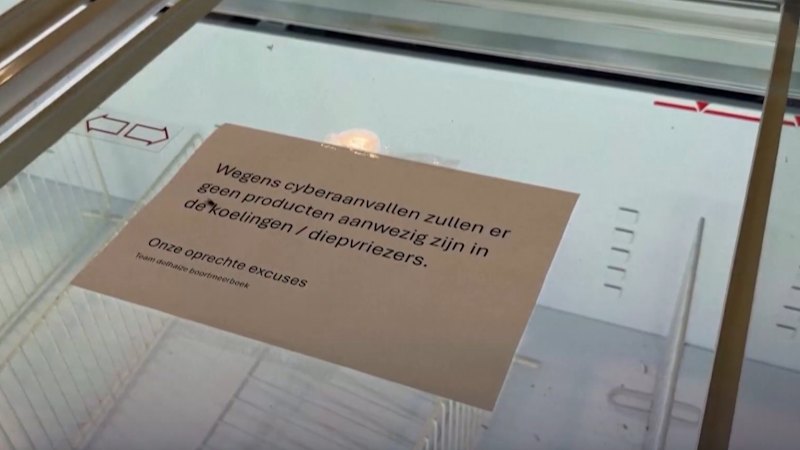
Imagine walking into your local grocery store, only to find the entire frozen food aisle dark, leaking, and reeking of spoiled inventory. This isn't a random power outage or a broken compressor. Across Europe, hackers have weaponized mundane temperature-control software, remotely cranking up industrial freezers to ruin tons of food in a single sweep.
It sounds like a ridiculous plot from a low-budget thriller. Yet, recent coordinated attacks across multiple European countries have proven that critical infrastructure vulnerabilities extend far beyond power grids and financial institutions.
The Reality of Connected Refrigeration Hacks
When major retail chains across Sweden, Belgium, France, and several other European nations woke up to soaring thermometer readings, the scale of the disruption became immediately apparent. Intruders targeted remote management systems—specifically equipment linked to manufacturers like Danfoss—manipulating internal settings to force extreme temperature spikes.
In some instances, equipment was heated up to extreme levels, triggering localized overheating and small fires. Business owners received frantic middle-of-the-night calls from employees. Thousands of euros worth of fresh meat, dairy, and frozen goods had to be tossed straight into industrial waste bins.
Why freezers? Because they represent the soft underbelly of modern commercial infrastructure.
Why Grocery Supply Chains Are Vulnerably Exposed
We build smart cities and connected storefronts without locking the digital back door. Supermarkets rely heavily on Internet of Things (IoT) devices to monitor cooling units, optimize energy costs, and automate regulatory compliance.
Convenience often trumps security. Many of these refrigeration monitoring nodes were connected directly to the open internet or managed by third-party vendors lacking stringent cybersecurity protocols. They frequently lack basic multi-factor authentication, firewalls, or isolated VPN layers.
If an attacker can bypass a weak default password on a remote temperature logger, they gain direct access to physical hardware. They don't need to crack military-grade encryption. They just exploit the fact that a grocery store fridge is treated like an appliance rather than a network-connected computer terminal.
The Broader Impact Beyond Spoiled Food
Lost inventory is frustrating, but the broader implications point straight toward economic disruption and psychological warfare. Deliberately targeting food supplies creates immediate supply chain friction, hits small-to-medium business owners hard, and erodes consumer confidence.
When butchers and grocery managers wake up to thousands of euros in losses, the financial strain is severe. Independent merchants don't always have deep corporate safety nets to absorb sudden, coordinated sabotage.
Security researchers note that these incidents mirror hybrid warfare tactics designed to test structural resilience. While ransomware gangs usually encrypt files and demand digital payouts to unlock corporate servers, these refrigerator attacks feel entirely different. They resemble pure disruption—chaos for the sake of chaos, or a stark warning shot about how fragile our daily logistics really are.
How Retailers Must Respond Right Now
You can't patch a physical supply chain with good intentions. If you manage operational technology or physical retail spaces, the playbook has to change immediately.
- Audit every single network-connected device: Map out every thermostat, HVAC controller, and refrigeration unit. If it doesn't need to talk to the outside world, disconnect it from the public internet entirely.
- Implement strict network segmentation: Put IoT appliances behind secure, monitored VPN tunnels instead of leaving them exposed on flat corporate or guest Wi-Fi networks.
- Enforce credential hygiene: Strip away default factory passwords immediately. Implement multi-factor authentication for any remote management console.
The recent wave of supermarket hacks proves that everything connected can—and eventually will—be targeted. It's time to stop treating physical appliances like dumb hardware.