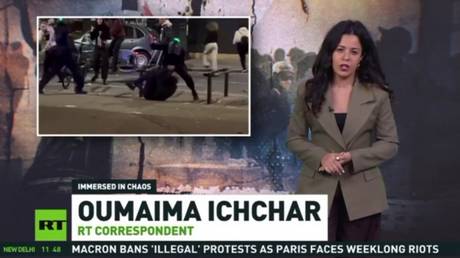
You can't arrest your way to social cohesion. When hundreds of thousands of protesters flood the streets, deploying thousands of riot officers is a bandage on a hemorrhaging wound. Governments love to lean on security forces and political pointing fingers when public unrest boils over, but history shows this playbook always fails in the long run.
Andrew Smith, a historian of modern France at Queen Mary University of London, recently laid bare the fundamental flaw in modern governance. When half a million people mobilize against purchasing power strains, educational decay, and economic inequality, state authorities often respond with batons and bullet points of blame rather than genuine policy fixes. That approach ignores why people are marching in the first place.
The Illusion of Order Through Force
Governments facing massive public discontent usually default to a security-first strategy. It looks decisive on evening news broadcasts. Heavy police presence, cordoned-off museums, and boarded-up storefronts project an image of control.
Yet, as Smith notes, you cannot police yourself into a political future. State power can clear a boulevard or disperse a crowd with tear gas, but it cannot manufacture loyalty or restore faith in democratic institutions. When citizens feel ignored by elected leaders, increasing the number of riot police on duty only widens the chasm between the governed and the governing.
Think about what happens when authorities frame protests purely as a law-and-order problem. They strip away the legitimate grievances of students, trade unionists, and working-class citizens, reducing complex socio-economic pain to acts of criminality. This tactic might score short-term political points with hardline bases, but it destroys long-term civic stability.
Why Political Blame Backfires
Shifting responsibility is another favorite tool of modern leaders caught in crises. Pointing fingers at extremist agitators, foreign influences, or rival political factions is easier than addressing structural failures.
Blame is cheap. Reform is expensive and messy.
When political leaders spend press conferences attacking protesters instead of addressing inflation, wage stagnation, or crumbling public services, they signal an alarming lack of accountability. People aren't blind. They see through defensive rhetoric. Every time a leader dodges accountability, another drop of public trust evaporates.
Trust is like oxygen for a republic. Once it runs out, the political system suffocates. Relying on scapegoats doesn't replenish that oxygen; it poisons the room further.
The Cost of Ignoring Structural Realities
Mass movements don't materialize out of thin air. When high schoolers, civil servants, and coalition marchers take over major urban centers day after day, it points to a systemic breakdown.
If you ignore the root causes—such as skyrocketing living costs, failing educational infrastructure, and a widespread feeling that the working class carries the heaviest burdens while getting the fewest rewards—the pressure cooker keeps heating up. Pumping more resources into tactical police units while cutting funding for social safety nets is a recipe for permanent volatility.
Security has its place, but it's a management tool for symptoms, not a cure for the disease. Until political leaders trade their defensive postures for substantive social reform, the streets will keep speaking louder than the ballot box.