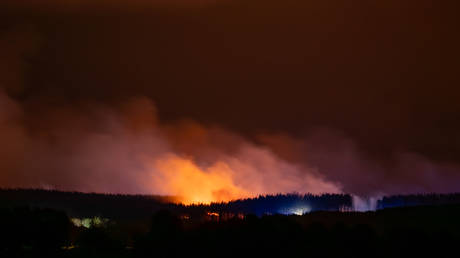
Belgium is currently facing its largest wildfire in recorded history. Thousands of hectares in the High Fens, or Hautes Fagnes, are scorched. The fire started on August 14, 2026, and by Sunday, August 17, it had consumed roughly 3,000 hectares of precious peat bogs, heathland, and pine forests near the German border.
This isn't just another news headline. It's a signal that the climate reality for Central Europe is changing fast. If you’ve been under the impression that Western Europe is somehow immune to the massive, uncontrollable blazes we often see in Southern Europe, you’re wrong.
The anatomy of an unprecedented blaze
The High Fens fire didn't just happen out of nowhere. It hit after the country endured its fifth heatwave of the summer. The ground was tinder-dry. These aren't just normal forest fires; they are burning through peat bogs. Peat is carbon-rich and incredibly difficult to extinguish once it catches. It smolders underground, popping up in new spots when you least expect it.
Firefighters from Belgium, Germany, and Luxembourg have been working in a coordinated effort. The army and local farmers are also on the front lines. They aren't just fighting flames; they are fighting the clock and shifting winds that keep blowing embers toward the German border.
Why does this matter to you? Because the traditional firefighting infrastructure of a country like Belgium was designed for house fires and smaller, isolated woodland blazes. A 3,000-hectare inferno in a rugged nature reserve is a different beast entirely. It requires heavy machinery, water bombers, and complex international cooperation.
Why the border matters
The proximity to Germany adds a layer of diplomatic and logistical pressure. The town of Monschau, a picturesque tourist hub on the German side, has been under a cloud of uncertainty. While officials have stated the fire likely won't cross the border, they’ve still advised residents in border-adjacent areas to evacuate.
The smoke pollution alone is a major health risk. It’s a sobering reminder that fires don't respect national lines. A localized disaster in one country immediately becomes a regional issue for its neighbors.
The climate factor
Scientists have been pointing to the increased frequency of heatwaves for years. We are now seeing the results. When you combine consecutive weeks of extreme heat with low humidity, the environment reaches a "flash point."
People often think of climate change as a slow-moving problem. It isn't. It’s right here, in the form of ruined nature reserves and displaced residents. If you look at the data from the European Forest Fire Information System, this blaze is more than double the size of the previous record-holder from 2011. That trend line should worry everyone.
What this means for the future
We have to get smarter about land management. The High Fens is a protected area, but protection isn't just about keeping people out. It’s about active forest management that minimizes fuel loads. When we leave vast swathes of dry, dense forest unmanaged in an era of 35-degree Celsius heat, we’re basically building a fuse.
If you live in or travel to these areas, you need to stay informed. Don't wait for a formal evacuation order if you see smoke or hear about nearby fires. Have a go-bag ready. Know your escape routes. These events are becoming more common, and "it won't happen here" is no longer a valid survival strategy.
We are seeing European civil protection mechanisms being tested to their absolute limits. The deployment of EU helicopters and water bombers is helpful, but it’s a reactionary measure. The real work happens in the winter months, with controlled burns, better water infrastructure in remote reserves, and aggressive public awareness campaigns.
The High Fens fire is currently being managed, and we can only hope that cooler, more humid weather continues to assist the crews on the ground. But even when the last embers are extinguished, the lessons remain. We need to stop reacting to these crises and start preparing for the new, hotter reality.
Stay alert, keep your local emergency apps updated, and don't underestimate how quickly the weather can turn a peaceful forest into a hazard.