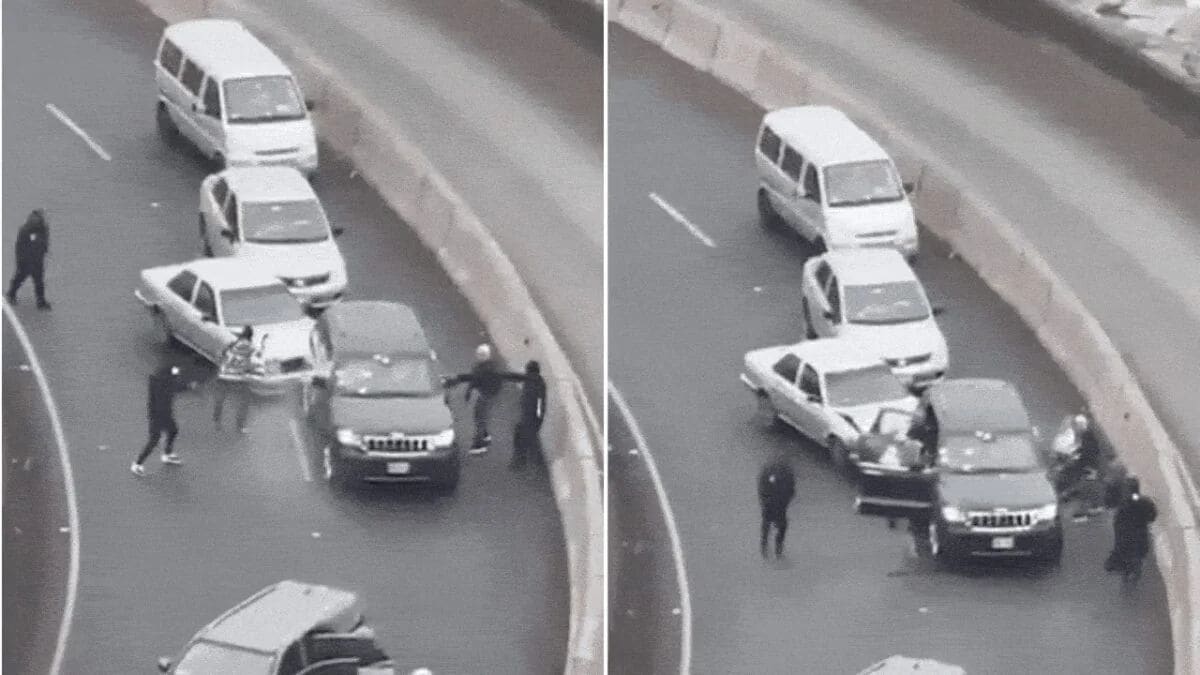
Around 6:30 a.m. on Friday, a routine morning drive toward Jorge Chávez International Airport in Peru turned into a barrage of gunfire. Masked attackers used multiple vehicles to box in a black SUV near Santa Rosa hill in Callao's La Perla district, close to the Costa Verde corridor. Over 30 shots rang out against the vehicle's body and windows. An Indian man and a Peruvian woman were injured before the gunmen forced the doors open and made off with bags, suitcases, and a briefcase believed to hold gold jewelry and gold bars.
If you've ever watched a crime movie and thought the ambush choreography felt a little too neat, CCTV footage from this Callao attack will wipe that skepticism right out. Hooded assailants didn't stumble onto a lucky target. Police investigators pointed to prior surveillance and advance planning, meaning the occupants were likely marked and tracked well before reaching the highway stretch.
Both injured victims were reported to be out of danger, with medical care sought at a local clinic. Callao Police Region head General Olger Benavides confirmed the case is being handled as robbery and assault, noting that officers are still working to verify exact contents taken from the SUV while reviewing surveillance video and tracking getaway vehicles.
What Actually Happens in a Targeted Highway Gold Heist
Most people hear "30 shots fired" and picture random street violence. Honestly, that misses the mechanics of what went down near Santa Rosa hill. When attackers fire dozens of rounds at an SUV's windows and body, they aren't just shooting wildly for drama. They're trying to break glass, disable resistance, force doors open fast, and keep nearby drivers or witnesses from intervening during a narrow window of time.
Using multiple vehicles to block a target car is classic containment. One car ahead slows or cuts off forward motion; another pressures from behind or the side. Once forward escape is gone, a crew that has already cased a route knows every side street, turnoff, and choke point nearby.
What makes a case like this extra tricky for investigators is the gap between reported loot and confirmed cargo. General Benavides made a careful distinction: police are treating it as assault and robbery, and they're still establishing what was inside those bags and briefcases even though reports pointed to gold jewelry and gold bars. When high-value goods move outside armored transport or formal bullion protocols, victims and witnesses can be reluctant, confused, or still recovering medically right after the attack.
Why Airport Routes Attract Organized Crews
Headed to an international airport with suitcases and briefcases? That creates a predictable time window and a fixed destination. Anyone who knows you're flying out has a rough deadline for when you have to be on the road, which makes pre-planned interception way easier than chasing a car with no schedule.
Peru's Callao area sits right beside the port and major transit arteries serving Lima and the airport corridor. High-traffic urban highways near dense neighborhoods give criminals two things they love at once: steady traffic flow to blend into beforehand, and tight local streets for quick dispersion afterward.
Let's be real about a common misconception here. People often assume an SUV—especially a dark one—equals safety. A standard black SUV might look imposing on the road, yet ordinary automotive glass and unarmored door panels won't stop high-velocity rounds or coordinated prying once the car is boxed in. Even if a vehicle has reinforced features, no static vehicle is invulnerable if it's cornered without an escape lane and surrounded by multiple armed attackers.
Spot the Red Flags Before You Hit the Road
You don't need to live in fear every time you grab a cab or drive to a terminal. Still, ignoring basic operational security when carrying high-value items is asking for trouble. In my experience looking at high-risk transit incidents, crews usually gather intelligence long before anyone pulls a trigger.
Watch out for these warning signs when moving valuables or traveling early in the morning:
- Pre-trip information leaks: Loose talk about flight times, cash, bullion, or expensive jewelry at hotels, offices, workshops, or with casual contacts gives insiders a blueprint.
- Shadowing patterns: Notice a car hanging back through multiple turns, pacing your speed, or matching your lane changes before you even hit the highway? Don't brush it off as coincidence.
- Early-morning isolation: Pre-dawn hours mean lighter traffic, fewer eyes on the road, and slower emergency response times if things go sideways.
- High-visibility luggage: Carrying heavy briefcases, lockboxes, or bulky bags that don't match normal tourist packing draws extra attention during loading and transit.
One mistake travelers and businesspeople make all the time is sticking rigidly to a predictable route at the exact same hour. If you're moving high-value goods regularly, predictability is your biggest liability. Another blunder is stopping completely when an unfamiliar car pulls aggressively in front of you in a sketchy stretch—though you also have to weigh traffic reality so you don't cause a fatal crash.
Moving Valuables Across Borders Without Painting a Target
Moving gold, bullion, or heavy jewelry across international routes brings two separate headaches: street crime on the ground and customs rules at the border. Even if a shipment survives the drive to the airport, undeclared high-value items can trigger seizure, fines, or legal trouble during inspection.
Before flying with gold or fine jewelry, check official customs declarations for both your departure country and destination—such as guidance from SUNAT in Peru or the U.S. Customs and Border Protection rules if your itinerary connects through the United States. Every country draws different lines between personal jewelry, investment gold, and commercial cargo, and rules change periodically. Always verify current thresholds directly with the relevant customs authority rather than relying on hearsay at the check-in counter.
If you're transporting genuinely high-value merchandise or bullion in a region with known organized crime risks, standard ride-hailing or unvetted private cars simply aren't built for that risk profile. Regulated armored transport, vetted security logistics, and strict confidentiality around schedules exist for a reason. Trying to wing it to save money can cost way more than the transport fee.
Practical Next Steps If You're Traveling or Moving High-Value Goods
If you have an upcoming trip involving an airport transfer or you're responsible for moving valuable items, take concrete steps before you leave rather than improvising in traffic:
- Audit who knows your schedule: Share flight times and pickup locations only with people who genuinely need them, and avoid discussing valuables in public or unverified chats.
- Verify transit options ahead of time: Use reputable, traceable transportation arranged through trusted channels, and factor in extra time so you aren't rushing blind down unfamiliar roads.
- Keep valuables low-profile and documented: Avoid flashy handling during loading, keep receipts or ownership records accessible where appropriate, and check official customs rules well before packing.
- Plan an active-incident mindset: Keep doors locked while moving, leave space to maneuver when traffic allows, and head toward busy, well-lit police stations or crowded commercial areas rather than isolated shoulders if you suspect you're being followed.
Police in Callao are still piecing together the surveillance trail and hunting the vehicles tied to Friday's ambush near Santa Rosa hill. For anyone watching from afar—or planning their own road transit—the takeaway is pretty blunt: when a heist looks coordinated, it usually started long before the shots were fired.