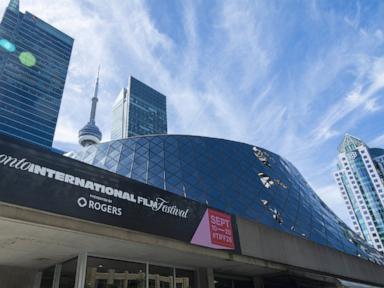
Art rarely exists in a vacuum. Right now, the Toronto International Film Festival is proving that geopolitical friction makes for a very loud red carpet.
The 51st edition of TIFF kicked off under a heavy cloud of cross-border hostility. U.S. President Donald Trump recently enacted sweeping 50% tariffs on $20 billion worth of Canadian goods, drawing an immediate mirror response from Ottawa on American steel, dairy, and farm equipment. But the trade war took a bizarrely symbolic turn when Washington signed an executive order renaming Lake Ontario as Lake America. Tech giants like Google and Apple quickly updated their map interfaces for U.S. users, while organizations like The Associated Press dug in their heels to keep the original geographic identifier.
On the ground in Toronto, filmmakers, executives, and local leaders aren't pretending everything is fine. They are using the festival stage to push back.
Taking Sides on the Festival Stage
Cameron Bailey, the chief executive of TIFF, didn't waste time on diplomatic pleasantries during opening night. While introducing the disability rights drama Being Heumann, he pointedly welcomed the crowd to "the beautiful shore of — say it with me — Lake Ontario." The audience caught the cue immediately.
Toronto Mayor Olivia Chow followed suit, drawing loud cheers by linking the tenacious spirit of the film’s subjects to Canada’s current posture against Washington. When powerful entities try to rewrite realities or squeeze neighbors, local resilience matters.
Even visiting American creators joined the chorus. Director Peter Farrelly took the mic to introduce his Sylvester Stallone drama I Play Rocky and made sure to emphasize his location. He stated clearly that he was happy to be standing on the shores of Lake Ontario, a subtle but unmistakable nod to the mapping controversy.
When Cinema Mirrors Trade Wars
Some movies on the slate didn't start out as political statements, but they hit differently in the current climate. Take The Stunt Driver, a new comedy from Canadian writer-director Michael Dowse. Starring Jay Baruchel as the infamous 1970s stuntman Ken Carter, the film tracks a wild attempt to launch a rocket-powered Lincoln Continental over the St. Lawrence River from Ontario into New York.
The movie turned into an accidental lightning rod. When Baruchel’s character declares that Canadians are "God's chosen people" or barks at an American counterpart that "the last thing we need is a Yankee doodle dandy telling us how to do our jobs," festival crowds erupted.
Dowse admits the timing feels entirely meta. He notes that while he considered leaning into the Lake Ontario naming battle during his premiere speech, he pulled back. He still views the current economic spat as political bravado, stating that both nations remain fundamentally tied as friends rather than enemies.
The Economic Reality Behind the Glamour
Beyond the red carpets and witty stage banter, the stakes for the entertainment industry are high. TIFF relies heavily on American audiences, buyers, and studio executives who cross the border every September. When trade policies sour and currency swings, independent financing models feel the pinch.
Tariffs on cross-border manufacturing and goods directly impact the physical production side of filmmaking as well. Crews, gear rentals, and post-production houses operating between Vancouver, Toronto, and Los Angeles face rising operational hurdles when economic protectionism takes over.
Festivals have always functioned as cultural safety valves. When governments lock horns over steel and dairy, artists use celluloid and satire to redraw the boundaries. Watch how studios navigate upcoming distribution deals across North America. Support local productions that refuse to let corporate mapping dictate geographic reality. Keep an eye on the box office returns for independent cross-border projects.
Beaver vs. elephant: the untold story of Canada's trade war with Trump
This video provides an in-depth look at the background negotiations and political escalations driving the current trade dispute between the U.S. and Canada.