If you still think Hong Kong is struggling to find its footing after years of economic shifts, you aren't paying attention to where the real money is moving. Saudi Arabia just took its biggest tech crown jewel, LEAP, and planted it right in the heart of the city.
The successful completion of the inaugural LEAP East conference from July 8 to 10 at the Hong Kong Convention and Exhibition Centre wasn't just a brief gathering of suits. It culminated in a massive three-year exclusive deal securing Hong Kong as the sole Asian host for the massive summit through 2029. If you enjoyed this post, you should look at: this related article.
This isn't a minor win. It's a fundamental restructuring of how technology capital moves across the globe.
For years, critics claimed that Western capital flight would starve the city's innovation ecosystem. What they missed was the quiet, deliberate alignment between the Gulf and East Asia. When Riyadh looks for a playground to deploy tens of billions of dollars into artificial intelligence, smart infrastructure, and new energy, it isn't looking toward Silicon Valley or London anymore. It's looking directly at a specialized gateway. The new LEAP East Hong Kong deal confirms that the city has successfully reframed its entire purpose for a new global order. For another angle on this story, check out the recent update from Wired.
The Middle East Wants Out of Western Tech Dependencies
To understand why this exclusive hosting deal matters, you have to look at Saudi Arabia's broader strategic anxiety. The Kingdom's Vision 2030 isn't a simple public relations campaign. It is a survival plan to diversify an economy historically bound to oil. They need advanced software, automation, and alternative energy systems.
Historically, Western tech companies provided these solutions. But the current geopolitical climate has made those dependencies look dangerous to Riyadh. Sanctions, political strings, and constant ideological demands from Western partners have soured the relationship.
Saudi Arabia wants new partners who don't lecture them. They want practical, scaled technology. That means looking toward mainland China, which currently leads the world in practical applications of drone logistics, battery storage, and commercial AI.
But Saudi investors cannot simply dump hundreds of billions directly into mainland corporate structures without navigating dense regulatory walls and currency controls. They need a friction-free zone.
Hong Kong fills that void perfectly. It operates under a common law system, offers absolute intellectual property protection, and allows capital to flow in and out without restrictions. It gives Middle Eastern wealth a safe space to meet Chinese engineering. The LEAP East deal didn't happen because everyone suddenly became friends. It happened because the city is the only location on earth that solves this specific structural problem for both sides.
Inside the Exclusive Three Year LEAP East Hong Kong Deal
The deal itself, ironed out between the Hong Kong Tourism Board and the event's prominent organizer Tahaluf, guarantees that the flagship Middle Eastern tech expo will not set foot anywhere else in Asia until at least the end of the decade. This shuts out regional rivals like Singapore, Tokyo, and Seoul from accessing this specific pipeline of Gulf wealth.
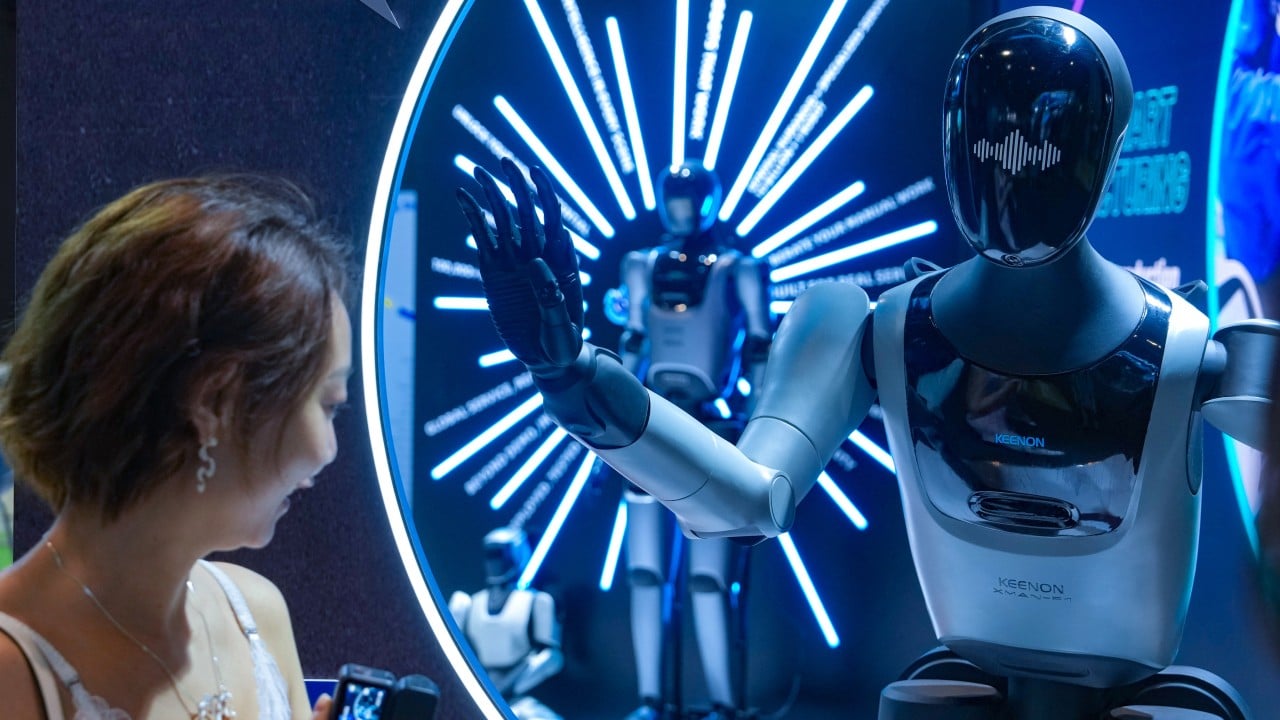
Think about the sheer scale of the event that just wrapped up. The three-day debut pulled in over 35,000 technology professionals, government officials, and venture capitalists from 30 different countries and regions. More than half of those attendees—55% to be exact—flew in from outside Hong Kong.
The floor hosted 450 exhibitors and 340 speakers, creating a massive, chaotic marketplace of ideas.
This wasn't an event filled with low-level regional sales managers. Financial Secretary Paul Chan and Professor Sun Dong, the head of the Innovation, Technology and Industry Bureau, spent their days walking the floor alongside Abdullah Alswaha, the Saudi Minister of Communications and Information Technology. When you get individuals of that caliber spending three days in the same building, deals get done.
The contract ensures that this convergence point remains locked to the city for the next three years. It provides a predictable, long-term platform for founders who want to secure capital without having to pitch to risk-averse Western venture boards.
Beyond the Hype of the Three Day Event
A lot of industry trade shows are nothing but hot air and empty promises. They feature flashy presentations on things that won't exist for a decade. LEAP East was different because it focused almost entirely on commercial scalability.
Look at what the Hong Kong Applied Science and Technology Research Institute brought to the table. They showcased 17 distinct innovations specifically tailored to the infrastructure ambitions of the Gulf. We're talking about real, deployable tech: automated logistics algorithms, smart grid management tools, and deep-tech hardware that can survive the harsh climate of the Middle East.
This isn't theory. Since its launch in 2000, the institute has generated over 1,500 patents and transferred more than 2,200 technologies to corporate partners. They understand how to move science out of the lab and into the real world.
During the summit, companies like HAI Robotics showed off autonomous warehouse systems capable of scaling up global supply chains, while local mainstays like Octopus demonstrated how digital payment systems can handle massive volumes securely.
The conversation shifted completely away from vague promises. Instead, the focus landed squarely on how to integrate these functional systems into the smart city projects currently rising out of the Saudi desert.
The Actual Numbers Driving This Bridge
If you want to know if a tech hub is real, look at the math. The economic momentum underpinning this partnership is staggering. Trade between the Gulf nations and Asia reached a massive USD 516 billion in 2024. That figure is expanding rapidly every single month.
At the same time, Southeast Asia's digital economy is on track to hit USD 1 trillion by 2030. Hong Kong sits right at the center of these two compounding growth engines.
The local government isn't just sitting back and watching this happen either. They're actively buying their way into the future of tech infrastructure. The administration has committed over USD 3.8 billion through three separate HK$10 billion funding pots specifically targeting research commercialization and new industrialization.
They are also scaling up hard infrastructure to match this ambition. Consider the Sandy Ridge Data Facility Cluster. The government expects this single project to deliver an astonishing 180,000 PFLOPS of computing power by 2032. That represents a 36-fold explosion over current local capacities, transforming the city into an undisputed regional data powerhouse.
This aggressive investment is yielding clear results on the ground. The city's startup ecosystem has expanded by nearly 40% since 2021. There are now more than 5,200 active startups operating across the territory. This deep pool of talent gives foreign investors something real to buy into when they arrive for events like LEAP East.
How to Position Your Business for This Capital Migration
The reality is clear. The money has arrived, and it isn't going back to its old channels. If you run a technology enterprise, a research lab, or an investment firm, you cannot afford to ignore this pipeline. Waiting around for traditional Western funding avenues to open up is a losing strategy in 2026.
You need to take immediate action to catch this wave before the 2027 edition of the summit arrives.
- Align your product with real-world infrastructure needs. Stop pitching abstract concepts. Focus your development on areas like smart city logistics, advanced manufacturing, or alternative energy systems that solve immediate problems for rapidly developing nations.
- Establish a local entity to access regional funding. Tap into the government's USD 3.8 billion funding pools. Securing a local footprint makes your company eligible for non-dilutive capital that can accelerate your product development.
- Target cross-border partnerships explicitly. Look for ways to connect mainland development capabilities with Middle Eastern deployment opportunities. Position your business as the connective tissue between these two highly complementary regions.
The exclusive three-year deal means the path is set. The infrastructure is being built, the capital is moving, and the hub is locked in. The only remaining question is whether you will build a presence on this bridge or watch your competitors do it instead.