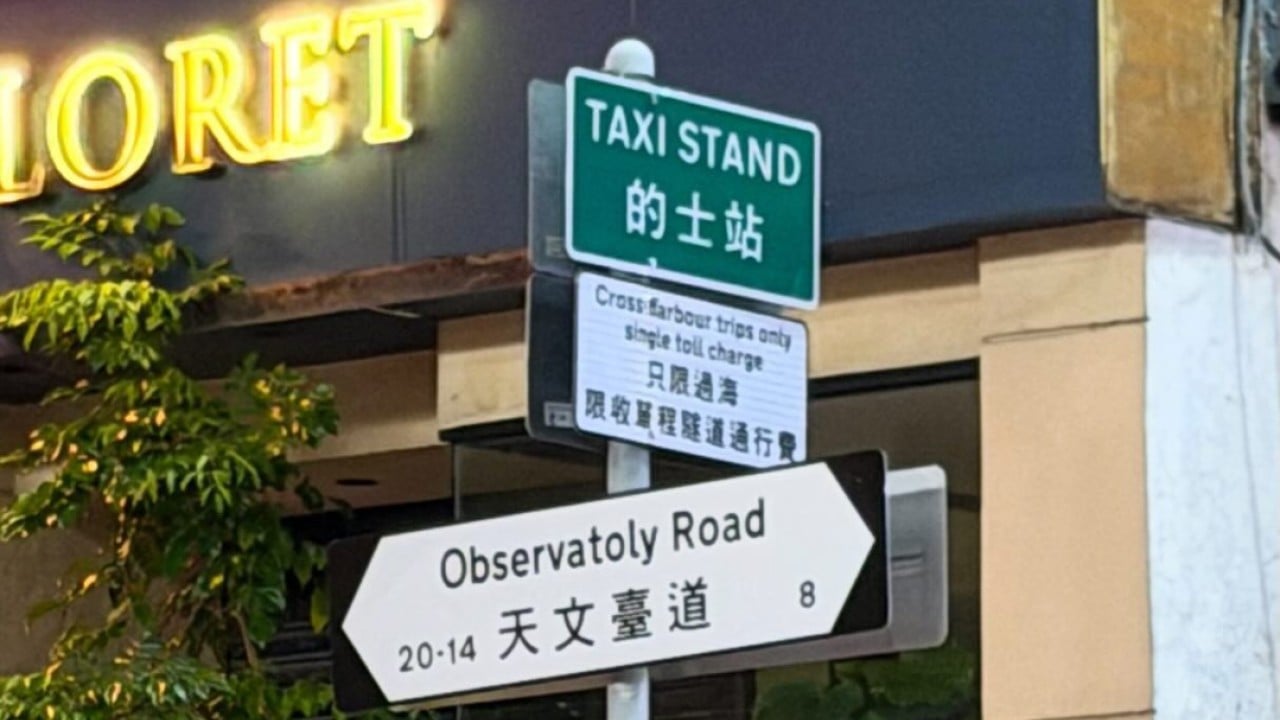
You have to wonder who looks at a giant metal sign with the word Observatoly printed in bold block letters and thinks, Yep, looks perfect, put it up.
Yet, that's exactly what happened in Tsim Sha Tsui. The Hong Kong Highways Department is currently eating humble pie after a brand-new road marker managed to butcher the spelling of the city's famous weather forecaster. Instead of pointing the way to the iconic Hong Kong Observatory, the sign directed bewildered pedestrians toward an existential linguistic crisis.
The blunder spread across local social media feeds faster than a typhoon warning, prompting the government to pull down the sign and announce an immediate review of its quality control measures. It's a classic bureaucratic faceplant. But if you look closer at how these signs actually get made, the mistake isn't just funny—it reveals a completely broken verification loop.
The Scratched Sign Excuse
When the public called out the spelling blunder, the Highways Department scrambled for an explanation. Their official defense? The contractor hired to make the marker was using an old, heavily scratched street sign as their design template.
Think about that for a second. The fabricators were literally copying a damaged physical artifact rather than looking at a digital database, a map, or a basic English dictionary. Because the bottom loop of the letter R was allegedly obscured or scraped away on the old sign, the contractor just assumed it was a L.
It sounds like a bad sitcom plot, but it's a real glimpse into how public infrastructure maintenance operates behind the scenes. Contractors are handed work orders to replace aging assets, and instead of verifying the text against official geographical records, they replicate whatever is already on the street—warts, dents, typos, and all.
The Quality Control Mirage
What makes this situation truly wild is the total absence of oversight before a sign gets bolted to a concrete pillar in one of the busiest tourist districts in Asia.
A standard municipal project isn't supposed to work this way. In theory, a piece of civic signage goes through multiple stages:
- The initial design draft.
- The manufacturing phase at the contractor's workshop.
- A post-production inspection.
- The actual installation by a field crew.
For "Observatoly" to make it into the wild, every single one of those defensive layers had to fail. The person who typed it missed it. The person who cut the lettering missed it. The team that loaded it onto the truck didn't notice a thing. Even the crew standing on the sidewalk with wrenches and bolts looked right at a word ending in "toly" and thought it was good to go.
Following the public mockery, the Highways Department vowed to tighten its verification steps. They promised that moving forward, staff will cross-reference all replacement text with official registries rather than relying on the physical signs they are tearing down. It's a sensible fix, but honestly, it's pretty terrifying that this wasn't already standard operating procedure.
Not Hong Kong's First Signage Rodeo
If this feels familiar, it's because Hong Kong has a long, colorful history of urban typos and translation mishaps. The city's unique blend of British colonial history and Chinese heritage means every single street requires precise bilingual rendering. When that process goes sideways, the results are legendary.
Take Rednaxela Terrace in Mid-Levels. It was supposed to be named after a man named Alexander. But a colonial-era clerk, accustomed to reading Chinese characters from right to left, registered the English letters backward. Instead of fixing the monumental screw-up, the government just rolled with it. A century later, Rednaxela remains the official name.
More recently, the government tried to "beautify" local street signs by introducing a classical Chinese font called Wen Yue Ming. It completely backfired. Drivers complained that the thin, artistic strokes were completely unreadable from a distance, forcing authorities to abandon the rollout after a wave of public backlash.
The Real Cost of Bad Signs
It's easy to laugh off a typo, but confusing or incorrect signage causes actual headaches. For a city that prides itself on world-class logistics and seamless tourism, these details matter.
When a driver is navigating tight, chaotic Kowloon streets at 50 kilometers an hour, they have a split second to read a marker. A weird font or an unexpected letter can cause a sudden lane change or a missed turn, which is all it takes to trigger a traffic gridlock or an accident. For tourists trying to find a historic landmark, a misspelled sign reads as cheap, careless, and disorienting.
Civic infrastructure reflects the competence of the administration running it. When the public sees a government department fail at basic third-grade spelling, it erodes trust in their ability to handle bigger, more complicated urban challenges.
How to Report an Urban Typo
If you're walking around Hong Kong and spot another bureaucratic masterpiece like "Observatoly," you don't just have to complain about it on Reddit. The Highways Department actually has a direct pipeline for public complaints, and public pressure is usually the only thing that gets these errors fixed quickly.
You can log on to the official Highways Department Fault Report page to submit a ticket. Take a clear photo of the sign, note the exact intersection or nearest building landmark, and select the traffic sign fault category. The department is usually hyper-reactive once an error goes public, often dispatching crews to tear down or cover up a botched sign within hours of a formal report. Keep your eyes open; given the current state of contractor oversight, "Observatoly" won't be the last typo to hit the streets.



.jpg)