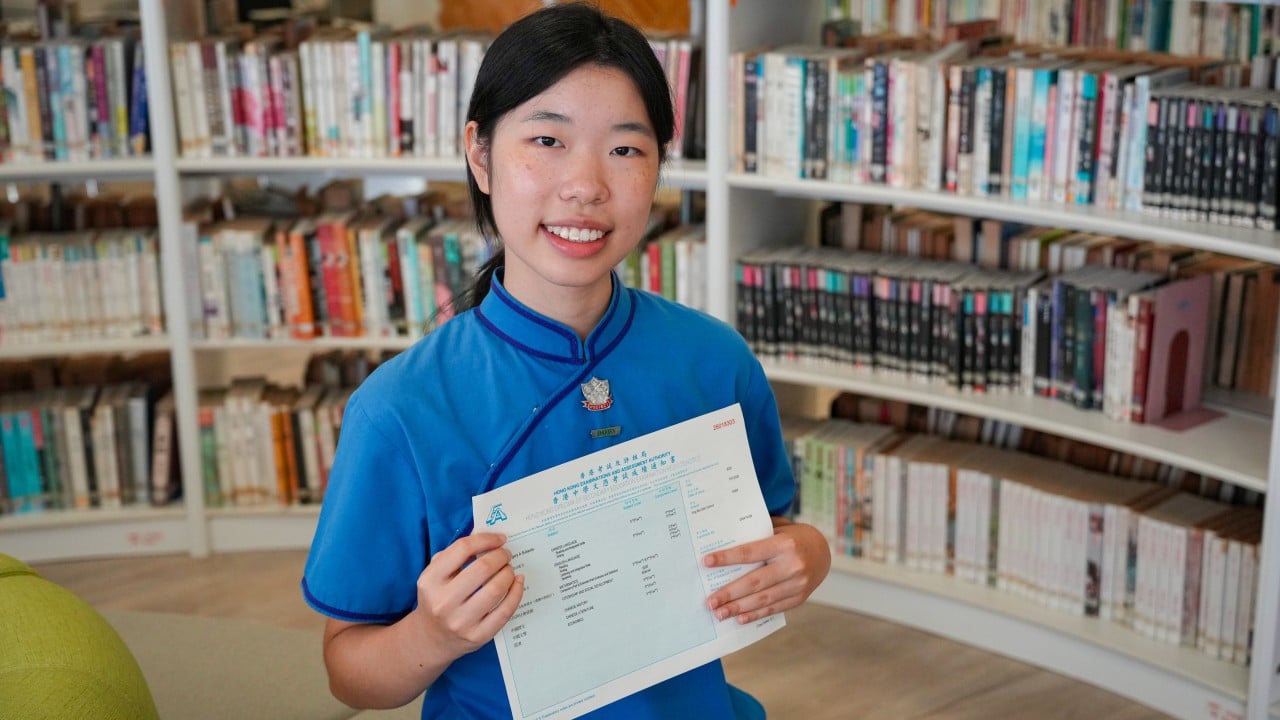
Every year in Hong Kong, tens of thousands of high school students sit for the Diploma of Secondary Education (DSE) exams. The pressure is heavy. Parents stress. Teachers push.
Most students think the path to those coveted 5** grades requires raw genius or studying until your eyes bleed at 3:00 AM. That is a lie.
If you look closely at the students who sweep 5** across seven or eight subjects, they are not working themselves to death. They do not have secret photographic memories. Instead, they treat the DSE like a game with highly predictable rules. They reverse-engineer the system.
If you want to survive the DSE and actually get into your dream university program, you need to stop studying hard and start studying with cold, calculated strategy. Here is exactly how Hong Kong's top exam scorers structure their lives, their minds, and their revision books to dominate the papers.
The Obsession with Past Papers is Done Wrong
Ask any high school senior how they revise and they will tell you they are doing past papers. They proudy boast about finishing twenty years of Hong Kong Certificate of Education Examination (HKCEE), Advanced Level (A-Level), and DSE past papers.
But most of them are wasting their time.
They print out a stack of papers, sit down, write for three hours, score themselves, and move on. They treat past papers like a diagnostic test. That is a massive mistake. Top scorers treat past papers as the syllabus itself.
Do not just do the paper, dissect the marking scheme
The Hong Kong Examinations and Assessment Authority (HKEAA) is incredibly predictable. The examiners do not want to think of brand-new question styles every year. They use templates.
When a 5** scorer does a past paper, they spend double the time analyzing the marking scheme than they did writing the actual test. They do not just check if their answer is right. They look for the exact keywords that trigger the marks.
In subjects like Biology or Chemistry, you can write a beautiful paragraph that is scientifically flawless, yet get zero marks. Why? Because you missed the three specific keywords the examiner's marking guideline required.
To fix this, try the Three-Color Pen Method:
- Black Pen: Write your initial answer under strict exam conditions.
- Green Pen: Grade your work and write down the exact missing keywords from the official marking scheme.
- Red Pen: Write down the conceptual error that caused you to miss those keywords in the first place. Was it a reading mistake, or did you genuinely not know the concept?
By the time you finish ten years of papers this way, you will start reading a question and instantly know exactly what the examiner wants to see. You stop guessing.
The Brutal Revision Schedules of 5 Star Star Students
You do not need to study fourteen hours a day. In fact, if you try to do that, your brain will shut down after day three. The human brain cannot maintain high-level cognitive focus for that long.
The top students who maintain their sanity during the grueling study leave period (usually from February to April) follow structured, high-intensity blocks. They treat revision like a professional athlete treats training.
A realistic daily schedule of a top scorer during study leave
Let's look at what an actual productive day looks like. It is structured around natural cognitive peaks.
- 07:30 AM – Wake up and hydrate. No studying in bed. Keep your sleeping space and working space completely separate.
- 08:30 AM to 11:30 AM – Core Focus Block (3 Hours). This is when your brain is freshest. Do your hardest subjects here. For most, this is Mathematics or your most difficult elective (like Physics or Economics). Use a timer. Block all social media.
- 11:30 AM to 01:00 PM – Long Break. Eat a real lunch. Walk outside. Get away from screens.
- 01:00 PM to 04:00 PM – Language and Active Recall Block (3 Hours). Focus on English or Chinese. Write essays, practice reading comprehensions, or do active recall flashcards for Liberal Studies/Citizenship and Social Development.
- 04:00 PM to 05:30 PM – Physical Activity. Go for a run, swim, or hit the gym. This is not optional. Physical exercise pumps oxygen back into your brain and lowers cortisol, the stress hormone that ruins memory retention.
- 07:30 PM to 09:30 PM – Light Review Block (2 Hours). Do not learn new things here. Review what you got wrong in the morning. Organize your notes for the next day.
- 10:30 PM – Sleep. Sleep is where short-term memory converts to long-term memory. If you sleep five hours a night, you are actively throwing away the things you studied during the day.
This schedule yields eight hours of highly intense, focused study. It is infinitely better than sitting at a desk for twelve hours while staring at Instagram every ten minutes.
Mindsets That Save Your Mental Health From Cracking
The DSE is as much a mental game as it is an academic one. Many brilliant students collapse on exam day because of anxiety.
The top scorers are not immune to fear. They just manage it differently.
Stop comparing your progress to classmates
Your school group chats will be toxic during study leave. Someone will brag about finishing their third round of past papers. Another will talk about how they scored 95% on a mock exam.
Turn off the notifications.
The only comparison that matters is you today versus you last week. If your past paper score went up by three marks, you are winning. If you finally mastered a difficult calculus concept, you are winning. The noise from your peers is just a distraction that triggers panic, and panic ruins performance.
Embrace the "good enough" philosophy
You do not need 100% to get a 5*. Depending on the subject, the cut-off for a top grade can be surprisingly low. In some science electives or mathematics papers, scoring around 80% to 85% is more than enough to secure a 5*.
Do not obsess over the impossible 5% of questions designed to stump everyone. Focus on securing the 85% of standard, structured questions. Perfectionism is the enemy of efficiency.
Subject Specific Tactics for English Chinese and Mathematics
Different subjects require entirely different cognitive approaches. You cannot study Liberal Studies the same way you study Physics.
Mathematics – Speed is everything
In Math Paper 1, time is relatively generous. In Paper 2 (Multiple Choice), time is your worst enemy. You have to solve 45 complex questions in 75 minutes. That is less than two minutes per question.
- Learn your calculator programs: If you are not utilizing the program memory on your approved scientific calculator, you are fighting with one hand tied behind your back. Program your quadratic equations, simultaneous equations, and triangle coordinates.
- Master the art of elimination: In Paper 2, you do not always need to solve the question. You just need to find the correct option. Use extreme values, plug the options back into the equation, or use coordinate geometry estimation to eliminate two or three options instantly.
Chinese Language – The hardest hurdle
For many local students, the Chinese Language exam is the "paper of death." It is notorious for subjective marking and unpredictable texts.
- Classical Chinese is a vocabulary test: Do not try to guess the meaning of classical texts. Buy a dictionary of classical Chinese characters and memorize the common meanings of key functional words (like "之", "其", "而", "以"). Once you know the vocabulary, translation becomes trivial.
- Use tight paragraph structures: In the writing section, do not write a stream of consciousness. Use the classic five-paragraph essay structure. State your thesis, provide a clear historical or contemporary example, analyze the connection, and address counterarguments. Examiners love structure because it is easy to grade.
English Language – Memorizing vocabulary won't save you
Many students try to memorize sophisticated words from the dictionary to throw into their writing tasks. It usually backfires. If you use a complex word in the wrong context, it looks awkward and costs you marks in coherence.
- Focus on collocations: Instead of memorizing single words, learn word pairings. Know how native speakers naturally group words together. Read high-quality English publications like The Economist or The New York Times to see how professional journalists structure sentences.
- Listen to natural English daily: Do not just practice DSE listening papers. Watch English documentaries, listen to podcasts, or watch YouTube videos without subtitles. Your brain needs to adapt to the natural rhythm, intonation, and speed of the language.
Your Action Plan for Today
Do not just close this article and go back to your old habits. If you want different results, you have to do something different. Take these three actions right now:
- Audit your study space: Clear your desk of everything except the subject you are studying. Put your phone in another room or inside a drawer. If it is on your desk, your brain is actively working to resist looking at it, which drains your cognitive energy.
- Schedule your sleep: Decide on a fixed bedtime and wake-up time. Stick to it even on weekends. Consistency in sleep is the easiest way to boost your cognitive processing speed.
- Analyze your last mock paper: Pull out your most recent mock exam. Do not look at the score. Find three questions you got wrong. Open the official marking scheme. Write down the exact keywords you missed and why you missed them.
The DSE is a massive mountain to climb, but thousands of students before you have conquered it. Stop letting the system panic you. Understand the rules, build your routine, and execute it day by day. You've got this.