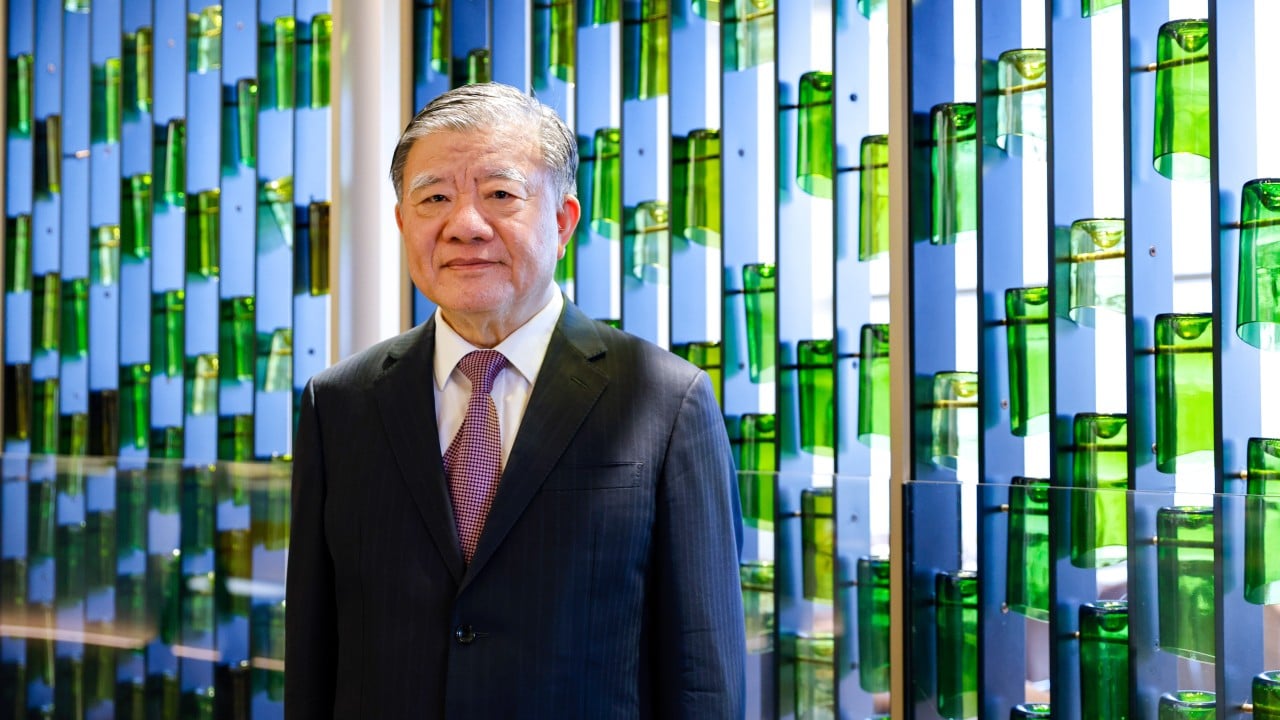
If you want to understand where modern medicine is winning its quietest and most important battles, you have to look at the laboratories bridging mainland China and Hong Kong. Professor Zhu Chen, a leading Chinese cancer researcher and co-winner of the prestigious Shaw Prize, recently issued a direct call to action. He wants Hong Kong to lock arms tighter with the mainland in the fight against oncology's biggest hurdles.
He isn't just tossing out polite academic suggestions. He's pointing out an obvious structural truth that a lot of bureaucrats miss. When you combine the mainland's massive clinical patient pools and state-of-the-art infrastructure with Hong Kong's international financial backing and global scientific networks, you get an unstoppable engine for medical breakthroughs.
Let's break down why this cross-border marriage matters, what usually gets in the way, and how this changes the future of drug discovery for everyone.
The Power of Combined Strengths
Most people don't realize how fragmented medical research can be. You have brilliant minds in Hong Kong universities publishing incredible papers, but they often struggle to find enough clinical trial subjects locally. Meanwhile, top-tier hospitals in mainland metropolitan areas are flooded with data and diverse patient cohorts, yet they historically faced friction when trying to plug directly into Western-dominated peer review loops and international financial markets.
Zhu Chen's argument centers on fixing this exact disconnect.
- The Mainland Advantage: Sheer scale. Access to large patient populations with diverse genetic backgrounds allows researchers to run statistically meaningful oncology trials much faster than anywhere else in the world.
- The Hong Kong Advantage: Absolute global fluency. Hong Kong acts as an institutional translator. It speaks the language of international patent law, global venture capital, and Western scientific journals without skipping a beat.
When you put these two puzzle pieces together, the timeline from a petri dish discovery in a lab to a commercialized cancer drug shrinks dramatically. That translates directly into saved lives.
Bureaucratic Roadblocks and Cultural Friction
Of course, getting two different administrative and legal systems to share data smoothly is never a walk in the park. Anyone who has ever tried to move sensitive genomic datasets across regional borders knows the paperwork headache involved.
Privacy regulations, data sovereignty laws, and institutional rivalries often slow things down. Hospitals on the mainland operate under different compliance structures than Hong Kong's public healthcare system. If researchers have to spend six months clearing legal hurdles just to share anonymized blood serum markers, momentum dies.
To make matters worse, academic silos still exist. Scientists can be territorial. Universities in Shenzhen, Guangzhou, and Hong Kong sometimes compete for the same talent pool instead of coordinating their lab resources. Zhu Chen's push is essentially a wake-up call to knock down those institutional walls. True translational medicine requires a unified front, not isolated fiefdoms.
What This Means for Global Oncology
You might wonder why a regional research alignment in southern China matters if you live thousands of miles away. The answer is simple: drug development is globalized, but the raw data driving it originates locally.
China's contribution to global cancer immunotherapy and targeted small-molecule drugs has exploded over the last decade. Mainland biotech firms aren't just copying Western patents anymore; they are inventing novel CAR-T cell therapies and antibody-drug conjugates from scratch. By using Hong Kong as the international launchpad, these innovations clear regulatory hurdles and enter global clinical pipelines much more efficiently.
When regulatory bodies like the US FDA or the European Medicines Agency look at multi-center trials, they want to see demographic diversity and rigorous compliance. Integrating Hong Kong's clinical oversight standards with mainland trial execution creates a data standard that is hard for anyone to dismiss.
The Real-World Road Ahead
Fixing this isn't about signing another vague memorandum of understanding or hosting another academic gala with speeches that sound good on television. It requires concrete operational changes.
- Streamlined Data Corridors: Establish secure, cross-border digital vaults where genomic and clinical trial data can move instantly under strict ethical oversight.
- Joint Talent Exchanges: Make it dead simple for post-docs and principal investigators to hold joint appointments across Shenzhen and Hong Kong institutions without losing pension or tax benefits.
- Unified Funding Baskets: Create bilateral grant programs specifically targeted at cross-border translational oncology projects, forcing teams from both sides to collaborate if they want the cash.
We are past the point where a single hospital or a single city can solve complex oncology problems alone. The infrastructure is already built. The talent is sitting in the labs right now. It's time to stop treating the border as a scientific barrier and start treating it as a bridge.