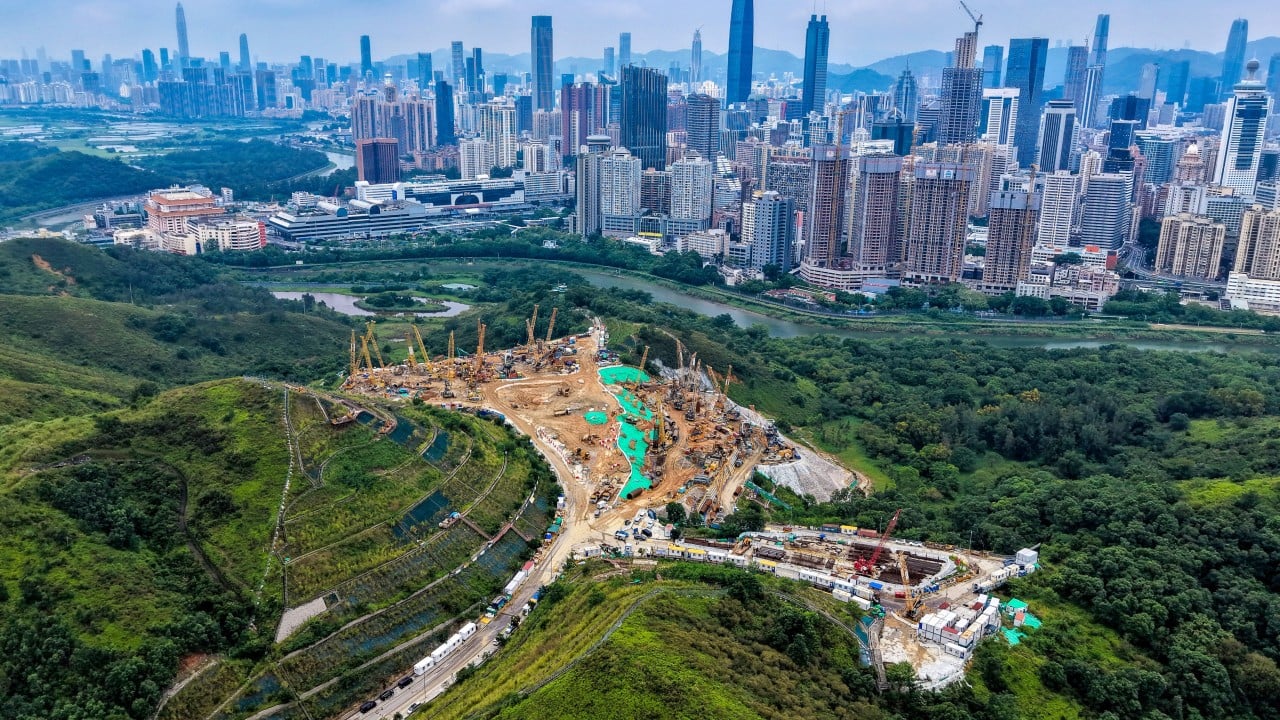
Hong Kong is pushing its technological ambitions into hyperdrive. CLP Power announced that the massive Sandy Ridge data facility cluster within the Northern Metropolis megadevelopment will begin phased operations by mid-2027. That schedule shaves a couple of years off the original 2029 timeline, proving that the city's hunger for artificial intelligence and cloud infrastructure cannot wait.
If you have been watching the region's digital infrastructure crawl forward in the past, this accelerated timeline changes everything. Let's break down why this project matters, what power suppliers are doing behind the scenes, and what it means for the local economy.
The Real Drivers Behind the Sandy Ridge Acceleration
Most people look at a data center project and see concrete, steel, and server racks. But the real bottleneck is always power. Energy is the oxygen of artificial intelligence. Without a stable and massive electricity supply, even the most sophisticated supercomputing chips remain expensive paperweights.
CLP Power stepped up to confirm it has the capacity to support energy demands equivalent to three or four supercomputing centers of this exact scale over the coming decade. That kind of grid confidence gives tech firms the green light to deploy capital without fearing sudden brownouts or restrictive energy caps.
When Range Intelligent Computing Technology Group broke ground on the site in March, industry watchers expected a slow, phased rollout stretching toward the end of the decade. Instead, intense commercial pressure and regional competition forced everyone involved to compress the schedule.
Powering the Next Wave of Supercomputing
You cannot talk about modern tech hubs without addressing power consumption. Supercomputing facilities guzzle electricity at scales that ordinary commercial buildings can't touch. CLP Power's managing director, Joseph Law Ka-chun, highlighted that electricity acts as the critical kinetic energy for artificial intelligence in Hong Kong.
Meeting this demand requires serious infrastructure adjustments. The utility provider is not just crossing its fingers; it has mapped out grid expansions specifically tailored for the border area near Shenzhen. This cross-border proximity gives the Northern Metropolis an unfair advantage. It sits right at the intersection of local innovation and mainland technological supply chains.
Here is what most casual observers miss about this setup:
- The electrical grid requirements demand dedicated substations capable of handling sudden spikes in cooling and processing loads.
- Phased operations mean servers will go live module by module, allowing engineers to test power draw under real-world loads before hitting maximum capacity.
- Collaboration between utilities and government bodies is the only reason this timeline shrank from 2029 to mid-2027.
What This Means for Tech Operations on the Ground
If you are running an enterprise, a cloud service provider, or an AI startup in the region, the mid-2027 launch date brings immediate strategic implications. Local computing capacity has historically lagged behind demand, forcing firms to rely on overseas servers or high-latency cross-border routing.
Having a Tier-1 facility cluster right on your doorstep changes the math. Lower latency, better data sovereignty compliance, and massive processing power will become locally available much sooner than expected.
However, don't expect a free-for-all. Demand for early slots in these phased rollouts will be fierce. Companies that wait until the facility officially opens its doors to secure capacity are going to find themselves locked out.
Keep an eye on how the utility integration progresses over the next twelve months. The real test is whether the grid expansion keeps pace with the rapid construction schedule on the ground. If CLP Power delivers on its mid-2027 promise, Hong Kong's tech sector will finally have the raw computing engine it needs to compete globally.