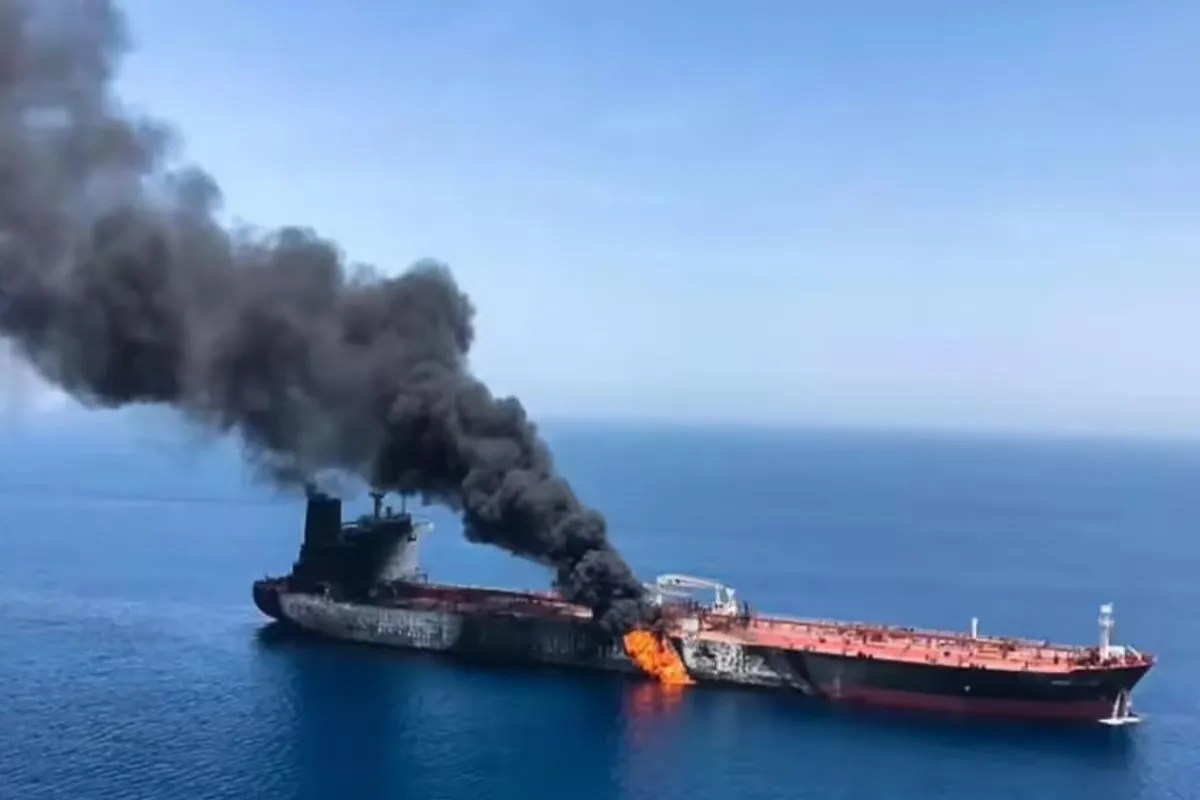
The Strait of Hormuz is bleeding energy stress, and nobody in Washington or Tehran is backing down. If you think the latest oil tanker incidents are just standard Middle Eastern posturing, you're missing the entire board. Right now, a messy collision of conflicting narratives, Houthi drone strikes, and shifting diplomatic threats has pushed global security into dangerous territory.
Let's look at what's actually happening beneath the surface.
The Battle of Stories Over the Hormuz Tanker Attack
When a tanker gets hit in the world's most critical oil choke point, the truth is usually the first casualty. Tehran's Islamic Revolutionary Guard Corps tried to brush off the incident involving the Panama-flagged tanker El Gaia as a simple underwater mine mishap. They claimed it scraped against a stray sea structure.
Washington isn't buying it.
CENTCOM officials quickly stepped up to trash that narrative. According to American military intelligence, the ship took a direct hit from an Iranian missile last month, followed up by a brutal drone strike near the Omani coast over the weekend. You don't just "scrape" a ship twice with precision military hardware. This friction proves that maritime transit in the Persian Gulf is turning into a hostile war zone once again.
The Trump Deal Paradox and Tehran's Hard Line
Donald Trump keeps dropping hints that Tehran is desperate for a deal. It's a classic negotiation tactic, but it's backfiring on the ground. Trump claims the leadership in Iran wants to talk terms, leaving the final decision up to Washington.
Tehran hates this rhetoric.
Mohsen Rezaei, secretary of Iran's Supreme National Security Council, called out these statements as pure contradiction. Iranian officials are sticking to a rigid stance: zero negotiations until Western sanctions lift completely. Meanwhile, Iranian President Masoud Pezeshkian has pointed fingers straight at those economic restrictions, arguing they're engineered solely to spark internal social chaos inside his country.
When both sides refuse to compromise on their starting conditions, diplomacy dies.
Spillover Chaos From Yemen to Lebanon
You can't look at the Hormuz strait in isolation. The violence is bleeding across multiple borders simultaneously.
Yemen's Houthi movement has escalated pressure by firing ballistic missiles and drones straight toward Saudi infrastructure. Coalition reports note that these recent strikes wounded at least 13 civilians, proving that regional air defense networks are stretched thin. At the same time, Houthi fighters claim they've seized strategic territory around the Greater and Lesser Hanish Islands in the Red Sea, triggering a massive response involving dozens of airstrikes across multiple Yemeni provinces.
Up north in Lebanon, the situation looks just as grim. Israeli strikes continue to pound southern towns, recently flattening a public school building in Kfar Tibnit. Even local fishing fleets aren't safe, with recent drone strikes hitting small boats near Iran's Kargan port and Larak Island.
What Happens Next for Global Energy Markets
The escalation doesn't stop at kinetic strikes. Diplomatic warfare is locking up international forums too. The United States recently blocked Iran's nuclear chief from attending the annual International Atomic Energy Agency conference in Vienna, slamming shut another window for quiet backroom talks.
If you are watching energy markets or international security right now, stop waiting for a peaceful resolution to drop out of the sky. The combination of stalled nuclear talks, active proxy conflicts, and disputed maritime attacks means shipping lanes will remain volatile. Keep a close eye on insurance rates for Gulf transit and emergency petroleum reserves. The margin for error in the Middle East just vanished.