Yemen’s Houthi rebels just declared an immediate naval blockade against Saudi Arabia, and energy markets are scrambling to figure out what happens next. On July 20, 2026, military spokesman Yahya Saree appeared on video to announce a "blockade for blockade" policy targeting Saudi shipping across the Red Sea. The announcement comes on the heels of a sharp military escalation in the region, right as the Strait of Hormuz remains effectively choked off by hostilities between the United States, Israel, and Iran.
If you've been following Middle Eastern energy flows, you know why this is terrifying. Up until now, Saudi Arabia relied on a crucial backup plan to bypass the Persian Gulf: pumping crude westward through its East-West Pipeline to Yanbu port on the Red Sea. The Houthi declaration directly targets that exact exit route. With both major maritime chokepoints in the region under fire at the same time, the global economy is staring down a supply shock unlike anything seen in decades.
How We Got to Blockade for Blockade
This move didn't happen in a vacuum. It's the culmination of escalating strikes that shattered a delicate truce held since 2022.
Tensions boiled over when the Houthi leadership accused Saudi Arabia of backing an airstrike on Sanaa International Airport. According to Houthi sources, the attack aimed to hit a direct flight returning from Tehran, where Houthi representatives had attended the funeral of Iranian Supreme Leader Ayatollah Ali Khamenei. The Houthis responded by firing ballistic missiles and drones at Saudi Arabia’s Abha International Airport.
When Saudi Arabia reinforced its long-standing restrictions on Yemeni airspace and ports, the Houthis invoked an "eye for an eye" doctrine. Yahya Saree declared that Yemeni forces would enforce a full maritime embargo on Saudi vessels. Nasruddin Amer, deputy head of the Houthi media office, posted on X that the Bab el-Mandeb strait would be shut to Saudi traffic to counter a decade of "unjust siege."
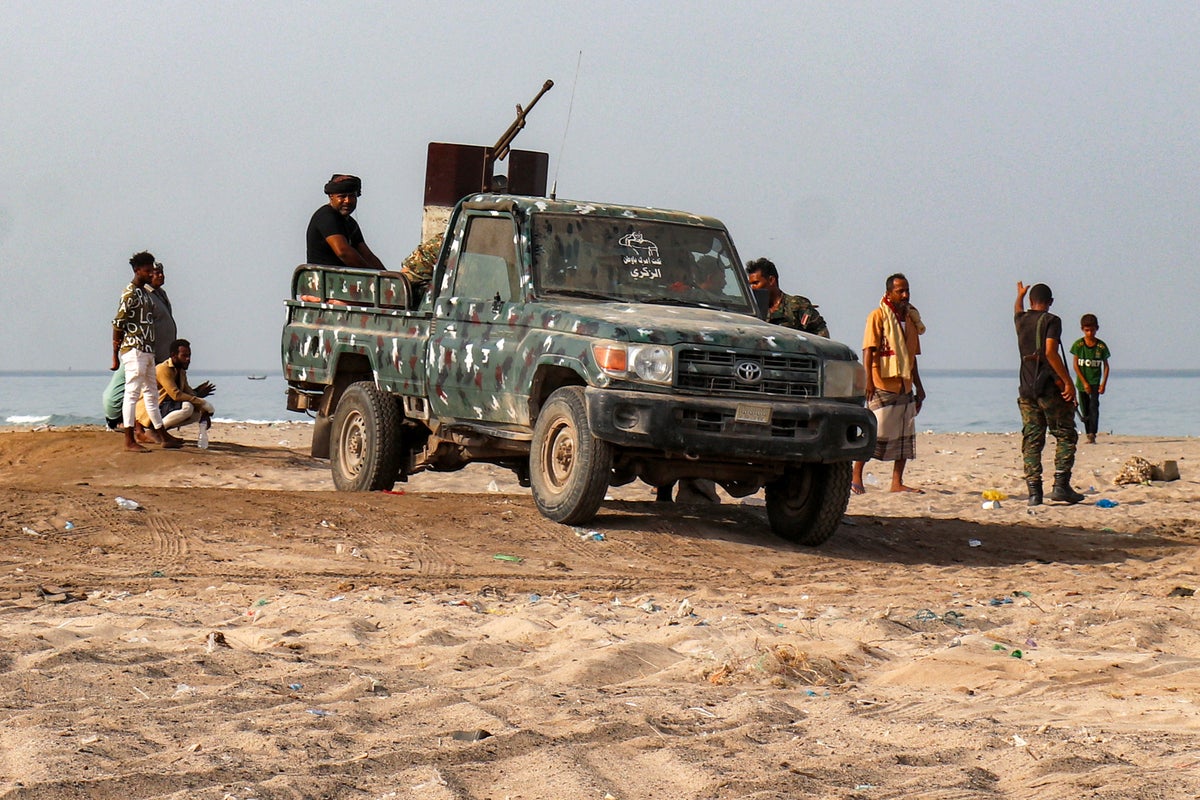
Saudi authorities haven't officially responded to the declaration yet, but regional military forces are already moving. Reports indicate Yemeni government forces backed by Riyadh dispatched heavy reinforcements to frontlines in Marib, Al-Bayda, and Al-Jawf. Meanwhile, the Houthis are moving fighters and anti-ship missile batteries toward coastal positions overlooking Hodeidah and the southern Red Sea.
The Strategy Behind a Dual Chokepoint Crisis
To understand why this blockade is so dangerous, you have to look at global shipping geography.
Usually, about 12 percent of total world trade and roughly a quarter of all global container shipping transits through the Bab el-Mandeb strait. This 20-mile-wide passage acts as the southern gateway to the Red Sea and the Suez Canal.
When Iran restricted shipping through the Strait of Hormuz following the outbreak of US-Israeli military strikes on February 28, 2026, global crude shipments took a massive hit. Hormuz normally carries roughly 20 percent of world petroleum liquids. The closure forced Saudi Arabia to shift millions of barrels per day across its 746-mile Petroline to Yanbu on the Red Sea coast.
That workaround is now in jeopardy.
If the Houthis successfully block or restrict Saudi tankers passing through Bab el-Mandeb, Saudi Arabia loses its primary alternative export route. Analysts from Kpler estimate that a total shutdown of Bab el-Mandeb could remove another 7 percent of global oil supply from the market. Combined with existing Hormuz disruptions that already cut global shipments by roughly 10 percent, the world faces an unprecedented 17 percent reduction in global oil flows.
Short-term workarounds simply don't exist for volumes of this size.
- Rerouting around Africa: Sending tankers around the Cape of Good Hope adds 10 to 14 days to a voyage between Asia or Europe and the Middle East. It skyrockets fuel costs and ties up global vessel capacity.
- Pipeline constraints: Saudi Arabia's East-West Pipeline has a capacity of roughly 5 million to 7 million barrels per day. But if tankers cannot safely load at Yanbu or pass out of the Red Sea, that pipeline capacity becomes useless.
- Insurance spikes: War risk insurance premiums for Red Sea transits spike overnight whenever anti-ship missiles are deployed, making commercial voyages economically unfeasible even before a ship takes damage.
What Most Analysis Gets Wrong About Houthi Tactics
A common mistake in Western coverage is treating the Houthis purely as a proxy acting on Tehran's orders.
Iran certainly provides weapons, training, and political backup. Reports surfaced that Tehran urged Sanaa to apply pressure on Red Sea trade if Washington targeted Iranian electrical infrastructure. But the Houthis have their own distinct political goals, internal pressure points, and regional ambitions.
The Houthis demonstrated between 2023 and 2025 that they don't need a traditional navy to shut down a international waterway. They rely on cost-effective, asymmetric warfare tactics that push conventional navies into an exhausting defensive position.
- Shore-Based Anti-Ship Cruise Missiles: Mobile launchers hidden in Yemen's rugged highlands can target vessels dozens of miles out at sea.
- Unmanned Surface Vessels (USVs): Remote-controlled, explosive-laden boats operate low in the water, making detection by radar difficult until they're close to a target.
- Low-Cost Attack Drones: Swarms of cheap loitering munitions force multi-million-dollar air defense destroyers to expend expensive interceptor missiles.
Even if Houthi drone and missile stockpiles are lower than they were during previous campaigns, they don't need to sink dozens of ships to enforce a blockade. Sinking or disabling a single high-profile tanker creates enough risk that commercial shipping operators voluntarily pull their vessels out of the area.
The Economic Ripples Beyond Crude Oil
Oil prices jumped immediately following Yahya Saree's speech before pulling back slightly as traders weighed diplomatic rumors of a potential 10-day ceasefire deal in Tehran. But markets remain deeply unstable.
The consequences go far beyond gas prices at the pump.
Higher shipping costs feed directly into global inflation. When tankers and container ships spend extra weeks at sea bypassing dangerous straits, the cost of raw materials, agricultural products, and consumer goods surges worldwide. European countries reliant on energy imports through the Suez Canal face immediate supply crunches, while Asian buyers in China, Japan, and South Korea face soaring freight rates to secure replacement cargoes from the Atlantic Basin.
Saudi Arabia also faces severe internal pressure. Riyadh spent years trying to wind down its military involvement in Yemen to focus on Vision 2030 economic megaprojects. A renewed war on its southern border, combined with choked export arteries, directly threatens the economic diversification plans championed by Crown Prince Mohammed bin Salman.
Realities on the Ground and Next Steps for Industry Observers
Diplomatic channels remain open behind closed doors. Iranian officials hinted that mediators presented proposals for a temporary pause in fighting, and Washington faces intense political heat over domestic fuel prices. Yet on the water, the military risk profile has shifted dramatically.
If you are tracking this conflict for supply chain logistics, energy trading, or geopolitical strategy, keep your eyes on these concrete indicators over the coming days:
- Yanbu Loading Operations: Monitor satellite tracking for crude oil tankers docking at Saudi Arabia's Red Sea terminal. A sharp fall in tanker departures indicates commercial fleets are already avoiding the area.
- Saudi Strategic Responses: Watch whether Riyadh launches retaliatory air raids on Houthi coastal positions or opts for naval escorts along its Red Sea corridor.
- Insurance Underwriter Notices: Look for announcement updates from the Joint War Committee and major maritime insurers regarding Red Sea coverage exclusions.
- Coalition Fleet Deployments: Track whether US Central Command shifts naval strike groups from the Gulf of Oman toward the Bab el-Mandeb to counter Houthi anti-ship batteries.
The situation remains fluid, but one reality is clear: the safety margin for global energy transit has vanished. Confronted with a simultaneous crisis at two of the world's most critical maritime choke points, international markets no longer have a safe detour available.