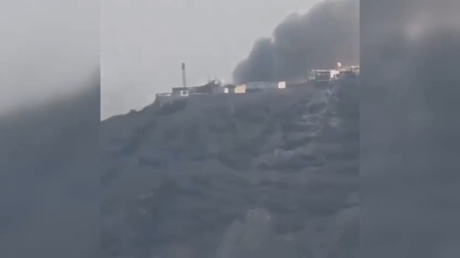
The sophistication of Houthi strikes targeting Saudi infrastructure has surprised military analysts for years. Conventional wisdom assumed that a militia group operating from one of the poorest nations in the region would struggle to sustain long-range precision attacks against an advanced military neighbor. Yet, recent operations—including attacks reaching Riyadh international airport and vital energy sites—tell a very different story.
If you want to understand how this capability evolved, you have to look past simple narratives about proxy warfare. The reality involves global supply chains, adapted commercial technology, and an indigenous manufacturing ecosystem that has proven remarkably resilient.
Beyond the Direct Iranian Connection
Most casual observers assume that every weapon used by the Houthis comes straight off an assembly line in Tehran. Security experts who study these procurement networks point out a more complex mechanism. While Iran has provided foundational technical expertise, training, and specialized components over the past decade, the group has shifted toward self-sufficiency.
Former members of the UN Panel of Experts on Yemen and researchers from groups like Conflict Armament Research have traced how the group utilizes dual-use commercial parts. Components manufactured globally—often legally exported for civilian applications—frequently find their way into Houthi workshops. Through porous border crossings and commercial shipping channels, specialized electronics, engines, and materials are adapted for military use.
This local assembly model creates a distinct challenge. Even if direct interdiction efforts disrupt specific smuggling routes, the underlying ability to build and modify drones and missiles persists.
The Evolution of Local Engineering
The transformation from simple rockets to advanced medium-range ballistic weapons didn't happen overnight. Former Yemeni military engineers, working alongside externally trained specialists, institutionalized a domestic manufacturing process.
Instead of relying entirely on high-end military factories, the movement built decentralized workshops capable of fabricating airframes, guidance systems, and warheads. This decentralization makes the arsenal harder to degrade through airstrikes. When you disperse manufacturing across multiple hidden sites, destroying a single warehouse doesn't cripple the broader network.
Furthermore, operational experience gained in active conflict zones allowed these technicians to rapidly iterate on their designs. Feedback loops from actual launches lead to immediate mechanical and software modifications, increasing reliability and payload capacity over time.
Challenges Facing Saudi Air Defenses
Defending a nation the size of Saudi Arabia against asymmetric aerial threats presents an immense operational burden. While high-end air defense systems like Patriot batteries perform well, covering thousands of square kilometers of oil facilities, civilian airports, and urban centers requires near-perfection.
Security analysts note that an integrated air defense network faces a numbers game against low-cost, mass-produced drones and cruise missiles. Interceptors cost millions of dollars each, whereas a simple drone can be manufactured for a fraction of that cost. When attackers launch waves of mixed projectiles—combining decoys, low-flying cruise missiles, and ballistic trajectories—even sophisticated defenses can experience saturation gaps.
The sheer geographic scale of the region means critical infrastructure points remain exposed to long-range vectors.
What This Means for Regional Stability
The persistent capability of the Houthis to strike deep inside Saudi territory alters the strategic calculations of every power broker in the Middle East. Traditional deterrence models based on conventional military superiority have failed to establish a durable quiet.
As long as the supply chains for dual-use components remain open and local manufacturing know-how continues to spread, modern air defense alone won't neutralize the threat. Securing infrastructure requires a combination of tighter international export controls, aggressive maritime interdiction, and complex diplomatic shifts that address the root drivers of the conflict.
The landscape of modern warfare has shifted downward in cost and upward in accessibility. Non-state actors can now project power far beyond their immediate borders by combining off-the-shelf commercial tech with determined local engineering. Ignoring that reality invites repeated strategic surprises.
How Yemen's Houthis are fending off Saudi Arabia's massive military
This video explores the tactical and regional dynamics behind how Houthi forces maintain operational strength against heavily armed adversaries.
http://googleusercontent.com/youtube_content/1