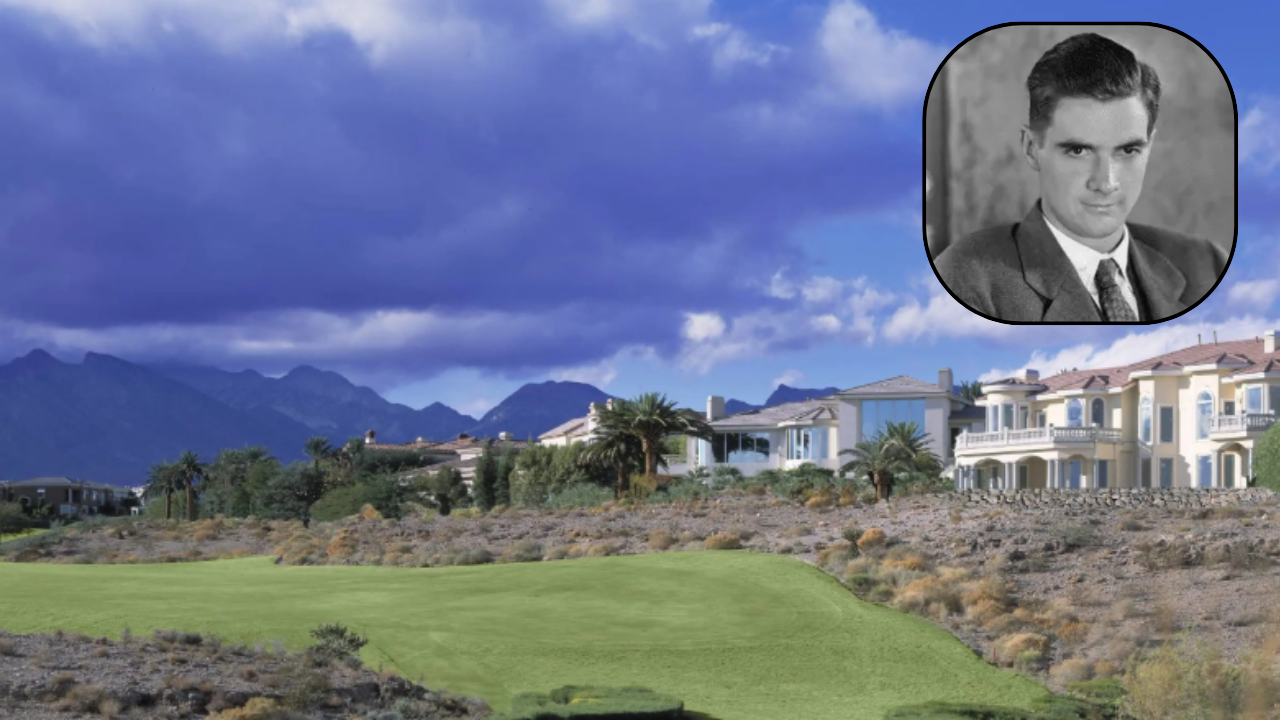
Most billionaires collect art, yachts, or fast cars. In 1952, the notoriously eccentric aviation tycoon Howard Hughes dropped pocket change on thirty thousand acres of barren Mojave Desert dirt west of Las Vegas for roughly three dollars an acre.
Nobody knew what to do with it. Back then, the western edge of the Las Vegas Valley was little more than creosote bushes, scorching heat, and rattlesnakes. Hughes originally thought about shifting some of his California operations out to the desert. That corporate move never happened. Instead, the massive plot sat completely untouched, gathering dust for more than thirty years while Las Vegas exploded in neon lights and casino booms just down the road.
That delayed start turned into one of the most brilliant accidental real estate plays in American history.
The Thirty-Year Desert Sleep
When corporate entities like Summa Corporation finally looked at the land decades later, they didn't rush out to drop cookie-cutter suburban tract homes on the sand. They realized that owning an uninterrupted expanse right against the mountain backdrop was a blank canvas worth protecting and planning carefully.
The turning point happened in 1988. Summa announced grand visions for a massive master-planned community named after Jean Amelia Summerlin, who happened to be Hughes' paternal grandmother. Around that same time, developers executed a crucial land exchange with the Bureau of Land Management. They traded away over five thousand acres to establish a protective greenbelt buffer near Red Rock Canyon, ensuring that future homeowners would keep views of the stunning sandstone cliffs rather than staring directly into another backyard.
Building infrastructure in the middle of nowhere takes guts. When the first residential village, The Hills, broke ground in 1990 across nearly 400 acres, city locals laughed. They watched Summerlin Parkway crawl westward from Rainbow Boulevard, dubbing it the "road to nowhere" because it terminated into absolute wilderness.
Moving Families Into the Wilderness
In March 1991, Cal and Maria Champlin moved their family into the newly minted community as its very first residents. They weren't just buying a house; they were gambling on a vision.
The master plan didn't stop at residential cul-de-sacs. Developers understood that people won't stay in the desert if they have to drive forty minutes for milk or medical care. By the mid-1990s, Summerlin started checking off major infrastructure boxes at a dizzying pace:
- The Summerlin Library and Performing Arts Center opened its doors in 1993.
- Summerlin Hospital Medical Center welcomed patients starting in 1996.
- Palo Verde High School opened in 1997 as the community's first public high school.
Golf courses also cemented the neighborhood's prestige early on. TPC Summerlin opened in 1991, and by 1996, a young Tiger Woods secured his first PGA Tour victory right there on the grass. That kind of global spotlight changed how buyers viewed western Las Vegas forever.
Connecting the Valley and Scaling Up
An isolated desert oasis is just a gilded cage if you can't commute. In 1992, road crews started carving out an eight-mile stretch of the 215 Beltway directly through the property. That concrete ribbon tied Summerlin tightly into the wider Las Vegas economic engine, turning a remote outpost into a prime suburban hub.
By 2001, the community celebrated its 20,000th home sale, logging an incredible 114 new-home purchases in a single week.
Commercial development followed population density. Downtown Summerlin launched in 2014, giving the sprawling community a walkable urban core packed with retail, dining, and offices. Sports fans soon followed. City National Arena opened in 2017 as the practice facility for the NHL's Vegas Golden Knights, and the Las Vegas Ballpark debuted in 2019 for Triple-A baseball.
What the Numbers Look Like Now
Today, that initial thirty-thousand-acre gamble spans roughly 22,500 acres after various federal land swaps and adjustments. More than 130,000 residents call the community home today, with eventual build-out projections expected to push past 200,000 people.
The developers also managed to balance concrete with conservation. Summerlin currently boasts over 300 parks and more than 200 miles of interconnected trails, proving that smart master planning can coexist with the harsh Mojave environment.
Howard Hughes never lived to see Summerlin rise from the dirt. Yet his cheap 1952 land grab set the stage for modern suburban expansion in the American West. If you are looking at real estate trends today, remember that patience and massive land positions often win out over short-term market hype.