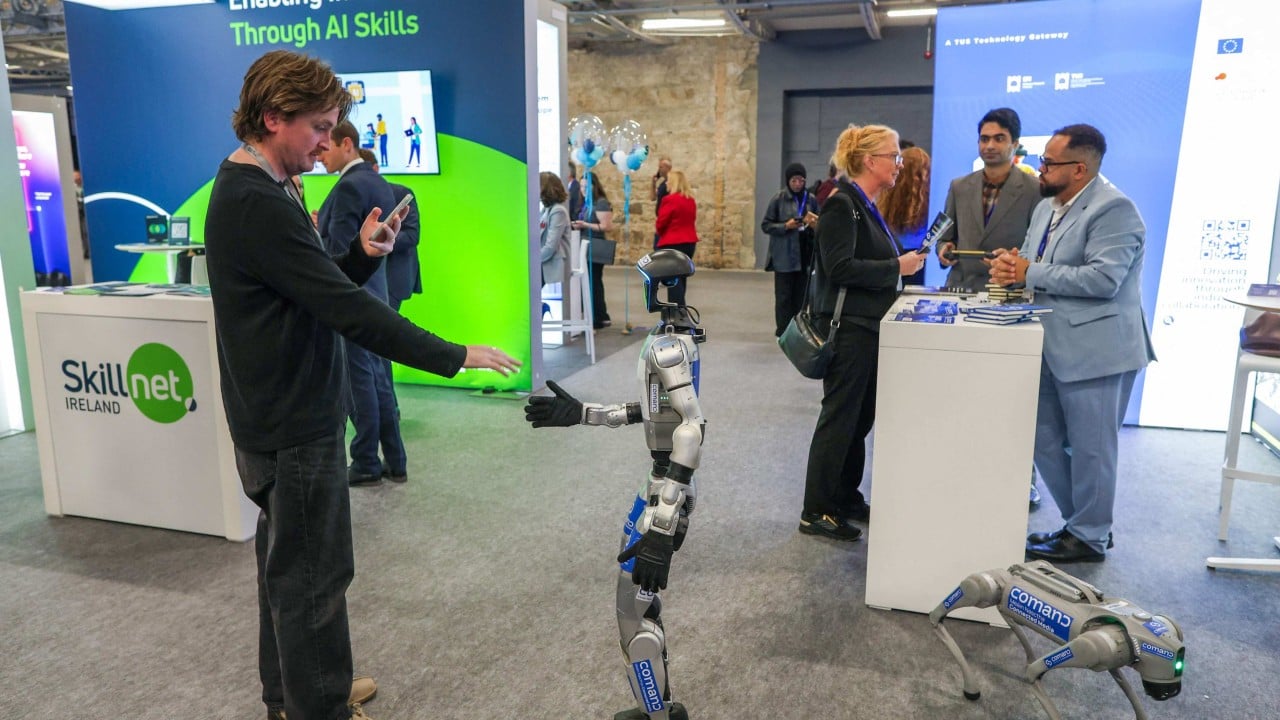
We are sleepwalking into a reality where machines with legs, cameras, and artificial intelligence will make life and death choices on the front lines. Walk into any robotics lab today, and you will see bipedal hardware designed to lift heavy crates, clear rubble, and patrol perimeters. But shift that same software toward military logistics or reconnaissance, and the ethical floor completely drops out.
San Francisco-based startups like Foundation Future Industries are building humanoid systems explicitly for industrial automation, yet their defense ambitions spark immediate global friction. When creators argue that metal frames carrying ninety pounds of cargo will eventually protect human lives, they miss the broader point. The transition from industrial helper to armed combatant requires only a software update.
The Logistics Trap
Nobody starts a war by strapping assault rifles to a bipedal android. They start by solving logistics. Armies bleed out supply lines long before bullets run low. Delivering rations, shifting ammunition crates, and evacuating wounded soldiers under sniper fire drain resources and cost human lives.
This is where humanoid robots find an easy entry point into modern defense structures. They don't need sleep, they don't panic under artillery fire, and they don't harbor trauma when things go sideways.
Startups building these systems point out that non-combat deployment is the immediate goal. Hauling cargo looks innocent enough on paper. Yet, once an infrastructure of autonomous bipedal machines embeds itself within military supply chains, weaponization becomes an engineering preference rather than a philosophical barrier. If an army can use a machine to carry a heavy pack, they will eventually ask it to carry a rifle.
Lowering the Political Price of Blood
Wars happen because leaders weigh the body bags against the geopolitical objective. When soldiers come home in flag-draped coffins, public pressure mounts to end the conflict.
Replace those soldiers with machines, and the political calculus shifts overnight.
If an invading force sends humanoid robots into a city instead of flesh-and-blood troops, the home front feels zero direct casualty grief. Analysts from organizations like the Atlantic Council warn that this decoupling of war from human suffering lowers the barrier to entry for armed conflict. When political leaders don't have to face public funerals, starting a war becomes dangerously easy.
The Illusion of Precision
Proponents of military robotics argue that artificial intelligence brings cold, hard math to chaos. Human soldiers make mistakes out of fear, fatigue, or prejudice. Computer vision systems, theoretically, can analyze a battlefield with three-hundred-and-sixty-degree awareness and pick out targets with pinpoint accuracy.
Human rights watchdogs completely reject this optimistic framing. Autonomous systems struggle with context. A child holding a toy looks remarkably different in a training simulation than they do through a dusty camera lens in the middle of an urban firefight.
When errors happen, accountability vanishes. You cannot put a line of code on trial at the International Criminal Court.
Where the Global Arms Race Stands
Governments across the United States, China, Russia, and regional defense blocs are pouring billions into autonomous systems. While international bodies like the United Nations call for binding treaties to restrict lethal autonomous weapons, technological momentum moves faster than bureaucracy.
Treaties take years to draft. Code compiles in seconds.
We aren't waiting for a distant sci-fi future. The hardware is standing on factory floors right now, waiting for the institutional green light to step onto the battlefield.
Stop looking at humanoid robotics as a neat trick of engineering. Treat them for what they are: the most disruptive shift in combat history, unfolding right in front of us.