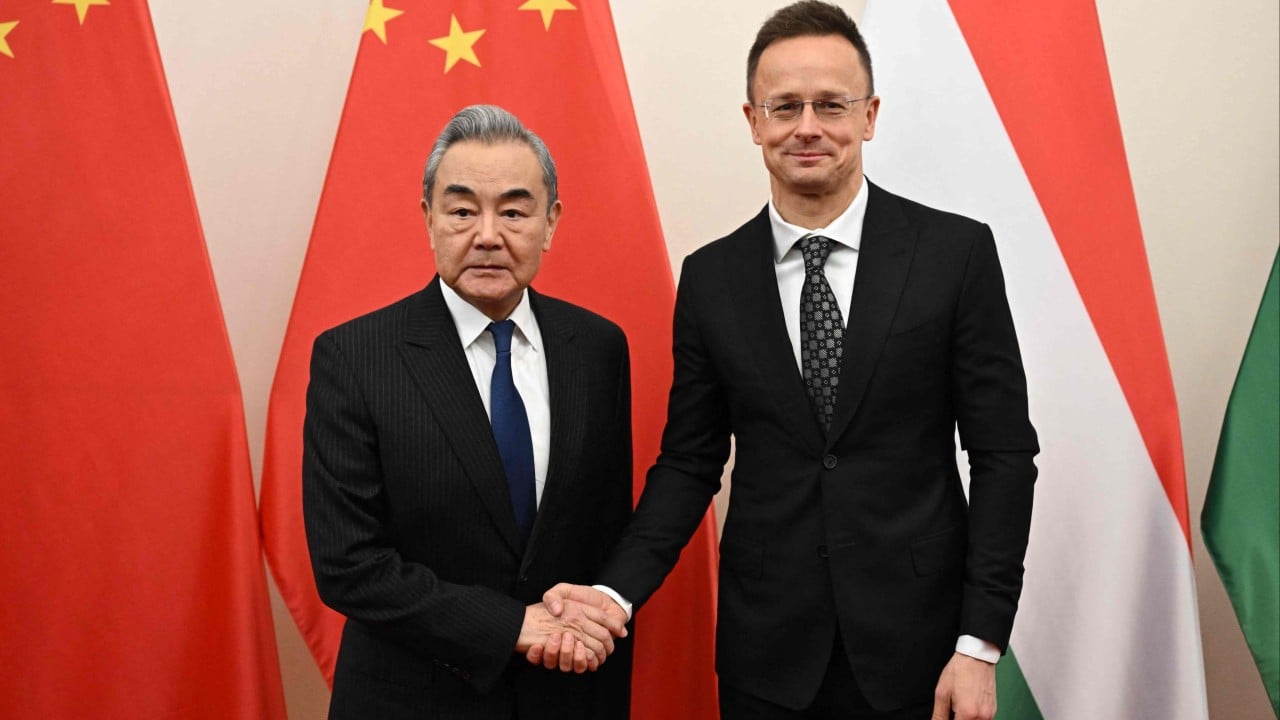
When a politician routes hundreds of billions in public funds to a foreign corporation and then takes a high-paying job at that exact company days later, people naturally get suspicious. That's precisely what happened in Budapest this July.
Hungary's government launched an official investigation into state deals made with Chinese electric vehicle maker BYD. The probe comes right after former Foreign Minister Péter Szijjártó resigned from his seat in parliament to become BYD's executive responsible for external relations and new business development.
If you've been following European politics, you know this isn't just a localized ethical hiccup. It sits at the intersection of European Union trade tariffs, aggressive corporate subsidies, and Chinese expansion into Western markets. Newly elected Prime Minister Péter Magyar didn't mince words when he told lawmakers that every single agreement, permit, and financial pledge given to BYD during Szijjártó’s tenure will face intense scrutiny.
Here is what's happening, why the deal is under fire, and what it means for the future of Chinese investments across Europe.
The Revolving Door Scandal That Triggered the Probe
The optics couldn't be worse. Péter Szijjártó spent nearly 12 years running Hungary’s foreign ministry under former Prime Minister Viktor Orbán. Throughout that time, he positioned himself as China’s most reliable ally within the European Union.
When Orbán’s party lost power in April to Péter Magyar’s pro-European Tisza party, Szijjártó kept his parliamentary seat. But he rarely showed up to vote. Then on July 15, he made a sudden Facebook announcement. He was stepping down from parliament to take an executive role at BYD.
Szijjártó framed the career pivot as a personal achievement, calling BYD one of the greatest corporate success stories of the last two decades. But back in Budapest, the announcement sparked instant outrage.
Prime Minister Péter Magyar openly questioned how a former top official could ethically step into a corporate suit for a foreign brand he showered with taxpayer money. In a normal democracy, that simply shouldn't happen. Moving straight from signing off on government checks to collecting a paycheck from the beneficiary looks terrible.
Magyar didn't hesitate. By July 20, he officially ordered a top-to-bottom inquiry into all commitments made between Szijjártó and BYD.
Breaking Down the Subsidies and Tax Commitments
How much money are we actually talking about here? Quite a lot.
According to Prime Minister Magyar, the previous government funneled roughly 300 billion forints—around €830 million—into state support for BYD. That total includes direct cash subsidies, tax relief, environmental exemptions, and dedicated infrastructure builds around BYD facilities.
To put the numbers in context, look at what Szijjártó negotiated while in office:
- 2023 Factory Deal: Szijjártó announced that BYD would build its first European passenger car assembly plant in Szeged, Hungary. The government pledged massive state aid, road upgrades, and local grid support to secure the deal.
- 2025 Headquarters and R&D Hub: Just last year, Szijjártó secured another deal to bring BYD's European headquarters and research center to Budapest, backed by a direct state subsidy of 20 billion forints (about $63.7 million).
- Regulatory Fast-Tracking: Environmental permits and local land zoning rules were smoothed over rapidly by central authorities, bypassing local opposition concerns about water usage and land contamination.
When state money flows that freely without full transparency, trouble follows. Taxpayers deserve to know whether those subsidies actually served national interests or if they were engineered to build a lucrative soft-landing spot for outgoing politicians.
How Hungary Became China Gateway to Europe
To understand why BYD wanted Hungary so badly—and why Szijjártó was so valuable to them—you have to look at the larger European trade map.
The European Union has spent recent years tightening rules against subsidized Chinese imports. To shield European automakers from low-cost competition, the EU introduced hefty tariffs on electric vehicles manufactured inside China.
Chinese carmakers needed a workaround. Building cars directly inside the European Union allows BYD to bypass those import duties entirely.
Hungary under Viktor Orbán offered the perfect loophole. Orbán’s foreign policy, dubbed "Eastern Opening," intentionally cultivated close economic ties with Beijing and Moscow. While other EU member states raised security concerns about reliance on Chinese state-backed enterprises, Hungary rolled out the red carpet.
Szijjártó didn't just invite BYD. He brought in massive Chinese battery manufacturing plants across the country as well. The goal was simple: turn Hungary into an assembly powerhouse for Chinese green tech right inside the EU single market.
That strategy worked for BYD, but it created immense domestic friction. Local residents protested battery plants over water consumption fears. Environmental groups warned about chemical risks. European diplomats grew increasingly uneasy with Hungary acting as a Trojan horse for Beijing's industrial strategy.
What the Hungarian Inquiry Will Look Into
The newly launched government inquiry isn't just about political grandstanding. Magyar’s administration mapped out a specific agenda for what investigators will pull apart.
Investigators are targeting four main areas:
- Procedural Integrity: Did Szijjártó or his team ignore explicit warnings from professional civil servants, financial auditors, or environmental agencies when handing out exemptions?
- Financial Burden: What is the actual long-term cost to Hungarian taxpayers? The probe aims to calculate the real ROI on state infrastructure projects built specifically to serve BYD facilities.
- Environmental Impact: Were standard environmental impact assessments bypassed or altered to fast-track construction permits in Szeged and Budapest?
- Legal and Ethical Standards: Did Szijjártó breach conflict-of-interest laws or confidential information protocols during his transition from parliamentarian to corporate executive?
Beyond the BYD deal, Magyar noted that authorities are also reviewing Szijjártó’s historical links to Russian officials. Reports previously surfaced alleging that Szijjártó held frequent phone calls with Russian Foreign Minister Sergey Lavrov while attending closed-door EU meetings.
Szijjártó has denied wrongdoing, framing his foreign policy work as patriotic pragmatic diplomacy. BYD has remained silent regarding the investigation.
What This Means for BYD and European Investors
Does this investigation mean BYD will pack up its Hungarian factories and leave?
Unlikely.
Prime Minister Magyar clarified that Hungary isn't trying to chase foreign investors away. The government wants BYD to succeed, provided it plays by the rules. If the company pays its taxes, obeys local labor laws, and respects environmental limits, its factories will continue operating normally.
However, the easy ride is over.
BYD can no longer count on quick favors, undisclosed subsidy totals, or rubber-stamped permits from Budapest. The company now faces a government that won't give preferential treatment at the expense of local communities or European standards.
This situation also sends a clear warning to other multinational companies relying on political backchannels in foreign capitals. When political regimes change, backroom deals usually don't stand up well under daylight.
Magyar also signaled that Hungary will pursue strict new post-government employment laws. The proposed rules would force departing ministers through mandatory cooling-off periods, preventing them from jumping into private roles at firms they helped subsidize while in power.
Practical Steps to Follow as the Investigation Unfolds
If you track global business, trade politics, or the EV market, this case sets a crucial precedent. Here is how to keep tabs on how this unfolds over the coming months:
- Monitor Hungarian Official Publications: Watch the Hungarian government portal and parliamentary filings for updates on the inquiry's findings regarding subsidy disclosures.
- Track EU Competition Policy Announcements: Pay attention to European Commission statements. The EU has been auditing foreign state subsidies that distort the internal market, and the Hungarian probe could supply Brussels with fresh evidence.
- Watch BYD Construction Milestones: Check whether regulatory scrutiny delays construction or operational timelines at BYD’s Szeged manufacturing facility or Budapest headquarters.
- Follow Proposed Legislative Changes: Track whether Hungary successfully passes its proposed cooling-off legislation for former cabinet ministers, which could reshape how foreign corporations recruit former officials in Central and Eastern Europe.