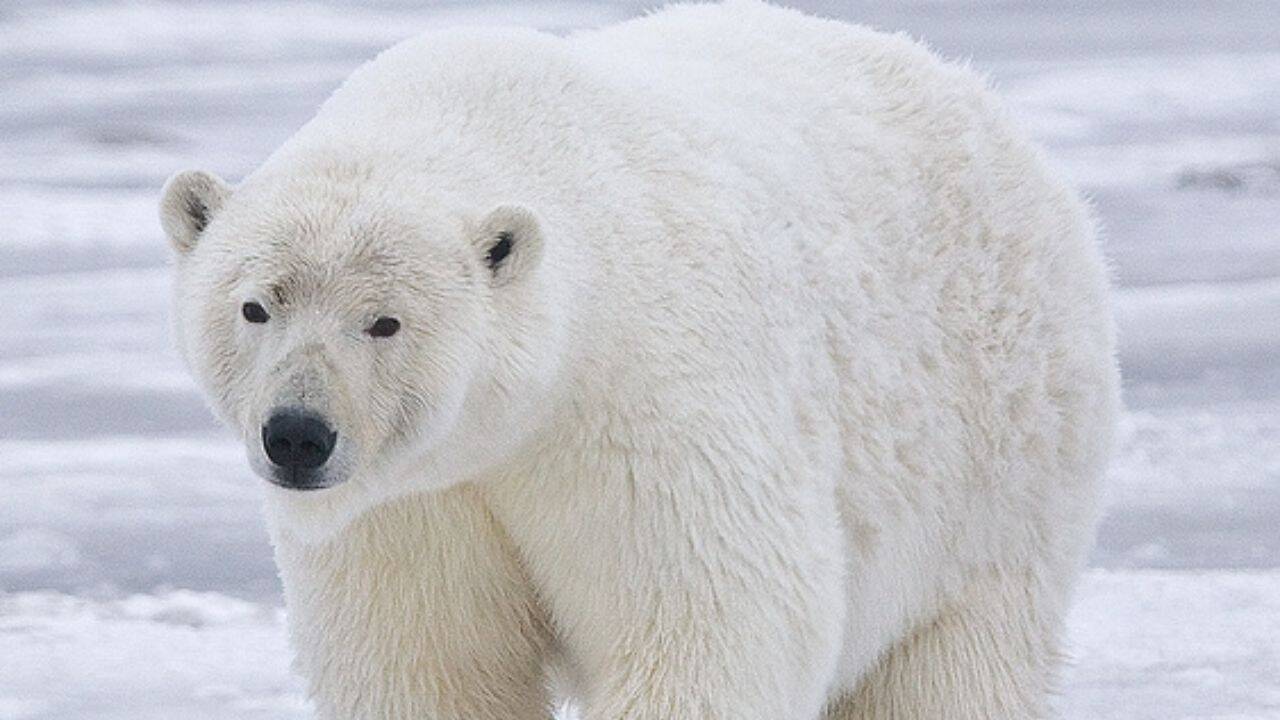
You’ve probably seen the classic image of a polar bear standing on a shrinking ice floe. It's the go-to visual for climate change, but it misses a gritty, real-time shift happening right now. The Arctic isn't just getting warmer; it’s getting desperate. We aren't just looking at habitat loss anymore. We are looking at a fundamental change in how the top predator of the North manages its survival.
A single polar bear in Alaska recently wiped out 89% of a common eider nesting colony in less than twenty-four hours. This wasn't some slow, seasonal decline. This was a sudden, violent, and highly efficient clearing of a food source.
When you hear about polar bears, you think of seals. Seals are fat-rich. They are the gold standard for a bear’s diet. But as sea ice retreats earlier each summer, the bears are spending more time on land. They are stuck. They are hungry. They have to eat something, so they are looking inland.
The Land-Based Feeding Strategy
For a long time, researchers thought these land-based feeding events were anomalies. They weren't. They are a sign of forced adaptation. Nesting colonies on barrier islands are perfect targets for these animals. These islands used to be safe havens for seabirds because they were surrounded by water and effectively blocked from large predators.
Now, the barriers are gone.
I’ve followed ecological shifts in the North for years, and the pattern is clear: predators follow calories. If you are a polar bear and you can't reach your seal hunting grounds, you stop being picky. You start raiding nests. You eat hundreds of eggs. You eat the chicks. You might even take out the adults. It’s an opportunistic hunting style that we once considered rare in places like northern Alaska.
Why This Is A Major Problem
The biggest issue isn't just that one colony gets destroyed. It’s about the ripple effect. Seabirds in the Arctic are already stressed. They are dealing with warming waters, shifting fish populations, and habitat erosion. When you pile on top-tier predation by bears who have no other choice, these colonies can’t recover.
Take the Cooper Island colony of Mandt's black guillemots. It’s been a cautionary tale. Researchers tried everything—even swapping out natural nests for bear-resistant plastic cases. It worked for a while. Then the bears figured it out. They learned how to manipulate the containers. By 2024, that colony faced total reproductive failure. That’s not a temporary setback; that’s a local extinction event.
What Happens Next
If you think this is a one-off, you're missing the point. Polar bears have incredible memories. They are highly intelligent, and they learn where the easy meals are. If a bear successfully clears a colony this year, it’s going to return to that spot next year. It’s a guaranteed return on investment for a starving animal.
We need to stop viewing these events as just "sad news" stories. They are data points in a massive, ongoing ecological experiment.
- Increased Monitoring. We need to know which barrier islands are at the highest risk. If we want to save these colonies, we need eyes on the ground before the bears show up.
- Acceptance of Shifted Baselines. We have to stop expecting the Arctic to look like it did fifty years ago. The rules have changed.
- Strategic Management. Wildlife experts are currently debating how to protect vulnerable nests without creating "traps" that just draw bears in further. It’s a delicate balance.
The reality is that we’ve fundamentally altered the Arctic’s caloric landscape. Bears are just doing what bears do when they're hungry: they adapt. But that adaptation comes at a massive cost to everything else living on the coastline. Don’t expect this trend to slow down. As long as the ice keeps retreating, the bears will keep looking for alternatives. And right now, the seabirds are paying the price.