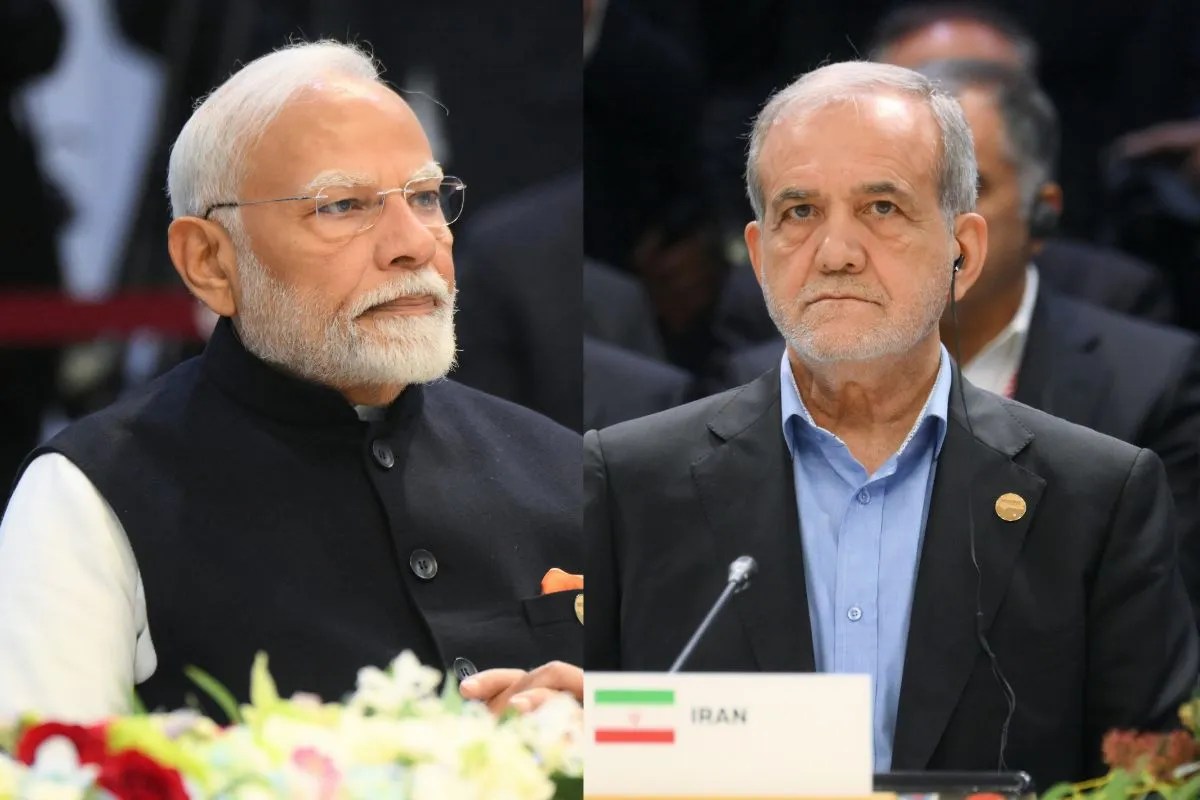
Geopolitics rarely moves in a straight line. When Indian Prime Minister Narendra Modi and Iranian President Masoud Pezeshkian sit down together, the traditional playbook of international diplomacy gets thrown out the window. Everyone is talking about the upcoming BRICS summit, but they are missing the real story unfolding behind closed doors. Tehran just made it crystal clear that the economic alliance isn't just about global posturing—it is a lifeline for regional commerce, and India sits right at the center of it.
If you think this is just another diplomatic handshake for the cameras, you aren't paying attention. Let's look at what is actually happening on the ground. Recently making waves in this space: Why Vladimir Putin Might Target The Uk Next And How British Security Is Preparing.
The Chabahar Port Reality Check
For years, people talked about the Chabahar Port as a nice-to-have logistical alternative. That mindset is dead. Western sanctions and volatile Middle Eastern shipping lanes have turned this Iranian port into an absolute necessity for New Delhi.
When you want to bypass hostile territory and cut straight into Central Asia and Afghanistan, you rely on Chabahar. Tehran knows this. Iranian foreign ministry officials have openly signaled that multilateral platforms like BRICS and the Shanghai Cooperation Organisation provide the exact diplomatic shield needed to fast-track these connectivity projects without getting bogged down by Western pressure. Additional information regarding the matter are detailed by TIME.
Here is what most mainstream analysis gets wrong. India isn't just buying oil or playing a balancing act between Washington and Tehran. New Delhi is securing its economic perimeter. When President Pezeshkian visits India for the summit, the agenda won't be about vague regional cooperation. It will focus entirely on clearing bureaucratic bottlenecks, upgrading port infrastructure, and insulating trade routes from ongoing maritime conflicts.
Navigating the Sanctions Maze
Running trade transactions with a heavily sanctioned nation is an operational nightmare. Banks get jittery. Insurance companies back out. Cargo ships face unexpected delays. Yet, India keeps finding ways to keep the ledger active. Why? Because energy security and trade diversification are non-negotiable for a growing economy.
President Pezeshkian understands that Iran needs reliable economic partners who won't buckle at the first sign of geopolitical pressure. India fits that bill. The recent bilateral talks in Bishkek laid the groundwork, and the BRICS stage provides the perfect multilateral megaphone to announce expanded trade baselines.
You won't see dramatic public announcements about every financial mechanism being worked out. Governments prefer quiet corridors for heavy lifting. But trade volumes tell the real story. Both nations are actively working on diversifying their trade basket beyond basic commodities.
What Most Observers Miss About the BRICS Shift
The western media loves to frame BRICS as an anti-Western club. That is a lazy narrative. For countries like India and Iran, it is about creating financial redundancy.
Consider the practical realities:
- Traditional payment gateways are heavily policed.
- Maritime insurance costs in the Persian Gulf have spiked dramatically due to regional proxy conflicts.
- Supply chains need predictable overland and sea corridors.
By leveraging the BRICS framework, Tehran and New Delhi are building a parallel track for commerce. It is pragmatic, calculated, and entirely driven by self-interest.
Moving Past the Hype
Don't expect overnight miracles from the upcoming summit. Infrastructure projects take years to mature, and bureaucratic inertia is a global disease. However, the political will at the top has never been clearer.
When leaders align on strategic connectivity, business follows. Keep a close eye on bilateral shipping agreements and joint logistics investments over the next twelve months. That is where the real game is being played.