Pakistan walked into the United Nations Security Council this week expecting to play the victim card on water sharing. Instead, it got hit with a sharp reality check.
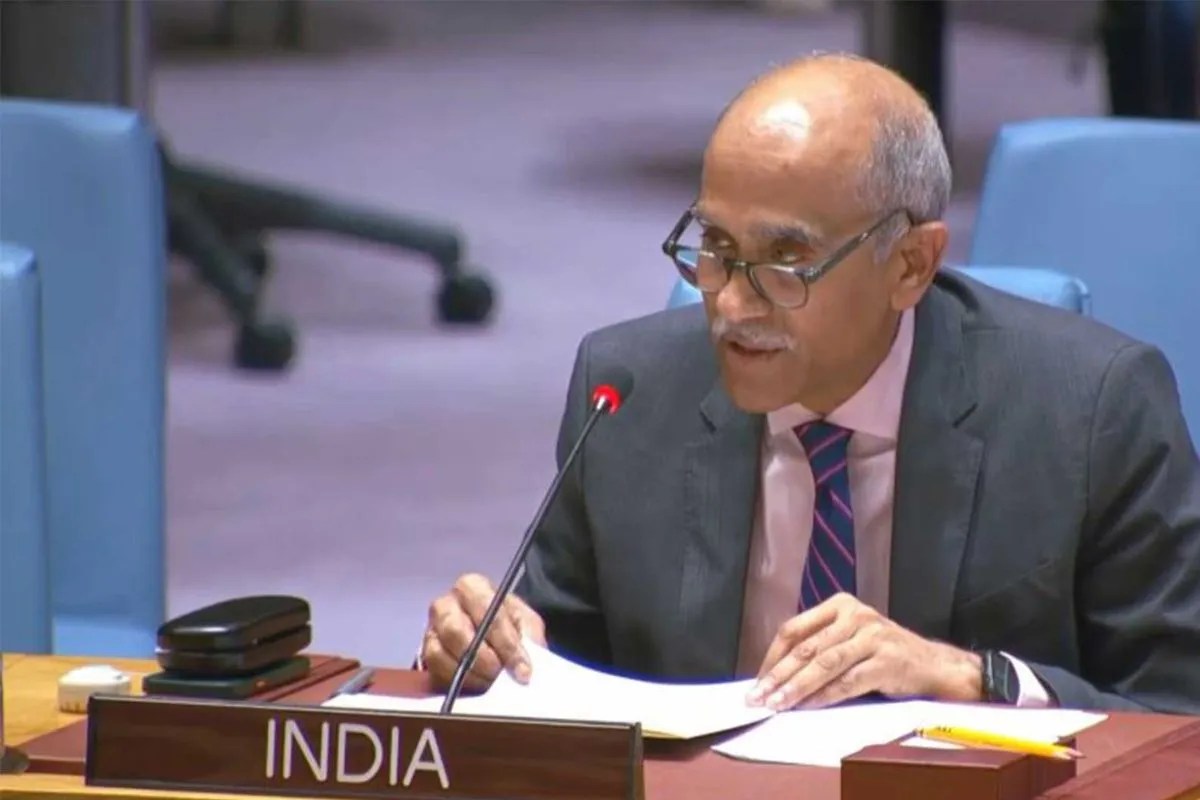
During a high level debate on natural resources and peace, Pakistan’s envoy tried to shift focus away from its internal mess by accusing India of "weaponising water" and illegally freezing the 1960 Indus Waters Treaty. India’s Permanent Representative to the UN, Ambassador Parvathaneni Harish, did not pull his punches in response. He plainly stated what everyone in diplomatic circles already knows. Cooperation requires basic trust. You cannot run a state-sponsored campaign of cross-border terrorism on one hand and demand uninterrupted, friendly water sharing on the other.
If you have been following South Asian politics, this showdown at the UN isn't just another round of bilateral posturing. It marks a fundamental shift in how India deals with its neighbor. For decades, New Delhi separated technical agreements from security issues. That approach is officially dead.
What Distorted the UNSC Debate on Natural Resources
The Security Council debate was supposed to focus on natural resource governance, specifically how managing resources transparently can prevent conflicts and build prosperity. It was meant to be a constructive discussion on international supply chains, sovereign accountability, and stopping armed groups from illegally trafficking minerals.
Pakistan saw an opportunity to hijack the agenda.
Asim Iftikhar Ahmad, Pakistan's representative, brought up the Indus Waters Treaty (IWT) and claimed that India’s decision to place the treaty in abeyance threatened over 240 million Pakistanis. He tried to tie the treaty directly to the Kashmir dispute, attempting to portray India as an aggressive power cutting off water to millions.
India wasn't originally planning to waste time on bilateral arguments during a broad policy debate. But when Islamabad pushed its usual script, Ambassador Harish exercised India’s right of reply.
He didn't mince words.
"It was not our intention to bring other issues in this forum, but my delegation is compelled to respond to Pakistan, as it has chosen to misuse today's discussion to peddle its false narrative," Harish told the council.
He reminded the room of the primary legal and constitutional reality. The Union Territory of Jammu and Kashmir has always been, is, and will remain an integral part of India. The only real issue waiting to be resolved in Jammu and Kashmir is Pakistan's illegal occupation of Indian territory.
Harish ended his intervention with advice that hit directly at Islamabad’s current political and economic crisis: "Instead of pointing fingers at India, Pakistan would serve itself and its people far better by putting its own house in order."
Why Water and Blood Cannot Flow Together
To understand why this argument erupted at the UN, you have to look at what happened following the deadly terror attack in Pahalgam, Jammu and Kashmir. When Pakistan-based terrorists targeted innocent civilians at a mountain resort, it shattered what little patience India had left.
Shortly after that attack, Prime Minister Narendra Modi reiterated a simple truth. Water and blood cannot flow together.
India officially placed the 1960 Indus Waters Treaty in abeyance. That meant halting routine meetings of the Permanent Indus Commission, suspending joint hydrological data exchanges, and pausing technical inspections.
Think about it logically. Why should any nation abide by a treaty built on mutual goodwill when the other party actively uses terror as a tool of state policy?
For years, Pakistan treated the IWT as an unshakeable entitlement. It assumed that no matter how many cross-border attacks took place, the water would keep flowing under World Bank guarantees without any accountability. India’s decision to put the treaty on pause shattered that illusion.
Pakistani officials rushed to international tribunals, claiming the treaty doesn't explicitly mention "abeyance." They argued that India cannot unilaterally pause the deal. But treaty law isn't a suicide pact. When a fundamental assumption of peace and good faith is repeatedly broken through violent attacks, expecting normal operations to continue is pure fantasy.
An Agreement Frozen in a Sixty Year Old Time Capsule
Beyond terrorism, there is a technical reality that critics of India's position conveniently overlook. The Indus Waters Treaty was signed in September 1960.
That was over six decades ago.
The treaty was designed around 1950s engineering capabilities, outdated climate data, and vastly different population needs. Back then, the combined population of the region was a fraction of what it is today. Clean energy demands were minimal, and modern climate change challenges weren't even on the radar.
Under the 1960 arrangement, the water from three eastern rivers (Ravi, Beas, and Sutlej) was allocated to India, while control over three western rivers (Indus, Jhelum, and Chenab) went largely to Pakistan. India was permitted restricted, non-consumptive run-of-the-river use for power generation on the western rivers.
In 2023, India formally asked Pakistan to re-engage and modernize the treaty to reflect 21st-century realities. New Delhi wanted to address critical issues like:
- Severe population growth and rising municipal water demand in North India.
- The desperate need for green hydroelectric energy to combat climate change.
- Modern scientific basin management and updated engineering standards.
- Fixing flawed dispute-resolution mechanisms that Pakistan constantly abuses.
How did Pakistan react? It flatly refused to negotiate.
Instead of sitting down with Indian engineers to update the accord, Pakistan weaponized the legal process. Every time India started building a hydroelectric project, like Kishanganga or Ratle, Pakistan ran to the World Bank to demand a Court of Arbitration. At the same time, it dragged its feet on technical discussions with Neutral Experts.
By trying to play two dispute mechanisms simultaneously, Pakistan created legal chaos. India made it clear that it would not participate in a parallel, illegally constituted Court of Arbitration that violated the treaty’s own step-by-step dispute rules.
The Reality Behind Pakistan's Water Panic
Why is Islamabad suddenly panicking about the Indus Waters Treaty at the UN?
The numbers tell the story.
Pakistan relies heavily on the Indus river system. Around 80 percent of its irrigated agriculture—covering roughly 16 million hectares of farmland—depends entirely on these waters. Overall, the Indus basin accounts for over 90 percent of Pakistan's total freshwater usage.
Its agricultural economy, already struggling with massive inflation, debt, and political instability, cannot afford any disruptions.
When India placed the treaty in abeyance, Pakistan feared that India would build massive storage infrastructure to starve its downstream farms. Pakistan’s diplomats tried to frame this fear as a humanitarian crisis caused by Indian aggression.
Honestly, that argument holds no water.
Even while the treaty remains paused, India hasn't acted maliciously. During recent flood seasons, India voluntarily issued over two dozen flood warnings to Pakistan outside the treaty framework purely on humanitarian grounds to safeguard civilian lives and livestock downstream.
India isn't trying to cause humanitarian disasters. India is demanding accountability.
While the treaty stays in abeyance, India is focusing on its own rights within its sovereign territory. That means optimizing water storage on eastern rivers, modernizing irrigation infrastructure, building clean hydropower stations, and ensuring that every drop allocated to India stays in India.
Why International Forums Are Seeing Through the Rhetoric
For decades, Pakistan’s diplomatic playbook involved raising the "Kashmir issue" and "Indian oppression" at every international gathering, whether it was a climate summit, a human rights meeting, or a discussion on natural resources.
That playbook has stopped working.
Global powers are weary of hearing the same rehearsed complaints while Pakistan’s internal economic crisis deepens and domestic terror groups continue operating within its borders. When Ambassador Harish told Pakistan to clean up its own house, he voiced what many global diplomats say behind closed doors.
Look at the stark contrast in performance between the two nations over the past few decades. While India built a trillion-dollar economy, expanded high-tech industries, and positioned itself as a major Global South voice, Pakistan spent decades relying on foreign bailouts and managing internal instability.
Trying to use the Security Council to score cheap political points on water management only highlighted Islamabad’s isolation. Nobody at the UN was surprised when India pushed back hard.
The Practical Steps Forward for Regional Peace
If Pakistan wants to restore cooperation on water sharing and stabilize its northern borders, playing victim at the UN won't help.
Here are the concrete steps required to break the current deadlock:
Cease Cross-Border Terrorism Completely
Cooperation requires trust. Until Pakistan takes verifiable, irreversible actions to dismantle terror networks operating from its soil, India will not restart normal bilateral agreements or technical water sharing under the 1960 treaty.Abandon Parallel Arbitration Tactics
Pakistan needs to drop its legal maneuvering at international courts and return to bilateral discussions through designated technical channels if it wants genuine resolution on hydro projects like Ratle and Kishanganga.Agree to Modernize the 1960 Treaty
The 1960 framework is obsolete. Pakistan must come to the negotiating table to update the treaty so it reflects modern climate challenges, clean energy requirements, and current demographic facts.Focus on Domestic Resource Management
Rather than blaming neighboring countries for water scarcity, Pakistan must fix its broken internal water distribution system, modernize inefficient canal networks, and address extreme water wastage across its own provinces.
India has drawn a line in the sand. The days of treating terror and diplomacy as separate tracks are over. Until Pakistan demonstrates real accountability at home, the Indus Waters Treaty will remain frozen, and New Delhi's stance at international forums like the UN will only grow sharper.