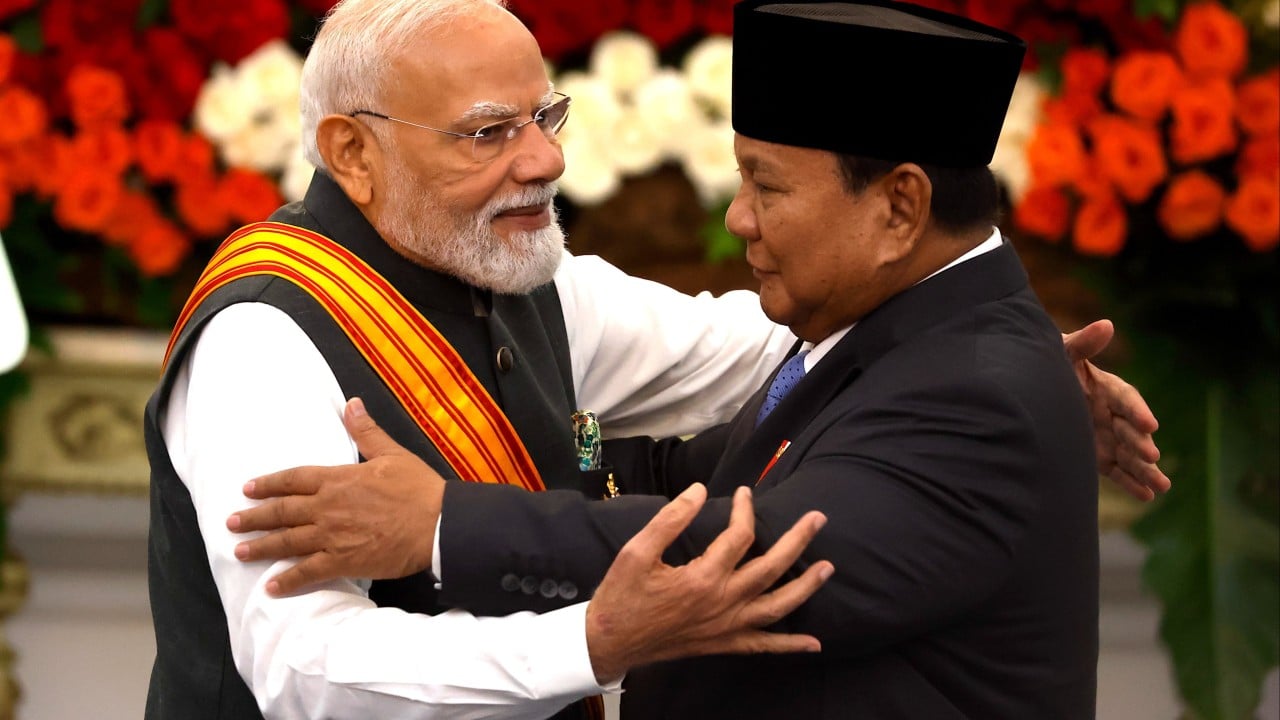
India just pulled off a massive strategic play in Southeast Asia. During a three-day state visit to Jakarta, Indian Prime Minister Narendra Modi and Indonesian President Prabowo Subianto finalized a blockbuster defense package. India will supply Indonesia with two batteries of BrahMos supersonic cruise missiles alongside Astra beyond-visual-range air-to-air missiles.
Most news reports treat this as a standard bilateral arms deal. They're missing the bigger picture. This isn't just about weapon sales or balancing defense trade books. It's a calculated redrawing of the Indo-Pacific maritime security map. Indonesia is now the third ASEAN nation to buy the BrahMos, following the Philippines and Vietnam. If you look closely at the geography, New Delhi is systematically arming the states surrounding the South China Sea.
What Indonesia Is Actually Buying
Let's clear up the technical details first. The headliner here is the BrahMos supersonic cruise missile system. Jointly developed by India and Russia, the BrahMos travels at roughly Mach 3. It hugs the sea surface or terrain, which means it pops up on enemy radar only when it's practically too late to react. In its final seconds, it executes erratic, S-shaped maneuvers to evade interception systems.
The initial deal includes two batteries of the BrahMos system, complete with launchers, radar units, and support vehicles.
The second half of the package is the Astra missile. This radar-guided, beyond-visual-range weapon can hit targets around 100 kilometers away. It marks the first-ever export of the Astra system. It's a clever logistical fit for Indonesia, since the Astra can integrate with the Russian-origin Sukhoi fighters that the Indonesian Air Force already flies.
Total cost estimates sit between $200 million and $350 million for the missile components alone, with broader package figures tracking higher when factoring in long-term technical support and training infrastructure.
The Strategic Geography You Cannot Ignore
Don't look at this deal in isolation. Look at a map. Indonesia's Aceh province sits just 150 kilometers away from India's southernmost point in the Andaman and Nicobar Islands. They are maritime neighbors guarding the western entrance to the Malacca Strait—the world's most critical choke point for global trade and energy shipping.
Alongside the missile announcement, Modi and Prabowo agreed to fast-track the joint development of Sabang Port in Indonesia. Sabang is located on Weh Island, right at the mouth of the strait. By embedding itself in Sabang’s infrastructure, India secures a forward eye on the shipping lanes that feed East Asia.
To make this coordination permanent, Indonesia is embedding a liaison officer directly into the Indian Navy's Information Fusion Centre in Gurugram. This means real-time maritime tracking and data sharing. It turns casual defense cooperation into an integrated monitoring network.
The Invisible Factor in the Indo-Pacific
Every analyst wants to claim this is entirely about Beijing. It's a bit more nuanced than that. Neither New Delhi nor Jakarta mentioned China by name in their official joint press statements. They talked about "global turmoil," "dialogue," and "peace and prosperity in the Indo-Pacific".
But let's be real. Indonesia has faced years of repeated friction with Chinese coast guard and fishing fleets dipping into its exclusive economic zone around the Natuna Islands. By placing Mach 3 anti-ship missiles on its coastline, Jakarta shifts from passive diplomatic protesting to credible, hard-power deterrence.
For India, this is the ultimate realization of its Act East policy. For decades, India was a massive weapons importer. Now, it's transforming into a regional security provider. By supplying high-end hardware to the Philippines, Vietnam, and now Indonesia, New Delhi is creating a chain of well-armed, independent partners across Southeast Asia. It forces any aggressive regional power to think twice before shifting the status quo.
Moving Beyond Hardware
The agreements signed in Jakarta prove this partnership is digging deeper roots than just military hardware. The two nations signed contracts spanning critical minerals, supply chains, and technology.
- Critical Minerals: Indian firms are investing directly in Indonesian processing facilities for nickel, stainless steel, and rare earth permanent magnets.
- Space Exploration: The Indian Space Research Organisation (ISRO) is stepping in to build out Indonesia’s domestic space sector through joint research and capacity building.
- Digital Integration: Indonesia will launch the Indonesia Open Network, utilizing India’s open-source digital commerce architecture, while working to integrate India's UPI payment system for cross-border transactions.
What Happens Next
If you're tracking defense movements or regional supply chains, keep your eyes on these immediate indicators:
- Monitor the integration timelines: Watch how quickly the Astra missiles are configured onto Indonesia’s Sukhoi fleet, which will serve as a test case for future Indian defense exports to countries using Russian hardware.
- Track the Sabang port development: Watch for construction milestones at the port facility, as this will reveal the true depth of India's access to the Malacca Strait choke point.
- Watch the next buyers: BrahMos Aerospace is already negotiating with at least half a dozen other nations across the Middle East and Africa. The Indonesian deal validates India's capacity to deliver complex systems to major regional powers.