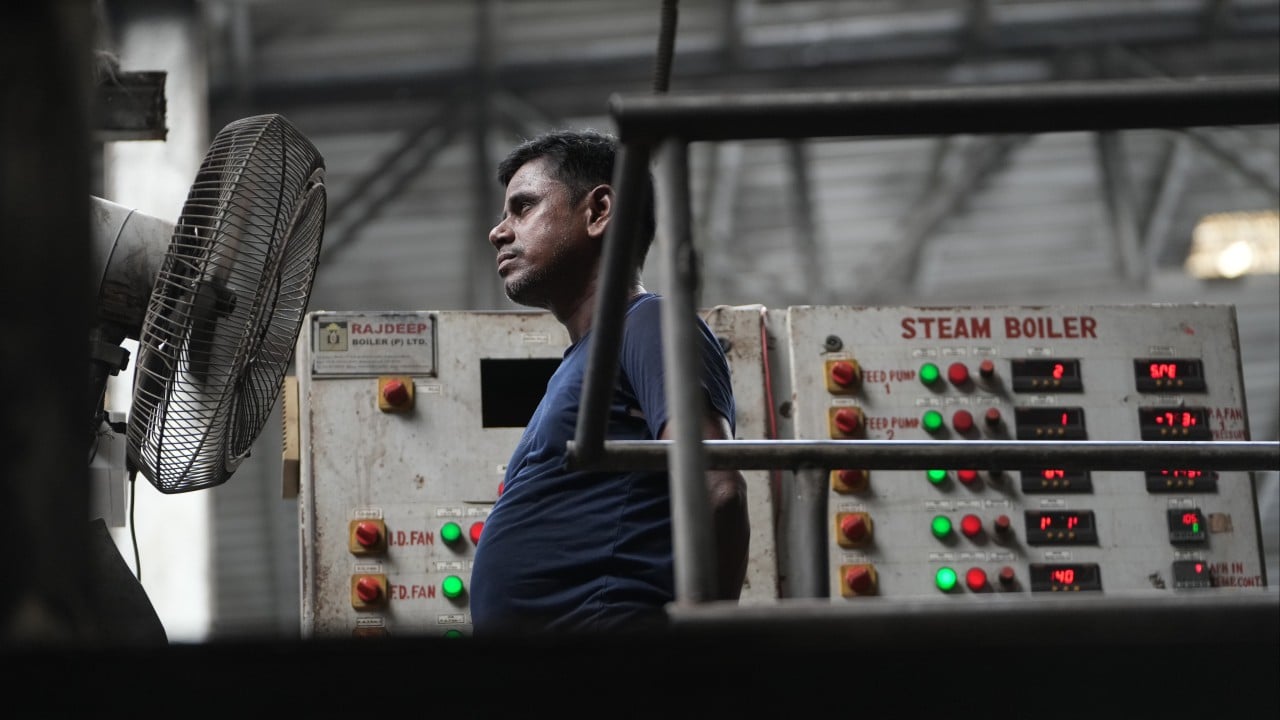
India wants to be the world's next manufacturing powerhouse. It's an open secret. For years, the global narrative has framed this ambition as a strict geopolitical choice. On one side sits Japan, the trusted democratic partner funneling billions into high-speed rail, industrial corridors, and advanced technology. On the other side sits China, the undisputed factory of the world, offering dirt-cheap components, unparalleled supply chains, and deep manufacturing expertise.
The common consensus says New Delhi must choose. Align with Tokyo to build a high-tech, secure future, or swallow its pride and rely on Beijing to scale up quickly.
That narrative is wrong. It's a false binary that ignores how modern global supply chains actually work.
If India wants to scale its factory floors, it doesn't need to pick a side. In fact, trying to choose between Japanese capital and Chinese supply chains is a fast track to industrial stagnation. Success requires playing both sides to its own advantage.
The Mirage of the Clean Break
The geopolitical tension between New Delhi and Beijing is real. Border disputes and strategic rivalry make economic dependence on China a tough pill to swallow. It makes sense that India has rolled out strict scrutiny on Chinese investments and banned hundreds of Chinese apps over the last few years.
But political rhetoric always hits a wall when it meets the reality of the factory floor.
Look at the numbers. Despite political frostiness, India's trade deficit with China crossed $85 billion in recent trade cycles. Why? Because Indian factories cannot survive without Chinese inputs. Whether it's active pharmaceutical ingredients (APIs) for Delhi’s massive drug industry, solar cells for its green energy transition, or components for smartphones, China is the default supplier.
You can't just build a smartphone ecosystem from scratch. When Apple suppliers like Foxconn expand in Tamil Nadu or Karnataka, they aren't bringing every single component sub-assembly with them from Taiwan or the US. They import the vast majority of the intermediate parts—the screws, the printed circuit boards, the camera modules—directly from mainland China.
A clean break from China isn't just difficult. It's economically impossible if India wants to keep its growth rate above 7%.
Why Japanese Capital Needs Chinese Parts
This brings us to the recent high-profile summit in New Delhi between Prime Minister Narendra Modi and his Japanese counterpart, Sanae Takaichi. The two leaders signed ambitious agreements covering semiconductors, critical minerals, and artificial intelligence. Beijing immediately pushed back, warning against "exclusive small groupings."
Tokyo has been a massive champion of India’s growth. Between 2000 and 2026, cumulative Japanese foreign direct investment into India surpassed $45 billion. Japanese money built the Delhi-Mumbai Industrial Corridor and funded metro systems across the country.
But here is what the analysts miss: Japanese investments in India cannot scale without Chinese components.
When a Japanese automotive giant or electronics firm sets up a massive manufacturing plant in India, they bring high-end engineering, automated machinery, and quality control systems. They don't bring the low-margin, high-volume component supply chains that China mastered over thirty years. If India locks out Chinese technicians, delays visas for Chinese engineers, or blocks critical component imports, those Japanese-funded factories stall.
I’ve seen this play out in industrial hubs like Noida and Chennai. A factory gets the green light, the Japanese capital is cleared, the machinery is imported, but the assembly line sits idle for weeks because an essential sub-assembly from Shenzhen is stuck at an Indian port due to regulatory red tape.
To make Japanese capital work, India needs Chinese speed and scale.
The MSME Bridge to Real Independence
So how does India escape this trap? The answer isn't a grand geopolitical alliance. It happens at the grassroots level, specifically within India’s massive network of Micro, Small, and Medium Enterprises (MSMEs).
According to data from the Economic Survey, India houses over 74 million MSMEs, employing roughly 328 million people. They contribute over 35% of the country's manufacturing output. Right now, most of these small businesses lack the technology to compete globally. They rely on cheap Chinese machinery and raw materials to make low-value goods.
The real opportunity lies in shifting from a buyer-seller relationship with China to a technical partnership with Japan.
Instead of focusing exclusively on massive billion-dollar projects, India needs to facilitate direct, small-scale joint ventures between Japanese MSMEs and Indian MSMEs. Japanese small businesses possess incredible, hyper-specialized manufacturing techniques but face a shrinking, aging domestic market. Indian MSMEs have the labor, the ambition, and access to a booming domestic market, but lack the technical precision.
By pairing a precision toolmaker from Osaka with a foundry owner in Pune, India can steadily upgrade its local supplier base. Over time, these upgraded local suppliers can replace the intermediate components currently imported from China.
It’s a slow process. It takes years of training, capital investment, and quality control. But it is the only sustainable way to build genuine manufacturing depth.
Playing the Pragmatic Middle
Instead of choosing sides, India’s strategy should resemble a pragmatic balancing act. New Delhi needs to use both superpowers for what they do best:
- Absorb Japanese capital and standards: Use Japanese funds to build out deep infrastructure, logistics networks, and high-tech sectors like semiconductor packaging and green energy.
- Utilize Chinese supply chains to scale: Treat Chinese components as the necessary fuel to jumpstart the manufacturing engine. Allow selective, fast-tracked visas for Chinese technicians who are essential for setting up advanced machinery on Indian factory floors.
- Focus on local value addition: Force foreign companies setting up shop in India to source a growing percentage of their parts locally over a strict timeline.
This isn't about being disloyal to strategic partners or coddling geopolitical rivals. It's about recognizing that in the modern industrial landscape, supply chains are hyper-connected.
Next Steps for Indian Manufacturers
If you're managing an industrial firm or investing in India's manufacturing expansion, waiting for a perfect geopolitical resolution is a losing strategy. Here is how to navigate this reality right now:
- Map your tier-2 and tier-3 dependencies: Look deep into your supply chain. If your primary supplier is in India or Japan, find out where they get their raw materials and sub-components. If it leads back to China, plan for regulatory friction.
- Pursue Japanese technical collaborations: Don't just look for western or domestic tech. Actively seek out smaller Japanese firms for joint ventures that focus on manufacturing process efficiency and specialized tooling.
- Build a regulatory buffer: Accept that import clearances for Chinese goods will remain volatile. Increase your inventory buffers for critical components to avoid assembly line shutdowns when political tensions flare.
India doesn't need to choose between the Japanese model of precision and capital or the Chinese model of raw scale. The winner will be the country that successfully blends both.