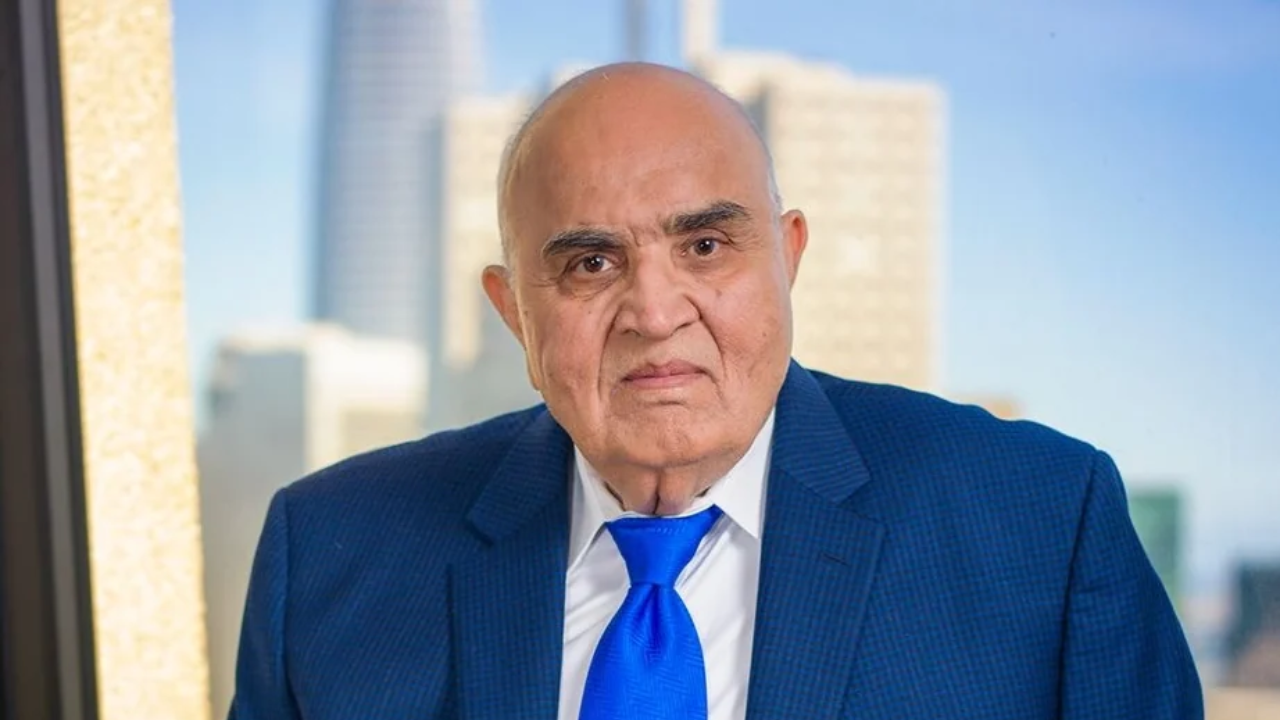
You build a company from scratch, take on years of financial stress, and right when it's ready to ring the bell on Wall Street, the board taps someone else to wear the CEO crown. That isn't a hypothetical plot twist. Venture capitalist and entrepreneur Kanwal Rekhi recently brought that exact scenario back into public view when he recalled being replaced as CEO of Excelan right before its 1987 public listing because board members doubted Wall Street would accept an Indian in the top spot.
The story hits a nerve because it exposes a massive contradiction in American tech. For decades, Indian engineers and founders kept the code running, the architectures scaling, and the products shipping. Yet when money managers and boards looked for the public face of a company, they often defaulted to a narrow mental template of who looked like a "real" chief executive.
Today, with Indian-origin executives running major tech giants and shaping global markets, that old bias can look like ancient history. Honestly, it's not. The assumptions behind that boardroom move still echo in how founders get evaluated, how boards are built, and who gets pushed aside when companies scale up.
What Kanwal Rekhi's Story Actually Reveals About Early Tech Boards
When Rekhi spoke in a street interview covered by outlets like The Times of India and Hindustan Times, he didn't paint his life as an overnight fairy tale. He arrived in the United States in 1967 with practically nothing, washed dishes in Chicago for $1.25 an hour, earned an electrical engineering degree from IIT Bombay and a master's from Michigan Technological University, and went on to launch Excelan in 1982. After Excelan's 1987 IPO and its 1989 merger with Novell—where he served on the board and as executive vice-president and CTO—he later invested in around 200 startups across firms like Inventus Capital Partners and SV Quad.
Still, the detail that sticks with people is the pre-IPO swap. The company was ready to go public, yet the board worried institutional buyers wouldn't warm up to an Indian CEO. In their minds, Rekhi was the technical brains, not the Wall Street pitchman.
That distinction—"techie" versus "CEO"—sounds harmless on paper until you watch how it plays out in practice. Technical founders get praised for building the engine, while outsiders get handed the steering wheel right before the biggest value event. It's a classic bait-and-switch that plenty of technical founders across backgrounds have experienced, though immigrant founders often faced an extra layer of cultural skepticism on top of standard boardroom politics.
How the "Techie Not CEO" Myth Took Root in Silicon Valley
Why did boards in the 1980s and 1990s assume institutional investors preferred a familiar executive profile? A big part of it comes down to risk projection. Boards are terrified of spooking public-market buyers during an IPO roadshow. When a board member thinks, Wall Street might not buy this, they're often projecting their own comfort zone onto institutional investors.
There was also a pipeline perception problem. High-skilled immigration brought thousands of engineers, researchers, and technical specialists into US tech companies and graduate programs. Because so many Indians entered through engineering and technical tracks, lazy pattern-matching turned a demographic concentration into a career ceiling. If you mostly see people of a certain background writing code or managing engineering teams, some decision-makers subconsciously treat that lane as their natural limit.
Even more interesting is what happened next over the decades. While early-stage boards sometimes sidelined technical founders before an IPO, later waves of leaders proved that deep technical fluency wasn't a handicap at all. In fact, running complex technology companies often requires someone who actually understands the product, the architecture, and the engineering trade-offs rather than treating software like a black box.
Why Technical Founders Still Get Pushed Aside Before Big Milestones
Don't kid yourself into thinking this only happens to immigrant founders or only happened in the 1980s. Boards routinely replace or sideline founders before IPOs, major acquisitions, or hyper-growth phases. Sometimes the founder genuinely doesn't want the public-company grind, investor relations calls, and quarterly compliance circus. Other times, investors want a "professional CEO" they feel they can control or who speaks fluent institutional finance.
Where bias creeps in is when competence gets confused with style. A founder who doesn't fit a loud, extroverted, or culturally familiar executive mold gets labeled "too technical" or "not commercial enough," even when they built the product and closed early customers. Conversely, a polished executive who talks a great game in board meetings can look "CEO-ready" without knowing how to ship a resilient product.
From Outcast to Corner Office: What Changed and What Didn't
Look at the broader arc of leadership in tech over the last couple of decades, and the contrast is striking. Indian-origin executives now sit at the helm of massive global corporations, while Indian-American founders and investors play a central role in venture capital and startup ecosystems. As Inc. has pointed out in coverage of Asian-American leadership in major tech companies, high-profile top jobs don't automatically erase every barrier underneath.
Two very different things can be true at once. One, the old excuse that "investors won't accept an Indian CEO" looks pretty laughable today. Two, representation at the very top of a few mega-caps doesn't mean every early-stage founder, mid-level manager, or emerging entrepreneur gets a fair shake.
As Rekhi noted in his remarks, self-doubt can actually be useful when it pushes you to spot blind spots and improve—provided it doesn't stop you from stepping into the arena in the first place. His line that it's not a shame to try and fail, only not to try at all, cuts straight through the fear that holds a lot of first-time builders back.
What People Also Ask About Founders and Pre-IPO CEO Swaps
Do boards really replace founders right before an IPO?
Yes, it happens more often than people talk about openly. Boards may bring in an experienced public-company CEO to lead the roadshow, manage Wall Street expectations, or handle post-IPO reporting. Sometimes that's a smart operational move; other times, it's an excuse to push out a founder whose style doesn't match the board's preferences.
Is the "techie vs. leader" stereotype still alive today?
Less overtly than in the 1980s, sure, yet it still shows up in subtle ways. Technical founders still get questioned on go-to-market, sales, or executive presence more often than non-technical operators get questioned on product depth.
Can a founder keep the CEO title and still take a company public?
Plenty do, especially when they retain strong voting control, build investor trust early, and surround themselves with seasoned operators—like a strong CFO or chief revenue officer—who fill real operational gaps instead of taking over the whole narrative.
Practical Next Steps If You're Building or Scaling a Startup
If you're a technical founder—or any founder trying to make sure you aren't sidelined when your company hits real traction—waiting until term-sheet day or IPO prep to protect your seat is way too late.
- Audit your cap table and governance early. Understand board composition, voting rights, protective provisions, and founder vesting before taking big institutional checks. A friendly investor today isn't guaranteed to vote your way under pressure three years from now.
- Build commercial proof, not just great tech. Investors love great engineering, right up until they wonder who's going to sell it at scale. Own key customer conversations, pricing decisions, and revenue metrics yourself so nobody can credibly paint you as "just the techie."
- Hire complementary operators instead of handing away the wheel. If you hate finance, compliance, or enterprise sales, hire top-tier functional leaders under you rather than assuming you have to step aside entirely just to look "institutional."
- Pick investors who back you, not just your code. Before signing with a fund or angel group, talk to other founders they've backed—especially ones who hit rough patches or leadership transitions. Watch how those investors behave when things get messy, not when everything is going up and to the right.
- Keep shipping regardless of the noise. Doubt is normal, external skepticism is cheap, and boardroom politics are part of the game. Focus on solving a real customer problem, building durable value, and giving yourself a genuine shot instead of talking yourself out of starting.