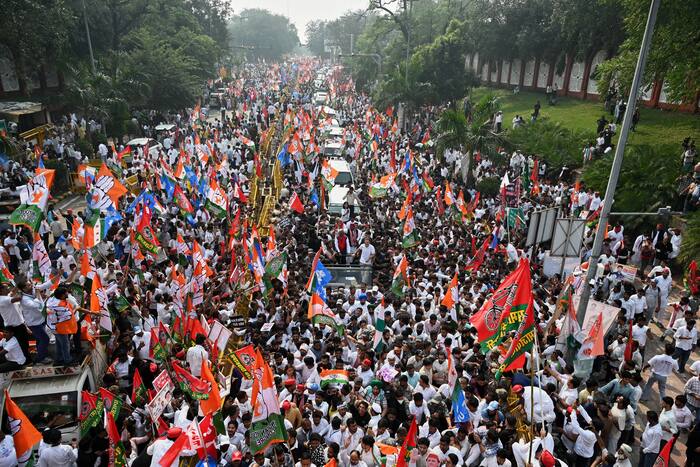
Democracy looks messy when thousands fill the streets to question the people counting the votes. That is exactly what is happening in India right now. Opposition parties from the INDIA bloc have taken their grievances directly to the capital, staging high-stakes protests targeting Chief Election Commissioner Gyanesh Kumar.
If you think this is just standard political theater, think again. The tension surrounding India's electoral apparatus has reached a boiling point, and the fallout will shape the political roadmap for years.
What Sparked the Chalo Dilli March
The trigger for these massive demonstrations isn't small. Opposition leaders and civil society groups organized the high-profile "Chalo Dilli" (Let's Go to Delhi) march toward Ramlila Maidan to protest alleged structural irregularities in voter lists and the administration of recent polls.
Critics argue that systematic voter roll manipulation and selective deletions are skewing democratic outcomes. Specifically, opposition figures claim these deletions disproportionately impact minority populations and marginalized communities who traditionally stand outside the ruling party's core demographic base.
Security forces turned parts of the capital into a fortress ahead of the march. Barricades went up, traffic ground to a halt, and police deployment hit maximum capacity. The government and the Election Commission have forcefully rejected these accusations, maintaining that the electoral machinery operates with absolute independence and strict constitutional integrity.
Why the Election Commission is the Ultimate Target
In a multi-party parliamentary democracy, the referee is supposed to stay above the fray. When politicians start targeting the referee instead of each other, the system is under stress.
The Election Commission of India holds immense structural power. Controlling how boundaries are drawn, how rolls are updated, and how electronic voting machines are managed puts the Commission right in the line of fire whenever election results disappoint major contenders.
When you look closely at why opposition groups are focusing on the Chief Election Commissioner rather than just legislative opponents, a clear strategy emerges:
- Delegitimizing perceived institutional bias before future election cycles.
- Mobilizing urban youth and grassroots coalitions through high-visibility street protests.
- Demanding immediate administrative transparency and independent oversight reforms.
The Broader Political Chessboard
This current wave of unrest involves a wide coalition. It is not just traditional parliamentary heavyweights like the Indian National Congress driving the narrative; student organizations, regional factions, and civil society groups have piled into the alliance.
The ruling party dismisses these rallies as desperate stunts by politicians who cannot accept democratic defeats at the ballot box. They point to legal precedents and constitutional safeguards, arguing that relentless attacks on independent institutions damage public trust far more than any administrative hiccup ever could.
Yet, public trust cuts both ways. Once the fairness of an election administration becomes a partisan wedge issue, convincing the losing side that a vote was clean becomes nearly impossible.
What Happens Next on the Ground
Protests at Ramlila Maidan rarely stay contained to one afternoon. The political opposition is betting that sustained street pressure will force structural concessions, compel closer judicial scrutiny, and keep institutional accountability at the absolute top of the national news cycle.
The government has chosen a hardline containment approach, relying on heavy policing to keep large crowds restricted. But optics matter immensely in Indian politics. Every image of blocked streets and heavy-handed security creates a new narrative about democratic friction.
Watch how the judicial system responds. Multiple petitions challenging various aspects of poll administration are already winding their way through legal channels. If courts step in to demand changes, the opposition wins a massive strategic victory. If courts validate the current processes, the political pressure shifts right back to how opposition parties plan to win voters over rather than fighting the referees.
Keep your eyes on the upcoming regional legislative sessions. That is where this street energy will transform into legislative gridlock.