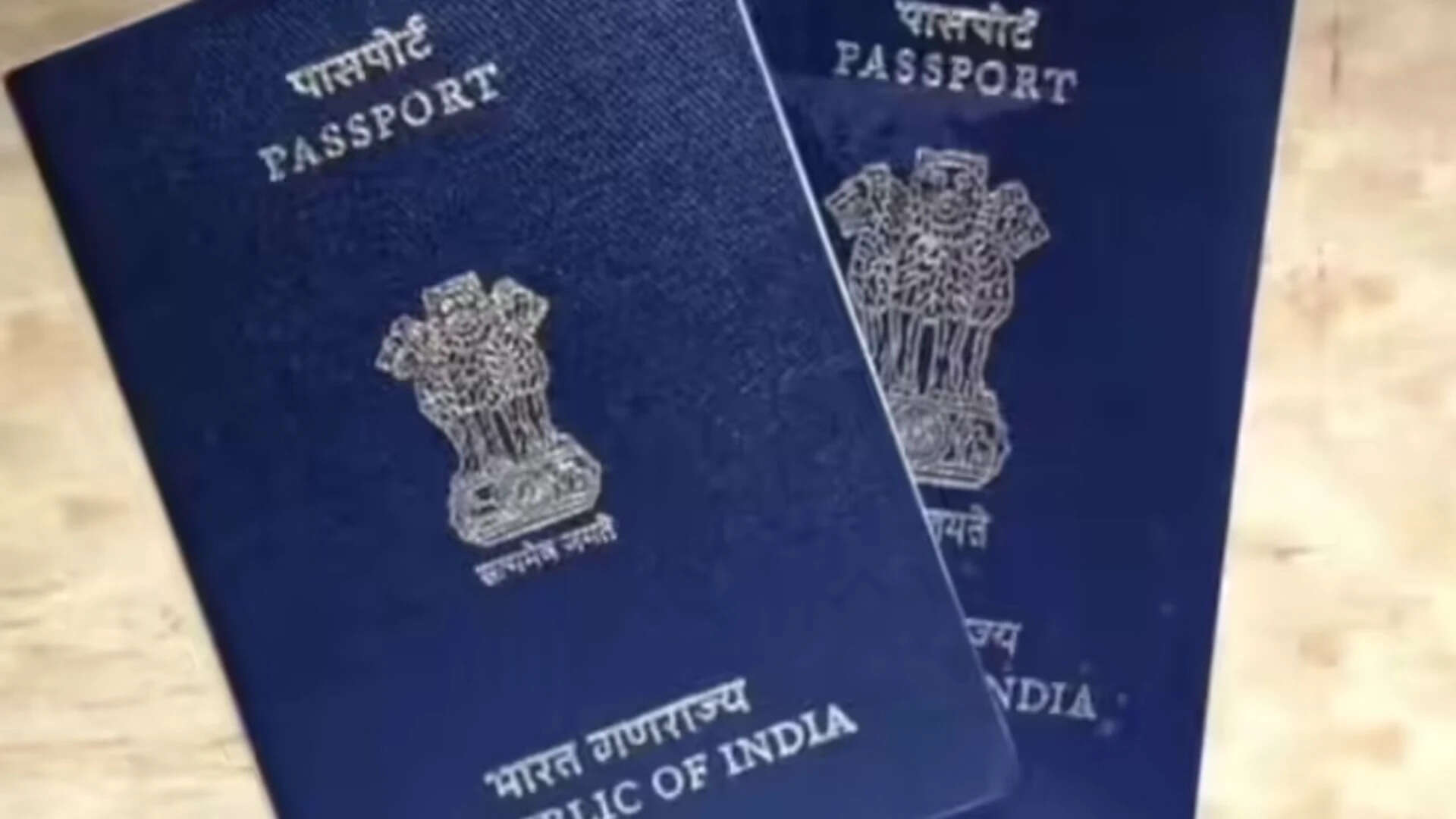
If you are one of the 4.5 million Indian expats living in the United Arab Emirates and your passport is expiring soon, you have a massive problem. The smooth, outsourced system you took for granted for nearly two decades has vanished overnight. Instead of booking a comfortable appointment at a neighborhood center, you now face massive lines stretching outside the Indian Embassy in Abu Dhabi and the Consulate General of India in Dubai. It is a messy throwback to 2009.
For the first time in 17 years, Indian missions are directly handling thousands of frantic walk-in applicants. The timing could not be worse. The peak summer travel season is here. Families are trying to fly home for school holidays. Workers need to renew their residency visas. Yet, the entire machinery responsible for handling Indian passport renewals in the UAE has ground to a sudden, painful halt due to corporate legal warfare playing out thousands of miles away in New Delhi.
The Legal Battle Holding Your Passport Hostage
You might wonder how a routine corporate contract update managed to cause widespread panic in Dubai and Abu Dhabi. It comes down to a messy legal fight. The multi-year contracts with the previous outsourcing giants, BLS International and SGIVS Global, expired at the end of June. A new vendor, Alhind Tours and Travels LLC, won the fresh government tender by offering the lowest financial bid. They planned to launch 16 unified Indian Consular Application Centres across all seven emirates on July 1.
That plan never happened.
Two disappointed rival bidders, E Trav Tech and Verasys, rushed to the Delhi High Court. They alleged that the technical evaluation stage unfairly disqualified them. The legal fight escalated rapidly, reaching the Supreme Court of India, which ordered a strict status quo on June 24 and sent the case back to the high court for an urgent review. Because the courts have not issued a final decision, Alhind cannot legally open its doors or process a single document.
This left the Indian government with two choices. They could either freeze all consular services entirely or force embassy diplomats and clerks to handle the clerical work themselves. They chose the latter. The resulting transition has created a logistical nightmare for ordinary citizens caught in the middle.
What the Disruption Looks Like on the Ground
Walk-in services are now the mandatory rule. The Indian Embassy in Abu Dhabi and the Consulate General in Dubai opened their own gates for general consular duties on July 2. Forget about booking a time slot online. The system operates strictly on a first-come, first-served basis. The operational window is brutal: Monday to Saturday, from 9:00 AM to 12:30 PM only.
The crowd sizes are staggering. More than 1,400 anxious people swarmed the Dubai consulate on a single Friday. The sheer volume of people trying to enter the building forced officials to completely rethink their security protocols.
To prevent total chaos, the consulate deployed over 100 staff members away from their regular diplomatic duties just to handle the paperwork backlog. They set up giant outdoor waiting tents to shield people from the intense July heat, established token numbering systems, and distributed free tea and snacks to exhausted families. They even built temporary breastfeeding facilities for mothers traveling with infants. Security teams are enforcing a strict rule: only the actual applicant can enter the building. If you are bringing friends or relatives for moral support, they will be left waiting outside the gates in the sun. The only exception is for parents accompanying underage children.
The Sixty Percent Fee Hike Rubbing Salt in the Wound
As if standing in line for hours during a summer heatwave was not enough, expats received another nasty surprise. A sweeping global revision of Indian passport service charges took effect on July 1. This marks the first major price increase since 2012, aiming to establish uniform costs across all international Indian missions.
The price jump is significant. A standard 36-page adult passport renewal that previously cost Dh285 now costs Dh450. That is an immediate 60% increase.
Standard Adult Passport Renewal Fee Change:
Old Fee: Dh285
New Fee: Dh450 (60% increase)
This sudden price spike has triggered sharp criticism from community leaders and social workers. Blue-collar laborers make up roughly 60% to 70% of the Indian population in the UAE. Many of these workers earn modest monthly salaries. Spending Dh450 unexpectedly damages their monthly budgets. Community volunteers are actively petitioning the Ministry of External Affairs in New Delhi to introduce a 50% fee concession for workers holding Emigration Clearance Required passports. Whether the government will listen remains highly uncertain.
Adding to the frustration is a rigid payment rule. The embassy and consulate buildings do not have the infrastructure to process credit cards, debit cards, or digital bank transfers for these walk-in crowds. You must pay in cash. Officials are demanding that applicants bring the exact change because the counters run out of smaller bills almost instantly. If you turn up with a large denomination note and no change, you risk getting sent to the back of the queue.
Essential Survival Steps for Expats Facing Renewal
If your passport expires within the next few months, do not wait for the legal battle to end. You must navigate the current system carefully. Following these steps will save you from getting turned away at the gates.
- Print everything before you leave home. Do not assume there will be a working copy machine or internet cafe near the mission. Fill out the official online application form via the government passport portal, print it, and bring two recent, clear color photographs measuring exactly 51mm by 51mm. The photos must have a plain white background, and you must wear a dark dress. Your ears, eyes, and forehead must be fully visible with no shadows.
- Gather every original document. Bring your current passport, clear photocopies of the first and last pages, and your valid Emirates ID card. If you are renewing a child's passport, both parents must present their original passports and sign the declaration forms in person.
- Arrive early with exact cash. The gates open at 9:00 AM, but crowds begin gathering hours before sunrise. Calculate your exact fee beforehand, factor in the new Dh450 baseline, and carry the precise amount in dirhams.
The Frozen Network Waiting in the Wings
The tragic irony of this crisis is that the physical solutions are already built. Alhind has fully completed its operational setup. The company established 16 modern Indian Consular Application Centres located strategically across the seven emirates.
These facilities sit empty in major hubs including Bur Dubai, Dubai Investment Park, Al Danah, Al Reem, Musaffah, Al Ain, Sharjah's Al Majaz and Rolla districts, Ajman, Fujairah, Ras Al Khaimah, Umm Al Quwain, Khorfakkan, Kalba, Madinat Zayed, and Ghayathi. They feature modern counters, digital queuing infrastructure, and payment terminals. They simply cannot open until the Delhi High Court removes the legal blockade.
For urgent inquiries or extreme emergencies, do not visit the old, shuttered BLS centers. Use the official emergency communication channels set up by the missions. You can call the toll-free number at 800 46342, send a WhatsApp message to +971 54 309 0571, or send an urgent email to pbsk.dubai@mea.gov.in. Keep your documents ready, watch the official social media channels of the Indian Embassy in Abu Dhabi for daily operational updates, and prepare for a long wait if you visit the missions this week.