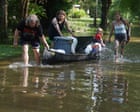
You smell the bleach and damp drywall the second you step onto Main Street in Cambridge City. Ten days after ten inches of rain turned Crietz Creek into an unstoppable wall of water, life isn't returning to normal. It’s crawling. Cars sit abandoned in public parks. Dumpsters overflow with ruined sofas, mattresses, and family photo albums destroyed by five feet of indoor water. Red spray paint marks the homes cleared by rescue teams.
This isn't an isolated anomaly. Recent catastrophic flooding across central and eastern Indiana wrecked critical infrastructure, left over a thousand people homeless, and claimed seven lives. Yet, look past the mud-soaked streets and you find a stark reality. The slow, painful recovery isn't just a byproduct of freak weather. It’s the direct result of years of legislative underfunding and political gridlock that left small towns entirely defenseless.
The Cost of Ignoring State Infrastructure
State leaders estimate the total damage from the August storms hits roughly $5 billion. How did a regional weather event spiral into a multi-billion dollar crisis? Simple neglect.
While neighboring states aggressively pumped money into environmental protection over the last decade, Indiana slashed funding for its state environmental agencies by nearly 20% between 2010 and 2024. Michigan and Ohio went the opposite route, boosting their resources to handle changing weather patterns.
When you strip funding from the agencies tasked with managing watersheds and zoning oversight, you get what happened here. Small communities like Cambridge City feature low median household incomes. Most residents can't afford private flood insurance, especially when properties sit in high-risk zones where premiums price working families out completely.
When Politics Stalls Emergency Aid
Disaster relief requires coordination between local, state, and federal offices. Right now, that machinery is completely jammed.
Governor Mike Braun submitted a federal disaster declaration to FEMA, but federal approval crawls at a snail's pace. Meanwhile, the initial federal emergency aid cap sits at a meager $5 million—a drop in the bucket compared to the actual destruction.
Why is the response so sluggish? Politics plays an outsized role. The state legislature maintains a Republican supermajority that has repeatedly blocked climate solutions task forces and voted against proactive environmental planning. Indiana remains one of the few states in the country without a formal climate action plan.
When local leaders ask for help, they get silence or red tape. Residents like Rick Keasling, whose dog had to swim to safety while his ground floor was completely submerged, are left listening to industrial dehumidifiers drone on in empty houses. Small business owners trying to reopen antique shops find themselves staring at empty streets because visitors assume the whole town is closed.
What Real Recovery Actually Requires
Fixing this mess takes more than a round of federal grants or a quick photo opportunity for politicians. It demands a hard look at how midwestern states handle aging infrastructure in an era of heavier, more volatile rainfall.
You cannot pave over natural floodplains and ignore zoning laws without paying a heavy price later. State lawmakers need to stop treating climate adaptation as a partisan buzzword and start treating it like public safety. Until local officials prioritize upgrading drainage systems and funding emergency reserves before the next storm hits, towns like Cambridge City will keep waiting in the mud for help that arrives too late.