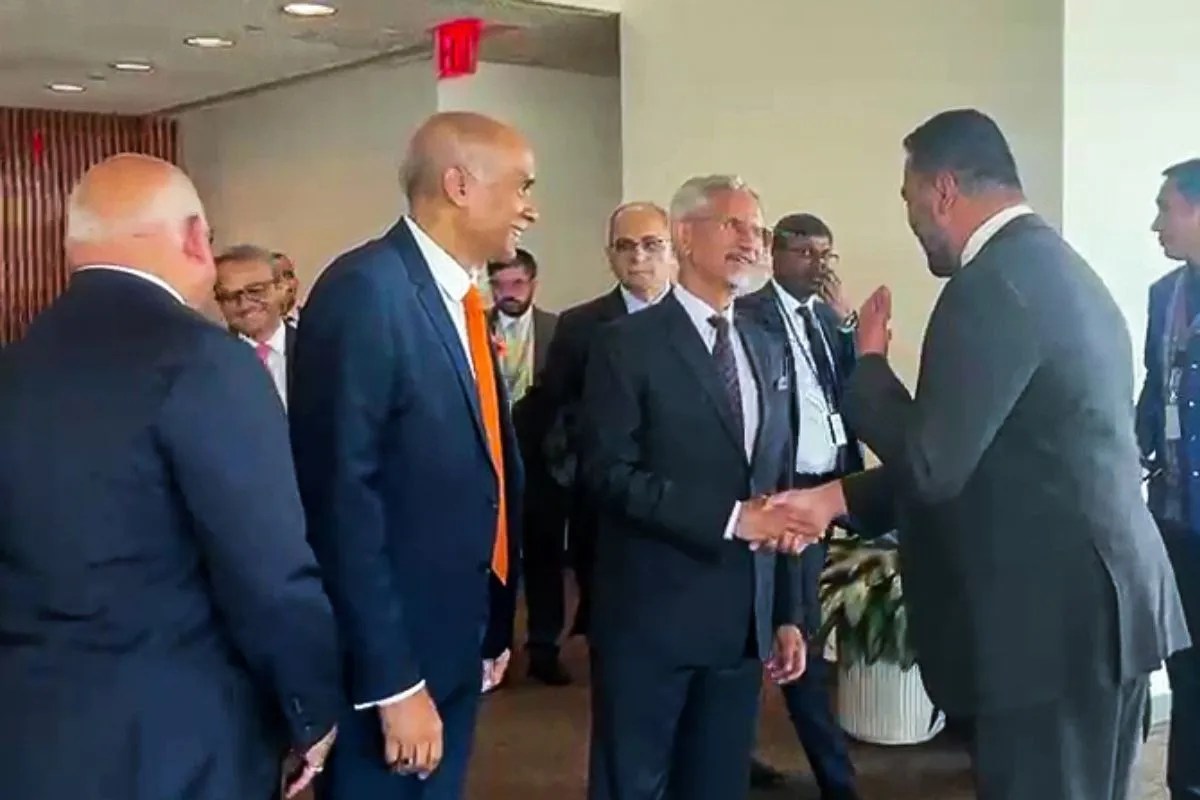
India wants back in the room where the biggest global decisions are made. External Affairs Minister S. Jaishankar officially launched the country's campaign for a non-permanent seat on the United Nations Security Council for the 2028-29 term. This happened at the UN headquarters in New York during a gathering packed with foreign diplomats, ambassadors, and officials.
If you think this is just another routine diplomatic bid, you're missing the bigger picture. The global order is fracturing right now. The ongoing Ukraine war, the destructive Gaza conflict, and escalating US-Israel tensions involving Iran have pushed the UN into a corner. The Security Council often looks like a helpless bystander. India knows this. By launching a campaign built around the concept of peace and global trust, New Delhi is making a play to become the ultimate bridge builder between deeply divided global factions.
The vote will happen in June 2027. It won't be a walk in the park. India is going head-to-head with Tajikistan for the single available seat in the Asia-Pacific Group category. This means Indian diplomats are entering an intense period of global campaigning to secure the required two-thirds majority from the UN General Assembly.
The core philosophy behind the SHANTI campaign
At the center of this diplomatic push is what Jaishankar termed the SHANTI vision. In Sanskrit and Hindi, shanti means peace. But New Delhi has turned this ancient word into a modern diplomatic policy framework. The acronym stands for Securing Comprehensive Advancement through Norms, Trust, and Integrity.
The strategy addresses a major problem in global politics right now. The world is too interconnected to survive in a fragmented state. Interdependent supply chains, digital communications, and shared economic networks mean that a conflict in one part of the world creates immediate pain everywhere else. You see it in high food prices and broken energy markets.
India's pitch is simple. Global advancement can only happen if countries actually respect international rules and trust one another. The strategy is built on participation rather than domination. Instead of a world run by a handful of major powers dictating terms to everyone else, New Delhi wants a system based on the sovereign equality of nations.
Why India is betting heavily on its peacekeeping credentials
When India tells the world it knows how to keep the peace, it has the data to back it up. Jaishankar reminded the UN audience of a massive historical fact. Since the United Nations was founded, India has deployed nearly 300,000 personnel across roughly 50 separate peacekeeping missions worldwide. That is a massive footprint.
Right now, about 4,300 Indian soldiers, police officers, and experts are deployed across 10 of the 11 active UN peacekeeping operations globally. Most of these personnel are stationed in volatile regions across Africa. Very few countries can match that kind of hands-on experience in managing active conflict zones.
New Delhi isn't just offering raw manpower for the future. The campaign outlines a clear plan to modernize these operations. India is pushing for future-ready peacekeeping. This means giving peacekeepers better equipment, using modern technology to protect troops on the ground, and ensuring that UN mandates match the actual financial resources available. India is also making the Women, Peace, and Security agenda a core priority, pledging to deploy more female peacekeepers to conflict zones where they can build better trust with local communities.
Securing global oceans and fighting maritime piracy
If you look at where the global economy is vulnerable, it is on the water. Maritime lifelines are under constant threat from piracy, illegal trafficking, and regional conflicts. The recent instability in the Gulf has highlighted the severe dangers faced by everyday merchant sailors.
India is positioning itself as a primary guardian of the maritime commons. Indian naval forces are already actively protecting crucial sea lanes across the Indo-Pacific region. They operate regularly in the northern and southern Arabian Sea, the Gulf of Aden, the Malacca Straits, and the Gulf of Guinea.
During its proposed UNSC term, India plans to force the Council to focus heavily on the UN Convention on the Law of the Sea. New Delhi wants a free, open, and rules-based maritime order. When piracy spikes or ships come under attack, India wants coordinated, capability-based international cooperation rather than unilateral actions by a few powerful states.
Choking the flow of global terror money
Terrorism remains a massive challenge, but the international community often handles it poorly. For decades, global bodies have spent their time reacting to terror attacks after they happen. India wants to change that focus entirely.
The new UNSC campaign puts a massive target on terror financing. You can't stop terrorist organizations by merely chasing their foot soldiers. You have to restrict their resource base. India plans to introduce objective, evidence-based proposals to list terrorist groups and freeze their assets internationally. The goal is simple. Cut off the money, and you starve the network.
Giving the Global South a genuine voice
For too long, the UN Security Council has functioned like an exclusive club. The five permanent members hold veto power, while developing nations are left on the outside looking in. Prime Minister Narendra Modi raised this exact issue during a speech to the Parliament of Indonesia, noting that developing countries are demanding equal participation and a far greater role in global affairs.
India has spent the last few years building its reputation as the chief diplomat for the developing world. Pulling the African Union into the G20 during India's presidency was a major practical example of this strategy.
Now, New Delhi wants to bring that same energy to the UNSC. The impacts of climate change, high inflation, and broken supply chains fall heaviest on developing countries. Yet, these nations have almost no say when the Security Council drafts resolutions. India plans to act as a direct megaphone for their concerns, ensuring that the decisions made in New York reflect global realities rather than just Western or Eurocentric priorities.
Technology and the double edged sword of AI
The campaign isn't just looking back at old geopolitical issues. It is looking forward at emerging challenges. Artificial Intelligence and modern digital tools offer incredible benefits, but they also present serious risks when misused by bad actors or weaponized by states.
India is advocating for a human-centric approach to technology at the UN. The objective is twofold. First, the international community must bridge the digital divide so that poor nations aren't left behind. Second, there must be international guardrails to prevent the misuse and misapplication of technology, particularly when it comes to autonomous weapons and cyber warfare.
The bigger fight for permanent UN reform
Let's be completely honest about this campaign. A non-permanent seat lasts for only two years. India last held one in 2021-22, marking its eighth time on the Council. While these two-year terms are useful for setting agendas, they don't fix the underlying rot inside the United Nations.
The current 15-nation body was set up in 1945. It does not reflect the geopolitical realities of today. A continent like Africa has no permanent representation. India, the most populous nation on earth, is excluded from the permanent five.
New Delhi is using this 2028-29 campaign to keep the pressure on for comprehensive UNSC reform. India's Permanent Representative to the UN, Ambassador Harish Parvathaneni, recently criticized status-quo nations for using delaying tactics. These countries often use the argument that "nothing is agreed until everything is agreed" to block any real change and protect their own power.
India has openly warned that if the UN only expands the non-permanent category, the reform will be a complete failure. It wouldn't alter the core power structure of the five permanent members. While India campaigns hard for the 2028-29 seat, the long-term objective remains a permanent seat with full voting privileges.
What happens next on the campaign trail
The launch in New York was just the opening salvo. Winning a seat requires relentless diplomatic legwork. Jaishankar's schedule shows exactly how intense this effort is. He arrived in New York directly after an extensive tour of Gulf nations, including Qatar, Bahrain, Kuwait, and Oman. Right after launching the campaign, he headed straight to Brussels to engage with European Union leaders.
Over the next year, Indian diplomats across the globe will be lobbying foreign ministries to lock in voting commitments. They will have to demonstrate why India's inclusive, dialogue-driven approach is better for global stability than Tajikistan's alternative bid.
The next step for India is to turn the abstract principles of the SHANTI vision into concrete bilateral agreements with voting member states. Expect to see New Delhi use its extensive development partnerships—which currently fund active projects in 79 different countries—as a key proof point of its global solidarity and leadership. The campaign has officially begun, and the stakes for global governance could not be higher.