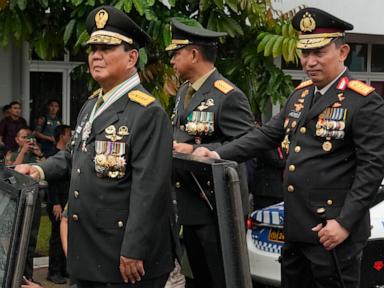
Six current and former senior police officials in Indonesia are now officially named suspects in an alleged treason plot, turning a simmering wiretapping controversy into a full-blown political earthquake.
Honestly, that headline sounds like a script straight out of a political thriller. Yet in Jakarta, investigators from Bareskrim—the national police's criminal investigation agency—announced that the six men allegedly conspired to prepare and begin executing acts of treason. According to Bareskrim chief Asep Safrudin, the goal wasn't a sudden tank-in-the-street coup. Instead, investigators say the suspects aimed to erode public trust in President Prabowo Subianto's administration so that former national police chief Gen. Listyo Sigit Prabowo could hold onto political leverage and keep the police chief's office in their orbit.
Wire news wires tend to sum this up in a few tight paragraphs. A wire story gives you the who, what, and when, then moves on. What you really need to understand is why a surveillance investigation jumped all the way to treason allegations, how six named figures fit into the picture, and what this means for civilian control over Indonesia's security apparatus.
What Happened When an Alleged Wiretapping Probe Became a Treason Case
To make sense of the charges, look at how fast the scope of the inquiry expanded. Earlier in November 2026, authorities named senior officers as suspects over alleged illegal wiretapping, unauthorized access to electronic systems, and destroying electronic evidence. Investigators said those operations began in 2025 and stretched into 2026, allegedly intercepting communications involving President Prabowo, cabinet ministers, state officials, political figures, media representatives, and civil society groups.
At first, many observers treated the story as an ugly internal power struggle or a rogue surveillance operation. Then came the escalation. In parliamentary testimony, police officials noted a separate report touching on alleged conspiracy to overthrow the government, and Bareskrim later moved to formally name six current and former officials as suspects under Criminal Code provisions covering treason, conspiracy, and preparation against the state.
That leap from wiretapping to treason isn't a minor legal technicality. Wiretapping is a crime of abuse of power and privacy violation. Treason—or makar in Indonesian legal parlance—treats alleged political subversion as a direct threat to state authority and constitutional order. When prosecutors and investigators invoke treason over alleged efforts to undermine public confidence in a sitting president, they're arguing that the conduct crossed from rogue policing into political destabilization.
Who Are the Six Suspects and What Did Raids Turn Up
Bareskrim named Listyo Sigit Prabowo alongside Slamet Uliandi, Eko Hadi Santoso, Ahrie Sonta Nasution, Iman Imanuddin, and Tedjo Kusumo. Some reports and briefings have also referred to suspects by their initials—such as LSP, SU, EH, ASN, TK, and II—while detailing how the probe branched out across different phases and locations.
Listyo isn't a backbench bureaucrat. He led the national police for more than five years before moving into Prabowo's cabinet. Having a former top cop who spent half a decade running the country's largest law enforcement force named as a treason suspect changes the political math overnight. It forces everyone in Jakarta to ask a sharp question: if the people who ran the police apparatus allegedly tapped high-level officials or stirred unrest, who polices the police?
Raids across 14 locations—including searches in West Java and Banten—added even more head-scratching details to the public record. Investigators reported seizing 39 electronic devices and $45,000 in cash, alongside 20 One Piece flags and 250 shirts printed with "All Cops Are Bastards."
Hold on. Read that last line again. Anti-police shirts and anime flags turning up alongside electronics and cash in a treason-linked investigation? That's the kind of detail that makes people stop scrolling. Investigators point to alleged efforts to weaken public trust in the administration, while critics and analysts will inevitably scrutinize how physical items seized during searches tie into alleged digital surveillance and political conspiracy.
Why "Treason" Is So Contested in Indonesian Politics
If you've followed Indonesian politics for years, you know two things about treason charges. First, under Indonesian law, offenses tied to treason and conspiracy carry severe penalties—ranging from lengthy prison sentences up to life imprisonment or even the death penalty, depending on the exact article and charges pursued. Second, treason accusations in Indonesia have a long, complicated history.
Legal scholars and civil society groups have repeatedly warned over the years that broad or ambiguous interpretations of treason provisions can blur the line between genuine threats to state security and political rivalry or dissent. When a sitting government's own law enforcement arm investigates prominent political or institutional figures on treason grounds, public skepticism is almost guaranteed from at least one side of the aisle.
There's also a practical evidentiary hurdle. Alleging illegal wiretapping or unauthorized access to electronic systems depends heavily on digital forensics: server logs, device extractions, chain-of-custody records, and proof of who ordered what and when. Proving treason—meaning an actual conspiracy or preparation to overthrow or subvert state authority rather than dirty political infighting, turf protection, or unlawful snooping—requires a much higher bar.
Let's be real: naming someone a suspect in an investigation is a procedural step, not a conviction. Even police officials speaking to lawmakers have acknowledged that allegations of treason require thorough evidence and careful examination of motives and commands. Anyone reading headlines today shouldn't treat an investigative announcement as the final verdict, nor should they dismiss serious allegations involving the presidency and national security out of hand.
What This Means for Institutional Trust and Governance
Stepping back from the daily headlines, this case hits three nerves in Indonesian governance at once.
First, executive security and counter-espionage. If communications involving the president, ministers, and state institutions were indeed intercepted without authorization, that's a massive breach of state security. No president can govern comfortably if they suspect their own security or law enforcement circles can't be trusted with sensitive channels.
Second, factional politics inside powerful institutions. Over the past two decades, Indonesia's national police grew into a sprawling institution with immense reach across law enforcement, intelligence-adjacent policing, and domestic politics. When former and current senior officers get tangled up in allegations of political maneuvering, it exposes how high the stakes are whenever leadership shifts or power is renegotiated.
Third, public credibility. Everyday citizens, investors, and regional partners watch how institutions handle crises like this. A transparent, evidence-driven investigation that respects due process can reinforce the rule of law. A messy, opaque probe that looks selective or overly politicized does the opposite—it feeds conspiracy theories and deepens cynicism.
Practical Next Steps If You Are Tracking This Story
If you're following this case for work, research, or general awareness—whether you're an analyst, journalist, investor, or just someone trying to cut through social media noise—don't rely on viral clips or hot takes.
- Track formal charging documents and court filings, not just press briefings. Naming suspects is an early investigative milestone. Watch which specific Criminal Code articles prosecutors actually bring forward if the case moves toward indictment and trial.
- Separate technical wiretapping evidence from political motive claims. Digital forensics around alleged interception and data destruction are concrete. Claims about broader political plots require clear, corroborated evidence linking specific actions to specific objectives.
- Compare multiple reputable news outlets. Cross-check reporting from major wire services, Indonesian outlets like Antara, and regional broadcasters to catch nuances, name spellings, and updates as investigators release more details.
- Watch official responses from named individuals and legal counsel. Suspects and their lawyers often push back on investigative narratives or challenge procedural steps once charges or detentions are contested.
Stories like this move fast, and rumors travel faster than verified facts. Stick to the evidence as it emerges.
Senior Indonesian police accused of phone-tapping President
This video adds helpful context on the earlier wiretapping allegations involving senior police figures and President Prabowo Subianto that preceded the wider treason probe.