Imagine living nearly forty years of your life, building an identity around a specific family name, inheriting traits you thought came from your parents, only to open a holiday present that turns your entire world upside down.
That isn't the plot of a Hollywood drama. It actually happened to two men born in North Dakota.
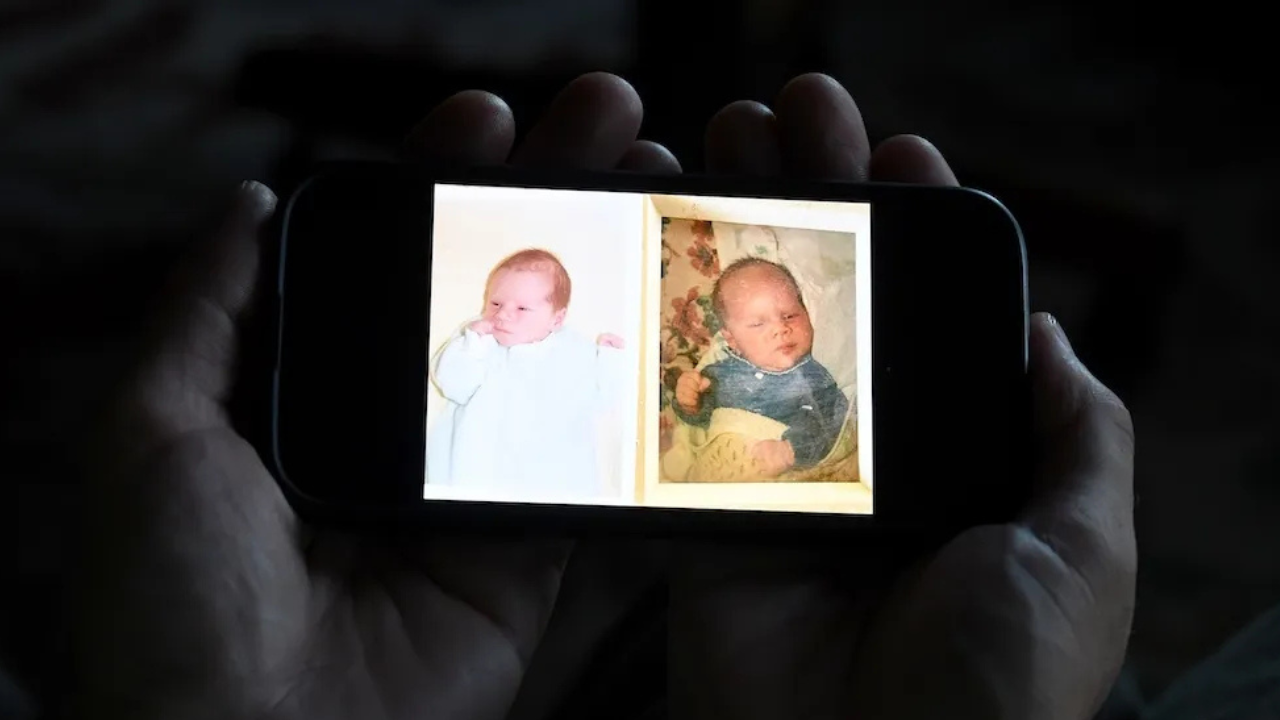
A simple home DNA testing kit gifted during Christmas blew open a secret hidden since 1983. Two baby boys born on the exact same day in the exact same hospital were handed to the wrong mothers. For almost four decades, each man grew up living the life intended for the other.
The Innocent Gift That Shattered Four Decades of Certainty
It started like any other holiday season. A family member bought an over-the-counter DNA test kit as a stocking stuffer, hoping to trace ancestral roots and connect distant family branches. Nobody expected to rewrite medical records or family lineages.
When the results came back, the genetic matches made zero sense.
The test showed no biological connection between the recipient and the family who raised him. Instead, the database flagged close genetic links to an entirely different family living right in the same region. What started as curiosity quickly turned into a forensic deep dive into hospital records from nearly forty years earlier.
The paper trail confirmed what the DNA test suggested. Back in 1983, nursery staff at the local hospital made a tragic error during discharge. Two infants were swapped, sent home with the wrong parents, and raised under identities that weren't biologically theirs.
Living Someone Else's Life for 40 Years
Think about the psychological weight of a revelation like this. You spend four decades looking in the mirror, searching for family resemblances, making sense of inherited traits, and celebrating milestones with people you believe are your biological parents.
Then a computer screen tells you your real bloodline lives just a short drive away.
Errors like this were far more common decades ago than hospitals care to admit. Before the era of barcode wristbands, modern infant tracking devices, and mandatory electronic verification, busy maternity wards relied on manual tag systems and paper charts. A moment of distraction by a nurse or a misplaced blanket could swap two lives forever.
When news of the swap broke, it forced both men and their families to confront painful, confusing realities.
- How do you process loving parents who aren't biologically yours?
- How do you build a relationship with birth parents after missing an entire lifetime of birthdays, graduations, and holidays?
- What does identity actually mean when your name, history, and medical background were assigned by mistake?
Neither family asked for this disruption, but the reality of modern ancestry databases meant the truth was bound to emerge eventually.
The Untold Legal and Emotional Reality of Hospital Swaps
Cases like this highlight an ongoing problem that medical risk management groups have quietly tracked for years. Historical hospital mix-ups often leave victims with very few clear legal remedies, especially decades after the fact.
Statutes of limitations on medical malpractice generally expire just a few years after an incident occurs or after the victim turns eighteen. When a switch isn't discovered until a person is nearly forty, the legal avenues against responsible health networks or former staff are extremely limited or entirely blocked by time limits.
Beyond the legal legalities, the medical implications are severe.
For forty years, both men relied on inaccurate family health histories. Standard checkups, preventative screenings, and risk assessments for hereditary conditions were based on medical histories that belonged to strangers. Correcting those files mid-life requires completely rebuilding personal medical records from scratch.
What You Should Do If Your DNA Test Reveals a Unexpected Result
Over-the-counter genetic testing has exposed tens of thousands of undisclosed adoptions, unexpected parentage cases, and rare hospital switches. If a home test drops a major shock in your lap, jumping straight to confrontation isn't the smart move.
Here is how experts suggest handling unexpected DNA findings:
- Verify the data before reacting. Retake a test through a second major platform like AncestryDNA or 23andMe to cross-reference raw data.
- Download your raw DNA file. Keep a digital record of your genetic data before making contact with matches in case accounts are made private later.
- Reach out carefully. If you choose to contact potential biological relatives, keep your initial message calm, neutral, and direct without placing blame.
- Seek specialized counseling. Standard therapy often falls short with non-paternal events (NPE) or switch-at-birth trauma. Work with a therapist who specializes in genetic identity resolution.