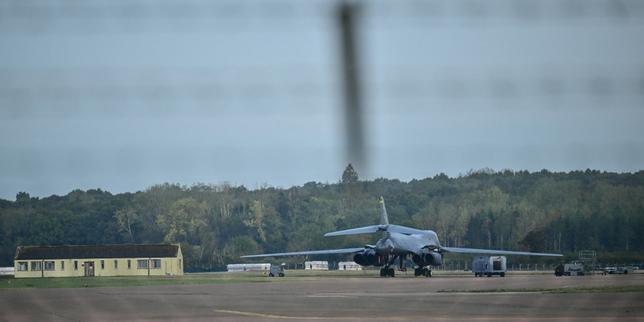
Security alerts rarely hit rural English villages without shaking things up. When armed police and bomb disposal squads swarmed the quiet perimeter of RAF Fairford in Gloucestershire back in September, it triggered immediate concern. Now, the investigation has reached a critical legal milestone with two men formally charged under strict national security legislation, while questions swirl regarding potential foreign state involvement.
The Charges and the Legal Framework
Crown prosecutors announced that twenty-four-year-olds Mohmed Abdulkarim and Nouman Essghir face serious counts under the National Security Act. This modern legislative tool gives authorities broader powers to tackle covert threats, espionage, and foreign interference compared to older traditional terrorism statutes.
The case stems from a frantic late-night emergency call made by a local farmer who spotted three suspicious vehicles moving toward the airfield perimeter. Armed officers responded rapidly, locking down the area, evacuating roughly eighty-five households in nearby Whelford, and deploying bomb disposal units to inspect vans left near the base.
What began as a chaotic rural lockdown has morphed into a complex counter-terrorism prosecution. Prosecutors and investigators are examining whether the suspects acted on behalf of external actors, casting a sharp spotlight on Iran amid ongoing geopolitical frictions.
Why RAF Fairford Matters on the Global Stage
Understanding the gravity of these charges requires looking at the strategic importance of the facility itself. While officially a British Royal Air Force station, Fairford regularly hosts deployments of United States Air Force assets, including heavy bombers like the B-1 and B-2.
The installation has served as a launchpad for strategic missions during broader regional conflicts, including operations tied to US actions against Iranian missile infrastructure. Because foreign military operations run out of these British soil installations, they make high-value targets for foreign intelligence agencies seeking to disrupt allied defense capabilities or gather sensitive operational data.
Untangling the State-Sponsored Threat Narrative
Authorities have increasingly warned about hostile state actors outsourcing surveillance and disruptive operations to local proxies or low-level operatives. While the investigation continues to probe ties to Iranian intelligence networks, Tehran has consistently dismissed such allegations, branding them as fabricated propaganda designed to fuel suspicion.
Security analysts note that modern espionage rarely relies solely on high-ranking intelligence officers moving quietly through checkpoints. Instead, handlers frequently employ individuals with dual nationalities or local ties to conduct reconnaissance, test physical security perimeters, or monitor high-value military movements.
What Happens Next in the Prosecution
The judicial process moving forward will test the limits and application of the National Security Act in open court. As Abdulkarim and Essghir face proceedings, the evidentiary trail will reveal more about how vulnerable vital defense infrastructure remains to grassroots infiltration attempts.
Protecting critical military installations requires constant adaptation against shifting threat vectors. The Gloucestershire incident serves as a stark reminder that modern national security battles can unfold just as easily in a quiet English country lane as they do in digital networks.