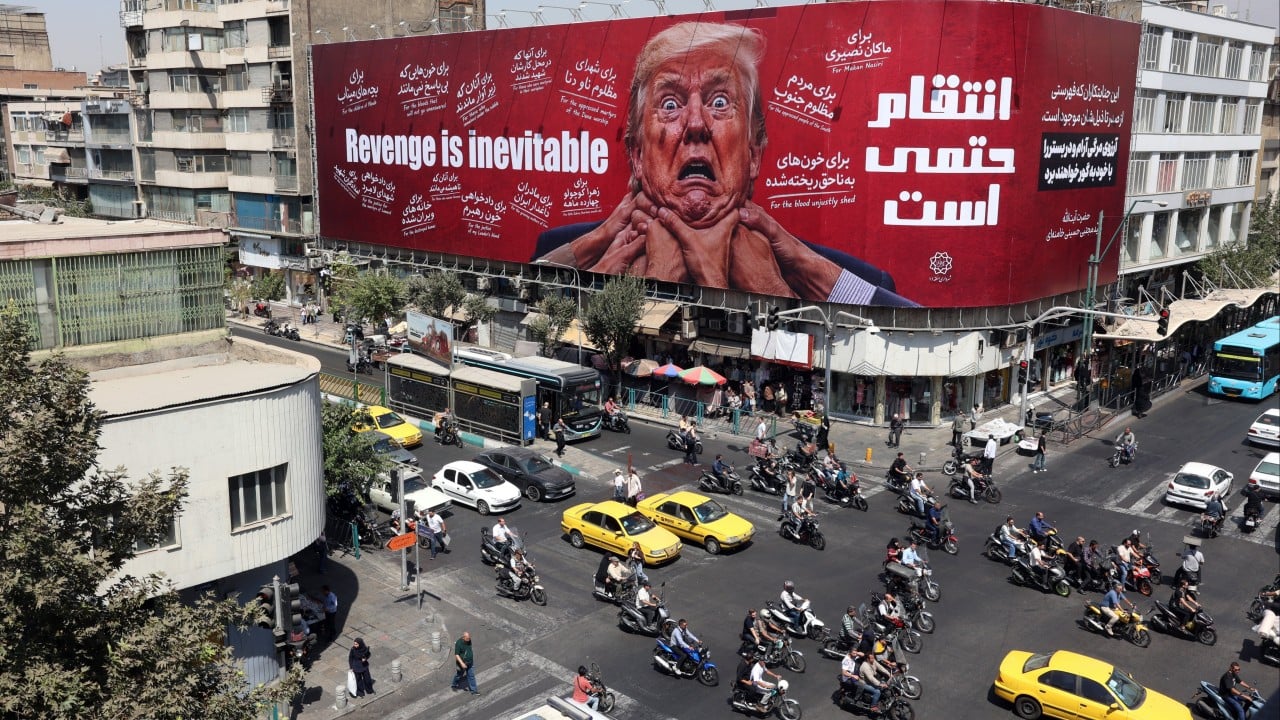
Walk through central Tehran right now and you won't just see heavy traffic. You'll see massive, hyper-aggressive artwork towering over major intersections, directly mocking Donald Trump and broadcasting wartime defiance. Behind these striking visual stunts is a tightly coordinated creative outfit operating under intense geopolitical pressure.
Most people scrolling past these images online assume they are slapped together overnight by state bureaucrats. They aren't. They are the calculated output of specialized design groups like the Designers' House, led by figures like Mostafa Kafaei. These teams churn out hyper-visible propaganda intended to distill complex geopolitical standoffs over the Strait of Hormuz into sharp, digestible visuals for millions of commuters stuck in daily gridlock.
Why Visual Propaganda Still Matters in Tehran
In a city where economic anxiety weighs heavy and daily survival takes up most people's bandwidth, traditional news consumption takes a backseat. The creative team behind these installations understands this reality intimately. When citizens are exhausted by inflation and military tensions, long-form political speeches fall flat.
That's where massive billboards come in. By transforming political defiance into pop-culture-adjacent imagery—ranging from Trump depicted inside catering containers to symbolic battles over the Strait of Hormuz—these designers ensure the state's messaging punches through the noise. You can't scroll past a three-story mural when you're sitting bumper-to-bumper on Valiasr Square.
The Logistics of Rapid Response Art
Creating state-backed public art during an active international crisis is a high-stakes balancing act. The production timeline is astonishingly tight. When diplomatic talks stall or military skirmishes flare up in the Persian Gulf, Kafaei and his team have mere hours to conceptualize, approve, and paste massive banners across high-traffic urban zones.
This isn't slow-moving government bureaucracy. It's agile warfare executed with graphic design software and giant printers. The imagery often relies on stark metaphors: American military hardware crushed under boots, political leaders trapped in confined spaces, or waterways transformed into literal muzzles. It’s designed to evoke an immediate emotional reaction, bypassing intellectual debate entirely.
What Western Audiences Miss About Iran's Visual Strategy
Foreign observers often dismiss these billboards as crude saber-rattling. But looking closely at how they are received locally reveals a more complex psychological function. For the regime's base, these installations provide a narrative of resilience and defiance against a superpower. They frame escalating tensions not as a series of defensive reactions, but as an ongoing struggle where local creators feel they are visually holding the line.
The effectiveness of these campaigns lies in their immediacy. You don't need a degree in international relations to grasp the message of a billboard showing a foreign leader trapped or cornered. By weaponizing urban architecture, Tehran's design teams have turned the city's skyline into a 24-hour psychological battlefield.
Inside Tehran: Iran's Bold Propaganda Billboards Mock Trump & Boast Control of Hormuz
This video provides a close-up look at the wartime billboards deployed across Tehran to project military strength and mock American leadership.
http://googleusercontent.com/youtube_content/1