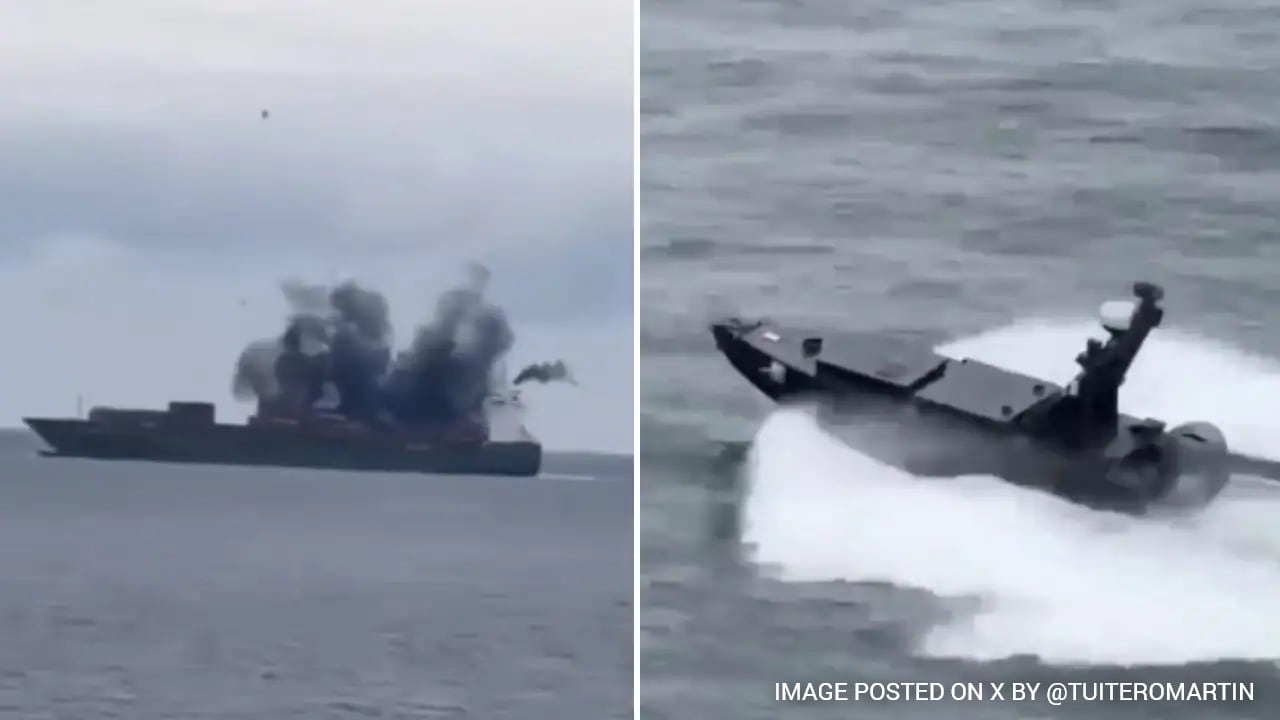
Commercial shipping in the Black Sea is facing an unprecedented security crisis. When a Greek-managed container ship gets struck and sunk by unidentified naval drones just off the Bulgarian coast, it stops being a localized regional conflict and becomes an international maritime emergency.
If you've been following maritime security updates, you know the stakes couldn't be higher. The Liberian-flagged Contship Jet was carrying 421 containers—including lithium-ion batteries and industrial components—when three sea drones targeted it near Cape Kaliakra. It sank in Bulgaria's exclusive economic zone, turning a routine voyage from Haifa, Israel, to Constanța, Romania, into a smoking wreckage.
Let's break down what actually happened, why analysts are pointing fingers, and what this means for global trade routes.
The Anatomy of the Black Sea Strike
Footage verified by news agencies showed a sleek, matte black surface drone charging toward the vessel at high speeds before detonating against the hull. That isn't basic coast guard tech. Maritime risk experts from firms like Ambrey identified the platform as remotely controlled and closely matching design derivatives like the Murena-300S.
Yet, pinning down exact accountability remains frustratingly difficult. Former naval officers and intelligence analysts noted that the specific architecture of the drones didn't line up cleanly with standard Ukrainian models. Moscow has denied involvement in these recurring Black Sea incidents, leaving regional authorities scrambling for answers.
You have to look at the broader pattern to understand the danger. Bulgarian officials report that at least six commercial vessels have faced drone strikes off their coastline recently, resulting in around two dozen seafarer fatalities. NATO member states like Romania and Bulgaria are caught in the crossfire, forced to watch as the fallout from the Russia-Ukraine war creeps closer to their sovereign waters.
Why NATO Waters Are Becoming a Danger Zone
For years, commercial operators assumed that exclusive economic zones (EEZs) belonging to NATO member nations offered a safe buffer. That illusion is shattered.
The attack on the Contship Jet happened entirely outside territorial waters, yet the vessel still went down. Even with advance warnings from French patrol aircraft alerting local forces to inbound threats, interception remains a massive logistical hurdle. Sea drones travel low, fast, and leave minimal radar signatures.
Prime Minister Rumen Radev of Bulgaria noted that these strikes consistently provide strategic benefits to Russia by choking off traffic, yet official attribution lags behind. As Bulgarian authorities put it, knowing who likely benefits doesn't automatically give you the ironclad evidence required for formal geopolitical accusations.
What Happens to Freight and Regional Trade Now?
Insurance premiums for Black Sea routes are skyrocketing. Crew members are refusing assignments. Port authorities in Constanța and Varna are tightening protocols, but cargo owners are panicking.
When dangerous cargo like corrosive liquids and lithium batteries go down with a sunken ship, environmental concerns follow closely behind. Initial checks by Bulgarian authorities showed no immediate major spill, but the long-term ecological monitoring will take months.
Commercial navigation requires predictability. Right now, the western Black Sea offers none. Shipowners are forced to weigh the immense profit of eastern Mediterranean routes against the very real risk of encountering a phantom naval drone. Expect tighter naval patrols, more air surveillance, and a massive shift in how civilian crews insure their passage near conflict zones.