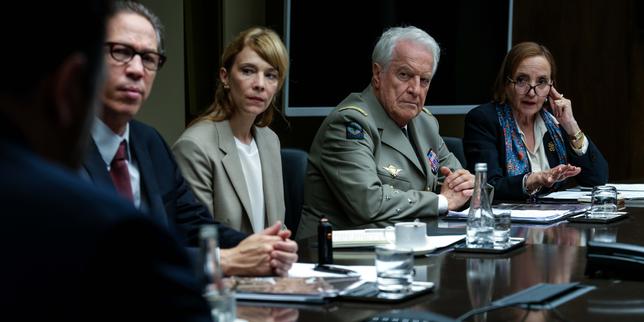
We rarely see French cinema tackle high-stakes geopolitical thrillers with genuine grit. Most domestic political dramas get bogged down in endless talk-fests inside wood-paneled parliamentary offices, completely ignoring the sheer, claustrophobic terror of real-world executive power. Then comes Jupiter, directed by Alexandre Smia and starring Denis Ménochet, which drags audiences straight down into the most classified room in France.
If you have ever wondered what actually happens when a newly elected French president faces an existential crisis, this film builds its entire narrative around that exact nightmare. The premise thrusts newly minted president Paul Archambault into a terrifying baptism of fire. Following an assassination attempt on his Russian counterpart, an explosive nuclear ultimatum lands on the desk of the French head of state, targeting a vital national ally. To figure out the next move, Archambault retreats deep underground into the Poste de Commandement Jupiter, the legendary command bunker tucked beneath the Palais de l'Élysée.
What the PC Jupiter Actually Is in Real Life
Hollywood loves a flashy underground war room, but French authorities keep the real Jupiter bunker shrouded in intense operational secrecy. Located meters beneath the presidential palace, this command post serves as the nerve center for France's nuclear deterrence strategy. When presidents need to consult with military chiefs, intelligence directors, and top advisors away from prying eyes and electronic surveillance, they head straight down the secure elevator shaft.
Unlike standard government meeting rooms, the actual bunker is designed to withstand catastrophic strikes while managing live, split-second intelligence feeds from global hotspots. The film taps directly into this raw claustrophobia. You can practically feel the concrete walls pressing inward as Ménochet's character grapples with a choice that could trigger global devastation.
Why This Geopolitical Thriller Breaks the Mold
French filmmakers historically shied away from hard-hitting military thrillers for fear of looking derivative or overly militaristic. Yet Jupiter manages to dodge those traps by focusing heavily on the psychological burden of command. The script, co-written with Thomas Finkielkraut, avoids painting the military brass as trigger-happy war hawks—a tired cliché common in American blockbusters. Real-world defense experts, including figures like Bruno Tertrais, often point out that senior military commanders tend to advocate for caution because they understand the horrific realities of combat better than anyone else.
The tension in the film comes from a different angle entirely: human unpredictability. Deterrence theory relies on rational actors calculating costs and benefits, but what happens when a leader begins acting erratically? That single question drives the narrative forward, turning a standard crisis simulation into a gripping study of absolute power under pressure.
The Stakes Behind the Screen
Releasing in November 2026, Jupiter arrives at a time when global nuclear anxieties feel closer to home than they have in decades. Audiences aren't looking for mindless action; they want stories that reflect the fragile state of international diplomacy. By anchoring its fiction inside a real, heavily guarded French institutional landmark, the film forces viewers to confront a sobering reality. The safety of millions often rests on the shoulders of a very small group of people sitting in a windowless room underground, trying to make the right call before time runs out.
If you want to understand how modern cinema handles the terrifying mechanics of nuclear deterrence without leaning into cheap propaganda, grab a ticket and head to the nearest screening. You'll never look at the Palais de l'Élysée the same way again.


