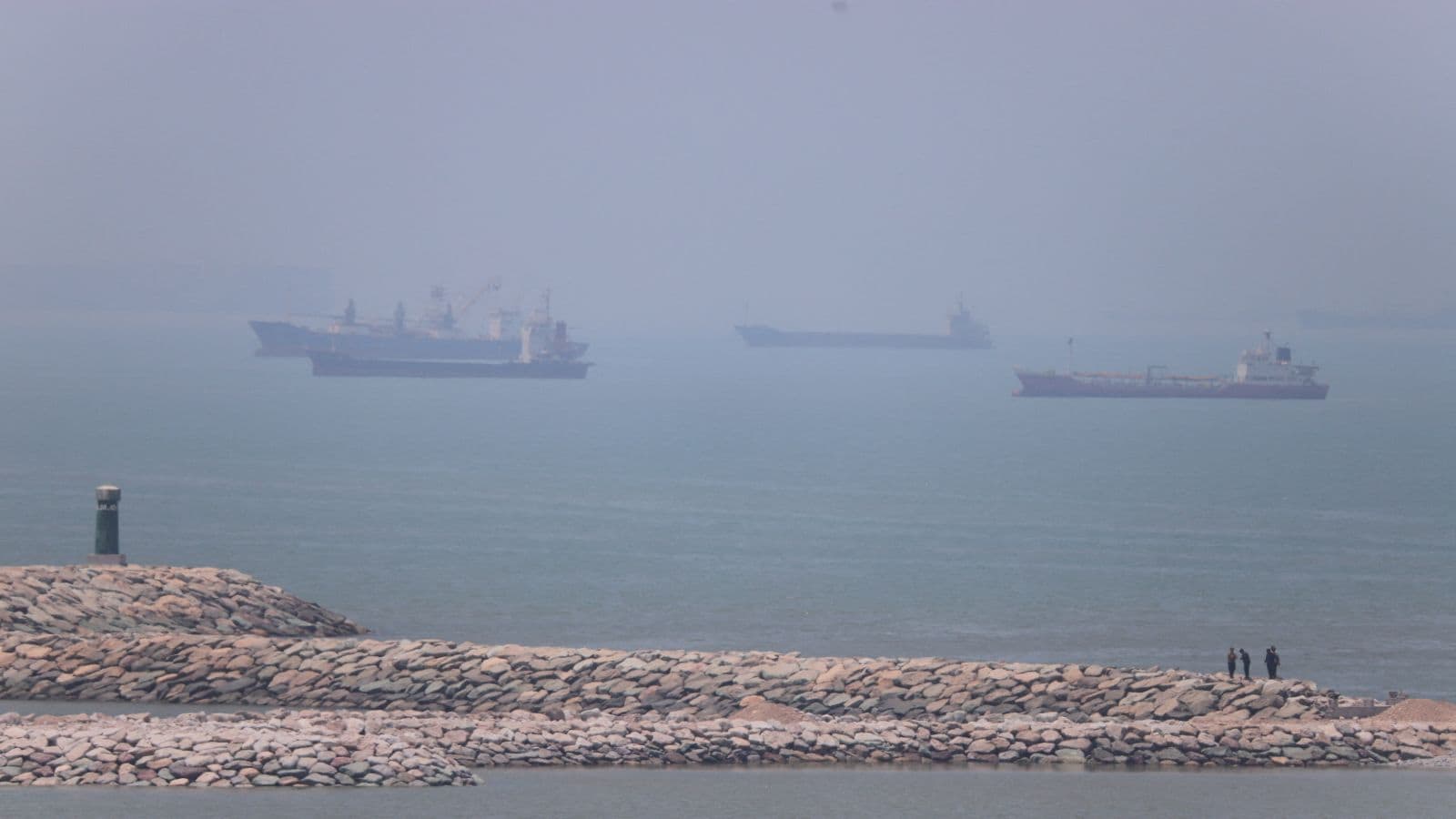
The maritime choke point that feeds a massive share of the world's daily petroleum supply just got a lot harder to navigate. When navigational aid systems in the southern part of the Strait of Hormuz were blasted and destroyed, Iranian state media wasted no time broadcasting a stark message. According to an unnamed official from the Islamic Revolutionary Guards Navy, zero unauthorized vessels managed to sneak through the route overnight.
If you track global energy flows, this escalation isn't just another routine headline. It represents a severe tightening of a bottleneck that has been under intense pressure for months.
What Happened on Qeshm Island
Explosions lit up the sky late on a Sunday near Qeshm Island, catching the attention of local residents and global intelligence trackers alike. While regional authorities quickly moved to calm local fears by insisting that essential infrastructure and civilian residential sectors dodged the brunt of the strike, the strategic damage was clear. Vital navigational aids—the digital and physical markers ships rely on to thread the needle through narrow international shipping lanes—took direct hits.
When you strip away the electronic and physical markers guiding tankers through tight waters, commercial transit becomes an extreme hazard. That reality is reflected clearly in modern shipping data. Commercial traffic through the strait has plummeted to a fraction of its normal pre-crisis volume. While historical averages hover around 85 commercial vessels passing through daily, recent tracking reveals numbers dropping close to absolute zero on multiple days. Major carriers aren't taking chances; they are rerouting around the Cape of Good Hope or parking their tankers offshore to wait out the volatility.
The Revolutionary Guards' Stance
Tehran's assertion that no unauthorized ships moved through the passage overnight highlights a dual strategy of surveillance and deterrence. The Revolutionary Guards maintain a tight grip on reporting maritime movements in these contested waters. By emphasizing that the corridor is effectively locked down—and pointing to the destruction of navigation aids as proof of a hostile operating environment—they reinforce the high-stakes nature of the ongoing regional conflict.
Naval experts note that operating without standard navigation beacons forces ships to rely entirely on independent onboard GPS and radar systems, assuming those haven't been jammed or spoofed. In a confined corridor where a single navigational error can run a supertanker aground or push it into territorial waters, missing infrastructure is a massive deterrent.
What This Means for Global Energy Markets
Markets hate uncertainty, and the Strait of Hormuz is ground zero for energy anxiety. Even minor disruptions send ripple effects through crude and liquefied natural gas futures. With commercial transits throttled to historic lows, energy traders are constantly pricing in the risk of a prolonged total closure. Insurance premiums for any vessel daring to operate in the wider Persian Gulf have skyrocketed, making routine voyages economically unviable for many independent operators.
Governments and shipping syndicates are scrambling for alternatives, but pipeline workarounds and diplomatic arrangements take time to materialize. Until navigational aids are restored and security guarantees are established, the world's most critical energy artery will remain a high-risk zone where moving unhindered is practically impossible.
Watch the radar tracking data closely over the coming days. The real test of this blockade won't be what officials claim in press briefings, but whether the tankers anchored off Dubai decide to move or stay put.