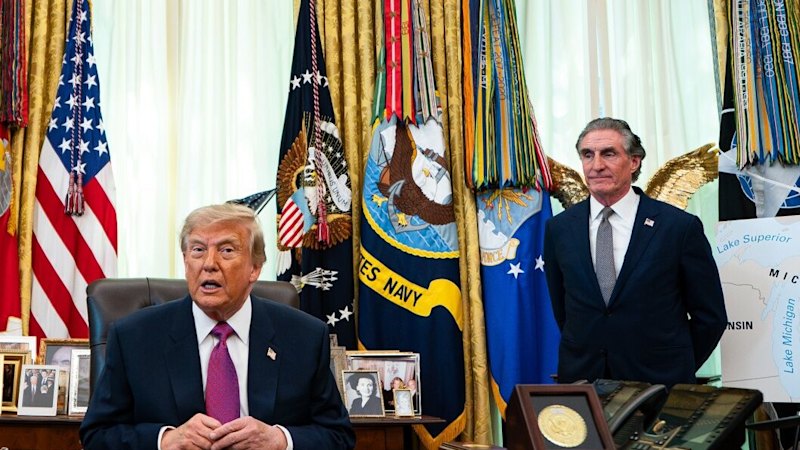
Writing about the inner workings of Donald Trump's administration is a bit like trying to map a weather system during a category five hurricane. You aren't studying calm institutional norms. You're tracking pure political volatility. Whenever a new insider account or investigative book drops, Washington loses its mind for forty-eight hours, cable news cycles churn themselves into exhaustion, and then the circus moves on. But if you look past the daily outrage, these unfiltered dispatches from reporters and former aides give us a rare look at how modern American executive power actually operates when traditional guardrails are thrown out the window.
Let's be honest about how access reporting works in Washington. Journalists don't get invited into the Oval Office because officials love transparency. They get access because competing factions inside the West Wing want to shape the narrative, settle old scores, or signal loyalty to the boss. When reporters like Jonathan Swan and Maggie Haberman secure deep inside-access for projects like their book Regime Change: Inside the Imperial Presidency of Donald Trump, they aren't just observing history. They are swimming in a shark tank where every leak is calculated. Understanding that dynamic is the only way to read these insider accounts without getting played.
The Character Cast and Power Struggles
Every administration has internal drama, but Trump's second term brought an entirely different ecosystem of ambition and ideology. The main characters fighting for the president's attention aren't just career bureaucrats or traditional conservative think-tankers. You have tech billionaires, populist firebrands, and seasoned operators all vying for the ear of the Oval Office.
Take the stark contrast between figures like JD Vance and Marco Rubio. They represent two entirely different strains of modern American conservatism. Vance leans hard into populist nationalism, challenging conventional foreign policy orthodoxy and corporate power structures. Rubio operates with a more traditional hawk mindset, navigating international relations through a well-worn institutional lens. Watching these forces clash inside the West Wing isn't just about bruised egos. It dictates whether the administration leans toward isolationist economic protectionism or aggressive foreign intervention.
And then there's the external cast of characters. Figures like Elon Musk and Mark Zuckerberg orbit the presidency with unique leverage. When tech titans wield that kind of direct influence over policy and communication channels, the traditional lines between private corporate power and public administration blur entirely. Insider accounts show that the President doesn't just listen to his cabinet; he listens to whoever is commanding the cultural and economic microphone at any given moment.
How Decisions Actually Get Made
If you expect Cabinet meetings straight out of an Aaron Sorkin script, you're looking at the wrong building. Decision-making in Trump's orbit is deeply personalized, often transactional, and remarkably fluid. Policy isn't born from a meticulous six-month interagency review process led by policy wonks with color-coded binders. It happens in rapid-fire conversations at Mar-a-Lago, late-night phone calls, or impulsive announcements that catch even senior staff flat-footed.
Consider major geopolitical shifts, such as decisions regarding conflict escalation or trade wars. Traditional administrations spend months gaming out second- and third-order effects across the State Department, the Pentagon, and the National Security Council. In Trump's White House, the timeline compresses drastically. Gut instinct, media optics, and personal relationships with foreign leaders often outweigh bureaucratic consensus.
Critics call this chaotic and dangerous. Supporters call it agile and disruptive, a deliberate dismantling of a sluggish "Deep State" that resists change. Whichever side you land on, insider reporting proves one undeniable truth: the process itself is the policy. If you control access to the room when the final, impulsive decision is made, you hold all the cards.
Why the White House Pushback Misses the Point
Whenever a tell-all book or deep-dive investigative report hits the stands, the playbook from the administration is entirely predictable. They dismiss it instantly. They call it fiction, label the reporters biased, or claim the sources are disgruntled former employees with an axe to grind.
Sometimes, they have a point. Access journalism relies heavily on anonymous sourcing, and anonymous sources love to paint themselves in a heroic light while throwing their rivals under the bus. You have to read every insider quote with a healthy dose of skepticism.
Yet, outright dismissal usually backfires. Even when the administration claims a book is "mostly made up," the frantic internal inquiries trying to plug leaks reveal a different reality. The panic inside the building usually tells you which stories hit closest to home. The details that sting are almost always the accurate ones—the exact phrasing of a profane argument in the West Wing, the real reason a policy pivot happened overnight, or the genuine contempt various factions hold for one another.
What You Should Take Away From the Chaos
If you want to understand American politics today, stop treating the presidency like a static institution. It is a reflection of one man's personality amplified by modern media, hyper-polarization, and institutional fatigue. Insider accounts matter not because they offer clean, neat answers, but because they expose the messy, human reality behind the headlines.
The next time a massive West Wing exposé drops, don't just look at the juicy quotes designed to dominate Twitter for an afternoon. Look at the structural shifts. Look at who is gaining power, who is losing influence, and how the rules of executive power are being rewritten in real-time. That is where the real story lives.
Watch The insider trading suspicions looming over Trump's presidency to understand the financial markets and political pressures surrounding the administration.
http://googleusercontent.com/youtube_content/1