Prestigious institutions love hiding their darkest secrets behind ivy walls and stellar reputations. When a scandal breaks, the standard playbook involves a quick public relations apology, a heavily managed internal review, and a swift return to business as usual. But sometimes an independent investigation pulls back the curtain so violently that the institution can't spin its way out. That is exactly what happened with a massive, independent review published by the Interlochen Center for the Arts.
If you think this is just another isolated story about a fallen predator, you are missing the bigger picture. The 97-page report compiled by the Sanghavi Law Office blew wide open decades of systemic failures at the renowned Michigan boarding and summer arts camp. Worse still, it directly tied convicted sex offender Jeffrey Epstein to multiple accounts of misconduct.
Let's break down what actually happened, why the school's previous defenses collapsed, and what this means for accountability in elite educational spaces.
Inside the Interlochen Investigation
In mid-2024, leadership at Interlochen received a disturbing report from an alumna detailing historical abuse. Instead of sweeping it under the rug, the board hired an outside legal team to conduct a comprehensive, independent probe. They interviewed roughly 180 people and uncovered over 70 firsthand accounts of sexual misconduct involving nearly 50 different adults tied to the school across a timeline stretching from the 1950s through the 2010s.
The findings paint a grim picture of an environment where perpetrators operated with near-total impunity. Former students described a culture of heavy isolation from their families, immense power imbalances, and staff members who actively enabled or ignored boundary-crossing behavior.
Legal representatives for survivors didn't mince words, describing the campus environment during those decades as a free-for-all for predatory adults.
The Jeffrey Epstein Connection
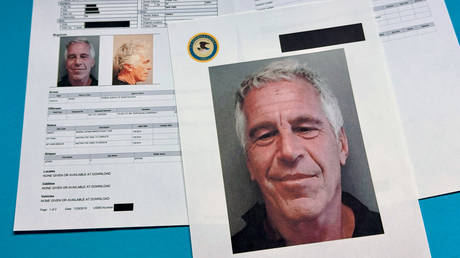
While many of the named individuals were faculty, administrators, or trustees, the inclusion of Jeffrey Epstein drew immediate global attention. Epstein attended the arts camp as a student way back in the summer of 1967. Decades later, between 1990 and 2003, he transformed into a major financial donor for the institution.
Back when his money flowed freely, the campus even featured a building named the Epstein Lodge. Following his 2008 criminal conviction in Florida, Interlochen quietly stripped his name from the lodge and cut institutional ties. At that time, and again after his 2019 federal arrest, school leadership maintained that internal record checks yielded zero complaints or reports regarding Epstein.
This new independent report shattered that claim.
Investigators spoke with two alumni who detailed direct sexual misconduct by Epstein. One alumna stated that Epstein and Ghislaine Maxwell offered to cover her tuition, bringing her into their orbit before she experienced inappropriate physical touching both at the lodge—which was finally demolished in June 2026—and later in New York. Another former student reported that Epstein flew her to New York after graduation and subjected her to abuse during a massage.
Why Institutional Denials Fail Over Time
Interlochen's leadership offered deep apologies following the release of the report, acknowledging the profound harm inflicted on their students. They handed all names over to local law enforcement and prosecutors. But the core question remains: how did elite institutions miss or ignore these warning signs for generations?
Boardrooms prioritize institutional protection. When alumni raised red flags decades ago, administrative responses frequently amounted to damage control rather than victim advocacy. Documentation was sparse, personnel turnover obscured patterns of behavior, and the immense social capital held by donors or elite faculty members silenced victims who knew nobody would believe them.
Transparency is painful, but it's the only baseline requirement for systemic healing. Demolishing buildings named after abusers and opening up archives to independent investigators marks a start, but accountability requires structural reform that lasts long after media cycles fade.
Stop assuming prestige protects children. Demand real oversight everywhere.