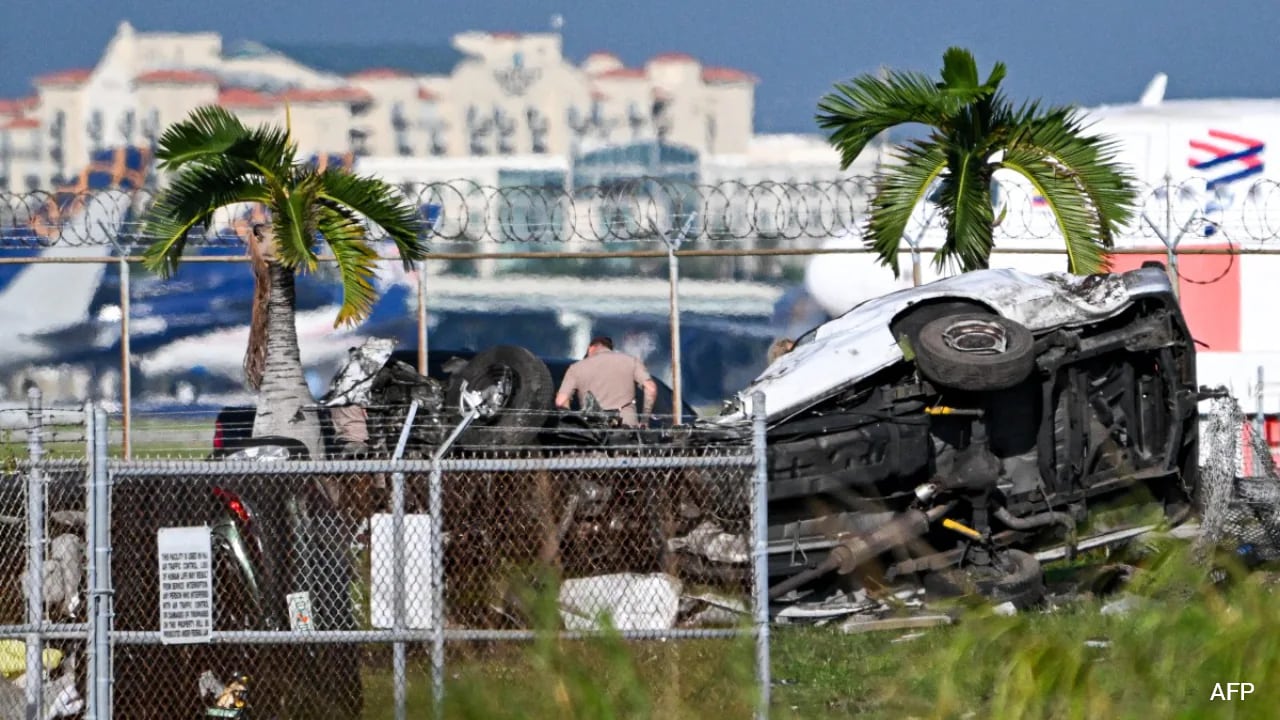
Five people left for work on a Sunday and never came home because a Boeing 767 barreled nearly 1,300 feet past the end of a Miami International Airport runway, tearing through a cleaning company van and an SUV before bursting into flames. That is the brutal human cost of the September accident involving an Amazon-contracted cargo flight operated by 21 Air.
When a massive aircraft overshoots a tarmac and claims lives on a public road outside airport bounds, aviation nerds and safety experts scramble for answers. Preliminary National Transportation Safety Board findings, flight data recorders, and cockpit voice audio give us a terrifying look into what went wrong on the flight deck.
Let's look past the breaking news headlines and examine the actual operational breakdowns that led to this disaster.
The Warning Signs Ignored on the Flight Deck
Cockpit voice recordings released by the NTSB show a terrifying lack of synchronization between the two pilots. As the cargo jet approached Miami following a flight from San Juan, Puerto Rico, one of the pilots repeatedly warned that they were coming in way too fast.
The response from the other pilot? Silence. Or at least, no consistent verbal acknowledgment.
When you fly a heavy commercial jet, crew resource management is everything. If one person is sounding the alarm about excessive speed, you don't just ignore it and pray for the best. Aviation safety specialists note that a junior or secondary officer calling out speed warnings needs a strong, assertive response from the captain. When that feedback loop breaks down, disaster follows.
An Unstable Approach and Late Landing
The plane did not execute a clean, textbook touchdown. Flight data shows the 32-year-old aircraft—originally built for passengers before its 2015 cargo conversion—remained airborne far too long.
It floated down the runway. By the time the nose and right landing gear finally made contact, the aircraft was estimated to be nearly halfway down a 9,360-foot strip.
Severe weather didn't help. Thunderstorms and wind gusts were rolling through the Miami area, creating potential tailwind conditions that pushed the aircraft forward instead of letting it settle. But weather is rarely a solitary cause in aviation disasters. Pilots are trained to deal with crosswinds and tailwinds. The fatal error happened when the crew chose to force a landing instead of walking away.
The Aborted Go-Around That Came Too Late
Seconds after touchdown, the pilots briefly disengaged the brakes and slammed the throttles forward. They tried to execute a go-around, attempting to get back into the air and salvage the landing approach.
They aborted that attempt just four seconds later.
By that point, it was mathematically impossible to stop. A heavy jet traveling at high speed down the wet asphalt of a shortening runway cannot simply reverse physics. Former federal aviation officials point out that the decision to go around should have happened minutes earlier, while the plane was still high above the ground. Hesitation on the flight deck ate away the precious runway distance required to brake safely.
The Devastating Ground Impact
The plane did not just stop on airport property. It blasted through a perimeter road used by warehouse workers and local businesses, flattening vehicles.
All five fatalities—identified by authorities as Rolando Aleman Leon, Yoel Rodriguez Naranjo, Julio C. Pineda, Carlos Acosta Fajardo, and Javierkys Reyes Quevedo—were inside a van belonging to an airline cleaning contractor. Three others suffered critical injuries, while the pilot and co-pilot survived with minor or moderate injuries, pulling through the wreckage of the cockpit.
Miami International Airport lacks engineered material arresting systems (EMAS)—crushable concrete beds designed at the end of runways to safely decelerate aircraft that overshoot. While the FAA has installed these systems at over 120 airports nationwide, major hubs like Miami still leave questions open regarding perimeter safety margins.
The NTSB investigation continues to dig through flight data and witness statements. Expect tighter scrutiny on cargo carrier oversight, pilot training protocols, and airport overrun safety buffers in the months ahead.
Review your standard operating procedures for unstable approaches, check your crew resource management training, and never ignore a cockpit warning.