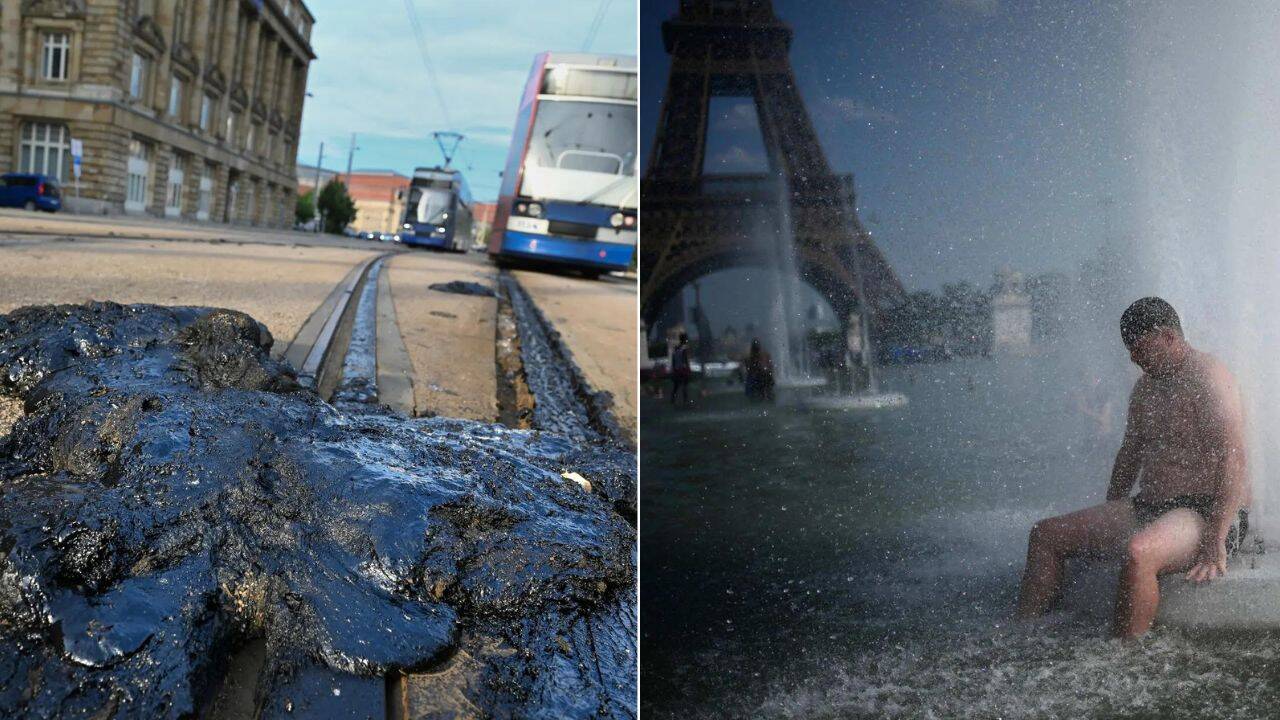
You won't see a thermal disaster coming the way you see a hurricane or a flood. There are no shattered windows or muddy streets. Instead, the air simply grows thick, the concrete turns into a radiator, and silent tragedies unfold behind closed apartment doors.
Official mortality data just laid bare the true cost of the late-June heatwave that scorched Western Europe. Over 10,000 excess deaths were recorded across the continent in just a single week, running from June 22 to June 28. According to EuroMOMO, the mortality monitoring network backed by the World Health Organization, the surge hit a staggering 10,650 deaths above what is typical for that time of year.
Climate attribution scientists didn't mince words. They confirmed this brutal stretch of extreme weather would have been virtually impossible without human-caused climate change. Global warming isn't a vague future problem anymore. It's actively driving up the baseline temperature, transforming normal summer weeks into lethal events.
Breaking Down the Grim Reality of the Summer Numbers
To understand why this is a massive warning sign, look at what happens before a heatwave hits. During the two months leading up to late June, combined mortality across the 27 monitored European nations sat roughly 500 deaths below average per week. The sudden spike to over 10,000 excess deaths in a seven-day window represents a massive, abrupt shock to the public health system.
The data tells a very specific story about who pays the highest price when the mercury climbs.
- The Elderly Burden: Out of the 10,650 excess fatalities, more than 9,000 were individuals aged 65 and older.
- The Hotspots: EuroMOMO flagged France and Belgium as the two nations experiencing "very high excess mortality" during the peak week.
- Broken Records: Belgium’s public health institute, Sciensano, reported that the nation suffered its worst heatwave-related excess mortality since record-keeping began in 2000.
- Regional Tolls: Germany’s public health agency, the Robert Koch Institute, estimated 5,120 heat-related deaths across the early summer season, with the vast majority concentrated in that late-June window.
When ambient temperatures don't drop at night, the human body never gets a chance to cool down. It triggers heat stroke or severely aggravates existing cardiovascular and respiratory conditions. Epidemiologists verified there were no competing anomalies, like a sudden COVID-19 surge, to blame. The heat alone drove the spike.
Why Young People Aren't Exempt from the Danger
The elderly bear the brunt of the indoor mortality numbers, but the heatwave triggered a completely different crisis among younger demographics. When temperatures in parts of Germany spiked to an unprecedented 41.7°C (107.1°F), thousands fled their stifling homes for natural water bodies.
The result was a sharp, tragic spike in drownings. The German lifesaving federation reported that 99 people drowned in June alone, marking the highest single-month drowning toll the country has seen in over two decades.
Emergency physicians point out a dangerous behavioral pattern here. Young people often think they are invincible to high temperatures. They jump into cold lakes or fast-flowing rivers to escape the heat, unaware of how thermal shock or physical exhaustion can incapacitate even strong swimmers. Alarmingly, over 90% of the drowning victims were male, and 40 of those who died were under the age of 30.
The Footprint of Human-Caused Global Warming
We can no longer treat these events as bad luck or freak weather anomalies. A parallel study conducted by Imperial College London, the UK Met Office, and the London School of Hygiene & Tropical Medicine analyzed the broader early summer heat across England and Wales. They found an estimated 2,700 heat-related deaths during May and June.
More importantly, the researchers isolated the climate variable. They concluded that 42% of those British deaths were directly attributable to the additional intensity that global warming added to the weather system.
Europe is currently the fastest-warming continent on the planet, heating up at roughly double the global average rate. When the baseline temperature rises, a standard high-pressure system gets supercharged. It creates intense, long-lasting thermal domes that trap stagnant, blazing air over major metropolitan zones.
How to Protect Yourself and Your Community Next Time
Waiting for emergency alerts from the government isn't enough when infrastructure starts buckling under 41°C conditions. You need to know how to adapt your immediate environment and routine.
Take these immediate actions when the next severe heat warning drops.
Audit your living space early Keep windows shut and covered with light-colored blinds or reflective materials during the peak sunlight hours of 11:00 AM to 4:00 PM. Open them only at night if the outside air drops below the temperature inside your home.
Recognize the difference between heat exhaustion and heat stroke Heavy sweating, dizziness, and a rapid pulse mean heat exhaustion; you need to cool down immediately with wet towels and hydration. If the person stops sweating, vomits, or becomes confused, their internal cooling mechanism has failed. That is heat stroke, and it requires an immediate emergency call.
Check on isolated neighbors Don't assume your elderly neighbors or vulnerable family members are fine just because they haven't called. Check on them twice a day. Ensure they have access to cool water and that their living spaces aren't trapping dangerous levels of ambient heat.
Avoid sudden thermal shocks If you are overheated, do not jump straight into cold natural bodies of water. The sudden temperature drop can trigger an involuntary gasp reflex or cardiac strain. Wade in slowly and acknowledge your physical limits.