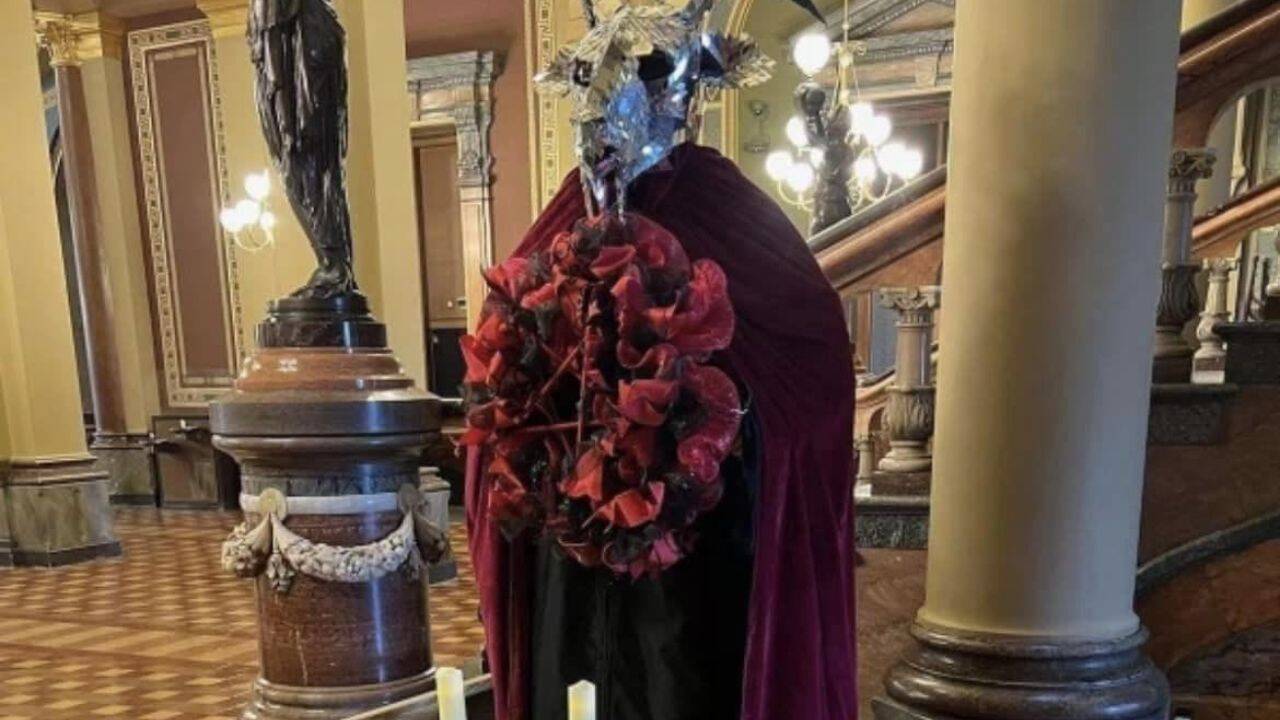
The Constitution doesn't protect popular speech. It protects the speech nobody wants to hear. A federal court just reminded Iowa officials of that basic reality, ordering the state to stop blocking The Satanic Temple from holding a holiday event inside the Capitol rotunda.
State leaders thought they could bar the door based on vague safety concerns and personal disapproval. U.S. District Judge Stephanie M. Rose saw right through it. The ruling deals a massive blow to politicians who try to weaponize bureaucratic red tape against religious groups they dislike. But if you think this battle is over, you haven't been paying attention to how state governments operate. For another perspective, see: this related article.
Inside the Iowa Capitol Clash
For years, the local chapter of The Satanic Temple tried to secure space for a holiday gathering inside the Iowa Statehouse. Every single time, the state slammed the door shut. Officials pointed to building rules, claiming the group's proposed costumes and props—like traditional Krampus sticks—posed a threat of violence or obscenity.
Represented by the ACLU of Iowa, the organization hit back with a federal civil rights lawsuit. They argued that the state was engaging in viewpoint discrimination. Related insight on this matter has been shared by BBC News.
Judge Rose agreed. In her ruling, she pointed out a glaring flaw in the state's defense: the Department of Administrative Services performed zero independent evaluation to see if the costumes actually presented a risk. More importantly, the Capitol already runs strict security checkpoints with metal detectors and trained personnel screening every single visitor who walks through the doors.
The state's excuse fell apart under basic judicial scrutiny. Judge Rose issued a preliminary injunction requiring the state to approve the permit application for a December 12 event, subject only to the standard security and insurance requirements applied to any other group.
The Real Cost of Viewpoint Discrimination
Politicians love to posture for their base. When controversial groups request public property access, local leaders often face intense pressure to shut them down. Caving to that pressure feels like an easy political win in the short term.
It always backfires in federal court.
The First Amendment exists precisely to stop government officials from acting as arbiters of acceptable taste or orthodox belief. If a public building opens its doors to holiday displays and religious gatherings, it becomes a designated public forum. You cannot invite mainstream religious groups in while locking out minority or controversial congregations just because their aesthetic makes lawmakers uncomfortable.
Matt Kezhaya, general counsel for The Satanic Temple, put it bluntly after the decision. He noted that public officials have a duty to uphold the Constitution even when doing so is unpopular, rather than scoring cheap political points by painting unfamiliar beliefs as dangerous.
What Happens Next
Iowa isn't giving up quietly. Representatives from the state attorney general's office indicated plans to appeal the decision. The broader lawsuit, which seeks damages for past constitutional violations and a permanent injunction under the Iowa Civil Rights Act, is still moving forward.
This legal friction isn't unique to Iowa. Statehouses across the country grapple with how to handle equal access requirements when non-traditional religious groups demand space next to traditional holiday trees and nativity scenes.
When public spaces are funded by taxpayers of all beliefs, the rules have to apply evenly. Bureaucrats don't get to rewrite constitutional law just because an event title makes headlines. Free speech protections are messy, loud, and entirely necessary.