When Washington threatens military escalation and indirect talks stutter in regional capitals like Muscat and Doha, outsiders often wonder who's really pulling the levers in Tehran. Is it the diplomats managing the microphones, or the generals mapping out missile arcs in the shadows? The reality is messier than a simple organizational chart. Iran’s dual posture of fighting and negotiating isn't driven by a single ministry. It’s a tightly controlled balancing act managed by a small core at the apex of the state, where ideology meets survival instincts.
The Supreme Leader Holds the Final Word
At the center of gravity sits Supreme Leader Mojtaba Khamenei. In Iran’s political architecture, the ultimate authority on existential matters—such as whether to launch a broader regional retaliation or entertain a nuclear compromise—resides entirely in the office of the Supreme Leader.
When Washington applies maximum pressure or launches targeted strikes against infrastructure, the supreme authority dictates the red lines. Recent warnings issued from Tehran make it clear that any renewed Western assault will face a response stretching far beyond immediate regional borders. That isn't a decision made by an elected parliament or a career diplomat. It’s a directive from the top down, designed to establish absolute deterrence through maximum readiness.
The Diplomatic Front: Navigating Between Talks and Skepticism
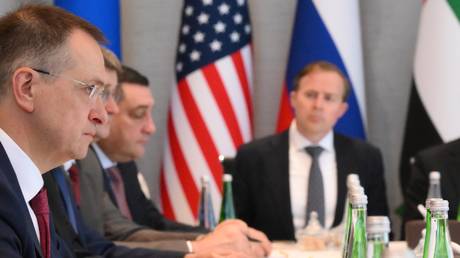
Down the hall, but operating under strict boundaries, sits the diplomatic apparatus led by Foreign Minister Abbas Araghchi. Their job is high-stakes diplomatic tightrope walking. They engage with regional mediators from Oman, Qatar, and beyond to keep channels open. Why? Because keeping talks alive serves a dual purpose: it signals a willingness to engage while buying crucial time to harden domestic defenses and blunt economic strangulation.
Yet, the diplomats don't set policy. They execute it within margins carved out by the security apparatus. Whenever negotiators in foreign capitals sound conciliatory, hardline voices back home—including Friday prayer leaders and conservative media outlets—step in to harden the rhetoric. This isn't accidental chaos. It’s a deliberate division of labor. The diplomatic wing tests the waters for sanctions relief and de-escalation, while the military wing ensures that no concession looks like capitulation.
The Armed Forces and the Regional Network
Real power in Tehran's crisis response also flows directly through the Islamic Revolutionary Guard Corps (IRGC) and regular military command structures. Figures coordinating the defense of critical bottlenecks like the Strait of Hormuz—alongside allied regional networks spanning Lebanon, Iraq, Yemen, and beyond—hold massive sway over operational readiness.
When military commanders update target lists across Europe and the Middle East in response to US and Israeli threats, they are shaping the physical reality on the ground that diplomats must then navigate. This creates a hard ceiling on diplomacy. Tehran's strategy ensures that fighting capabilities and negotiating positions reinforce each other rather than compete.
Understanding this structure cuts through the noise of daily headlines. Tehran doesn't suffer from a split personality; it operates a synchronized strategy where the threat of a wider war remains the ultimate leverage at the negotiating table.