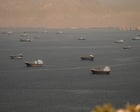
The ink on the Islamabad Memorandum of Understanding is barely dry, and the global shipping industry is already hitting the panic button. Everyone expected relief when US President Donald Trump and Iranian President Masoud Pezeshkian signed the surprise truce to end the intense conflict that broke out earlier this year. The US lifted its naval blockade. Oil tankers started moving again. The nightmare seemed over.
It wasn't.
Tehran dropped a bombshell just hours after the signing ceremony. It announced a plan to slap mandatory maritime fees on every commercial vessel passing through the Strait of Hormuz. Right now, there's a grace period. Iran says it won't charge transit fees for the next 60 days while technical talks happen in Switzerland. But once that clock runs out, the rules of global maritime trade change forever.
If you think this is just a minor regional tax, you're missing the bigger picture. This moves the goalposts for global supply chains. Iran is effectively trying to turn an international waterway into a private toll road. About a fifth of the world's petroleum passes through this narrow stretch of water. If Tehran pulls this off, it sets a terrifying precedent for every major maritime choke point on Earth.
The 60 Day Countdown to a Shipping Toll Road
The details coming out of Tehran show exactly how Iran plans to assert its authority. The Supreme National Security Council made it clear that traffic through the strait will increase gradually, but it comes under a strict new administrative regime. Ships can't just sail through like they used to.
Commercial vessels must now submit formal transit requests to a newly minted entity called the Persian Gulf Strait Administration. They even launched a website for it. Shipping companies have to log onto PGSA.ir and fill out applications before their tankers can even approach the waterway.
During the current 60-day negotiation window, the Iranian government claims it will cover the operational costs itself. They want to look cooperative while the broader peace talks play out. But they're using this time to build the digital and physical tracking infrastructure needed to enforce mandatory payments later.
Iranian negotiators say the fees aren't a political tax. They call them charges for "maritime services." They claim the money will pay for environmental mitigation, navigational management, pilotage, and security. It sounds reasonable on paper. In reality, it's a clever legal workaround to institutionalize their control over the passage.
The security angle isn't entirely fiction either. The recent conflict left the waters incredibly dangerous. Iran has acknowledged that certain safety hazards, including naval mines planted during the fighting, mean ships cannot choose their own paths. The Persian Gulf Strait Administration is enforcing strict routes and schedules. If a tanker deviates from its assigned slot, it risks hitting a mine or facing immediate interception by the Islamic Revolutionary Guard Corps navy.
Why Saudi Arabia and the Shipping Giants Are Furious
The reaction from the rest of the world was immediate and angry. Neighboring Gulf states feel blindsided. They see this move as an aggressive attempt by Iran to cement its regional dominance after surviving a direct military confrontation with the US and Israel.
Saudi Foreign Minister Prince Faisal bin Farhan Al Saud blasted the plan publicly. He pointed out that the management of the strait worked perfectly fine before the war. There were no safety issues, no environmental crises, and no fees. The Saudi position is simple. The world shouldn't accept a novel, forced arrangement just because a short war happened. They want things returned exactly to how they were before February.
The United Arab Emirates is equally livid. Emirati policy planners point out that their infrastructure took the brunt of Iranian strikes during the recent conflict. Now, they're being asked to watch Iran cash in on the aftermath. To make matters worse, Iran expects its Gulf neighbors to pour billions into a new $350 billion reconstruction fund. The US agreed to set up this fund to attract private investment and rebuild Iran's shattered economy. But Gulf officials are asking why they should fund their rival's recovery while that same rival threatens to tax their oil exports.
The commercial shipping sector is terrified of the precedent. Intertanko, the major industry body representing tanker owners, is screaming foul. Their leadership argues that the core tenet of international maritime law is at stake. If Iran successfully tolls the Strait of Hormuz, what stops Egypt from raising Suez Canal fees arbitrarily? What stops countries bordering the Strait of Malacca from demanding a cut of Chinese trade?
US Vice President JD Vance tried to calm the waters by stating that international waterways must remain free of tolls. He claimed the 60-day talks are meant to build a security framework, not a financial extortion racket. But the actual text of the memorandum leaves the door wide open. It states that after 60 days, Iran and Oman will jointly define the future administration of the waterway. Oman's territorial waters cover the western side of the strait, and Muscat has historically tried to maintain a delicate balance with Tehran. That dynamic worries Washington deeply.
The Legal Fiction of Free Navigation
To understand how we got here, you have to look at the messy reality of international law. The United Nations Convention on the Law of the Sea guarantees the right of "transit passage" through straits used for international navigation. Under normal rules, a coastal state cannot hamper or suspend this passage.
But Iran never ratified the 1982 convention.
Tehran operates under older rules of customary international law. They argue that the Strait of Hormuz consists of their territorial waters and Oman's territorial waters. In their eyes, foreign ships enjoy the right of "innocent passage," not the more permissive transit passage. Innocent passage allows a coastal state to suspend traffic if it deems the transit prejudicial to its peace, good order, or security.
By framing the new fees as payment for specific services like mine clearance, pilotage, and environmental protection, Iranian lawyers believe they've found a loophole. They aren't explicitly banning ships. They're just charging a premium for safe transit through a hazardous zone.
Hardliners in Tehran are already celebrating this as a massive victory over Washington. They are openly bragging that they didn't just survive the US blockade; they turned the strait into an Iranian asset. Iranian negotiators are telling their domestic critics that this deal is far superior to the old 2015 nuclear pact. Back then, Iran traded away its nuclear program for sanctions relief that the US eventually tore up. This time, Iran keeps its regional leverage. They can shut the strait down within an hour if the US violates the new agreement.
What This Means for Global Supply Chains
If you run a business that relies on global logistics, you need to prepare for higher costs. The immediate lifting of the US naval blockade caused a temporary drop in oil volatility, but that won't last once the fee structure becomes clear.
Some companies aren't waiting around to see how the negotiations end. Chinese shipping giant Cosco and several European car carriers have already started moving vessels through the channel again, eager to clear the backlog. But they're navigating an administrative minefield. Here's what's actually changing on the ground right now:
- Slower Transit Times: The mandatory registration at PGSA.ir creates an instant bureaucratic bottleneck. Ships can no longer time their arrivals dynamically based on market conditions. They must stick to rigid slots assigned by Tehran.
- Higher Insurance Premiums: Even though the war is technically over, the presence of unexploded mines and the mandatory routing mean underwriters aren't dropping war-risk premiums back to baseline levels anytime soon.
- Compliance Confusion: Captains now face a dual-authority problem. The US navy remains in the area to monitor compliance, while the Iranian PGSA dictates the actual movement of the ships. One wrong move could lead to detentions.
The economic reality inside Iran also guarantees they will push hard for these fees. The Iranian economic ministry admitted that the temporary US sanctions waivers on oil exports won't cause an immediate financial boom. The short war devastated their domestic revenue and created massive budget deficits. They desperately need new, reliable income streams that the US cannot easily freeze through banking sanctions. Cash collected directly from maritime services fits that bill perfectly.
Immediate Steps for Maritime Operators
Don't wait for the 60-day negotiation period to expire before adjusting your strategy. The framework for the new maritime regime is already active.
First, ensure your compliance and legal teams register immediately with the Persian Gulf Strait Administration if you have vessels slated for Gulf transit. Trying to bypass the PGSA.ir portal to make a point about international law will only get your ship detained or turned away at the mouth of the strait.
Second, recalculate your voyage expenses to factor in localized pilotage and security fees. Treat the Strait of Hormuz like the Suez or Panama Canals in your financial modeling. The era of free transit through the Gulf is effectively over, regardless of how much the US or Saudi Arabia protests.
Finally, keep a close eye on the technical talks at the Bürgenstock resort in Switzerland over the coming weeks. The real battle won't be fought with warships anymore. It will be fought over definitions of maritime service fees. If Oman aligns fully with Iran's administrative blueprint, the rest of the world will have no choice but to pay up or find alternative overland routes that simply do not exist at the scale required.