The Strait of Hormuz isn't just another shipping lane. It's the jugular vein of the global economy, and right now, Tehran has its hands firmly wrapped around it.
If you're wondering why energy markets are panicking and gas prices are creeping up, look no further than the latest hardline stance from Iran's Islamic Revolutionary Guard Corps (IRGC). The message coming out of Tehran is blunt: the waterway stays shut until Washington checks off a lengthy list of sweeping demands.
Forget diplomatic pleasantries. The standoff over this crucial maritime chokepoint has escalated from a simmering post-war dispute into a full-scale economic and military chess match.
The Six Non-Negotiable Demands
Mohammad Bagher Zolghadr, secretary of Iran's Supreme National Security Council, laid out a rigid roadmap that the United States must follow before commercial vessels see any relief. These aren't minor administrative tweaks. Tehran wants a total realignment of American policy in the Middle East.
The conditions include:
- A permanent end to military operations against Iran and its regional allies spanning Lebanon, Palestine, Yemen, and Iraq.
- The complete withdrawal of American naval and air forces from the immediate area.
- Full financial compensation for war damages sustained during the conflict.
- The immediate, unconditional lifting of U.S. sanctions and the release of frozen Iranian assets.
- A halt to the U.S. naval counterblockade strangling Iranian ports.
- An absolute stop to what Tehran describes as threats and insults directed at its national and religious values.
These demands blow past the framework of the June interim memorandum brokered by Oman. While Iranian Foreign Minister Abbas Araghchi has noted that talks with Oman regarding a temporary transit route are reaching final stages, the IRGC insists that reopening the broader strait is an entirely separate matter tied strictly to Washington swallowing this bitter pill.
The Ground Reality in the Gulf
You can't talk about Hormuz without looking at the kinetic reality on the water. This isn't just about political posturing; ships are actively taking fire.
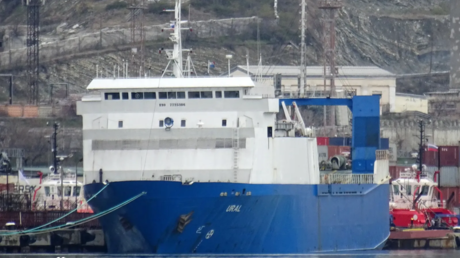
The United Arab Emirates recently confirmed that an Iranian missile struck an oil tanker operated by Abu Dhabi's state-owned ADNOC company inside the strait. Fortunately, there were no casualties, but the message to regional energy exporters is crystal clear. Iran is determined to punish any vessel trying to skirt its preferred maritime corridors or bypass its authority.
Meanwhile, tanker traffic through the waterway remains a fraction of its pre-war volume. Satellite and shipping data indicate that crude oil loading at key terminals like Kharg Island has hit major bottlenecks, as the U.S. counterblockade squeezes Iranian export capabilities while Tehran returns the favor by locking down transit.
Why Moderation Is Struggling to Win
President Masoud Pezeshkian represents a more pragmatic faction in Tehran, publicly arguing that now is the optimal window to lock in a lasting agreement and pull the country back from the brink. He wants to escape the exhausting limbo of "neither war nor peace".
Yet, the hardliners in the security apparatus hold the cards on maritime security. By treating the strait as an active theater of war rather than a civilian transit corridor, the IRGC ensures that maximum pressure remains on Washington and its allies. They know that keeping the global economy on edge puts direct political heat on Western leaders, especially with upcoming electoral cycles in mind.
Washington has maintained that port blockades will only lift once free navigation through Hormuz is fully restored without armed impediment. With neither side willing to blink first, the diplomatic track via Muscat faces an uphill battle.
Keep a close eye on the Omani-mediated transit talks over the next week. If those local navigation agreements collapse entirely, expect energy prices to react violently as the reality of a prolonged blockade sets in for global markets.