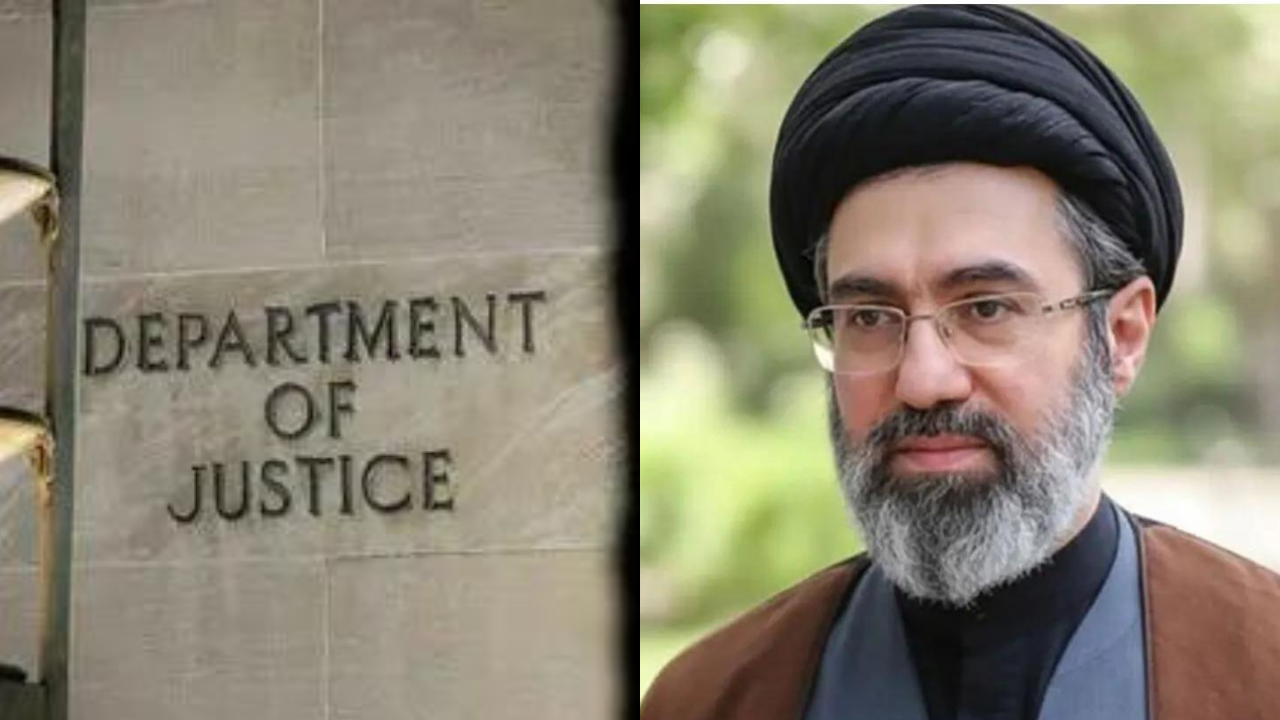
You don't expect the Supreme Leader of Iran to have a favorite luxury hotel chain or a direct pipeline into New York's biggest banks. Yet, a massive federal investigation just revealed that is exactly what happened.
The US Department of Justice is quietly untangling a global web of investments, cash movements, and shell companies tied directly to Mojtaba Khamenei. He took the reins as Iran's Supreme Leader in March after his father died in a US-Israel airstrike. Now, federal prosecutors want to know how his inner circle managed to bypass strict sanctions and slip hundreds of millions of dollars into the heart of the American financial system.
This isn't just about an enemy state hiding cash. It's a massive wake-up call showing that despite decades of trade restrictions, blacklists, and high-tech compliance software, the world's most heavily sanctioned leaders can still buy their way into Western capitalism.
The Wall Street Giants Under Scrutiny
Federal investigators are looking closely at how American institutions handled money linked to the Iranian leader's network. According to government officials familiar with the matter, the probe is looking at transactions tied to JPMorgan Chase and Citigroup.
The core issue isn't that these banks deliberately set up accounts for Iranian leadership. Instead, the focus is on correspondent banking. This is a system where global banks provide services on behalf of foreign financial institutions. It's a notorious blind spot. A bank in the Middle East or Europe processes a transaction for a local shell company, and that bank passes the buck through its US correspondent partner to clear the dollars.
By the time the money hits New York, the original sender's identity is buried under layers of corporate jargon. The DOJ wants to map out these exact gaps. They are trying to find the specific due-diligence failures that let these funds slip through undetected.
From Persian Gulf Shipping to British Real Estate
Mojtaba Khamenei didn't pull this off alone. Before taking the top job in Tehran, he built a massive business empire by relying on trusted proxies. Bloomberg reports that his network utilized a wealthy financier named Ali Ansari. Ansari used his vast banking, construction, and trading interests to act as a conduit for moving Iranian state wealth out of the country. Ansari has denied any connection to Khamenei, but federal investigators aren't buying it.
The scale of the empire is staggering. The money trail reveals a portfolio that stretches across:
- Persian Gulf shipping fleets moving oil under false flags.
- Private bank accounts tucked away in Switzerland and Liechtenstein.
- High-end commercial and residential real estate in the United Kingdom.
- Luxury property payments linked to global hospitality brands like Hilton Worldwide Holdings.
Think about the irony here. While the Iranian regime routinely leads chants against Western capitalism, its ruling family has spent years securing its personal wealth in London real estate and luxury hotel partnerships.
A Diplomatic Minefield for Washington
The timing of this investigation couldn't be worse for the White House. The DOJ probe is coming to light just 24 hours after Washington and Tehran signed an interim peace agreement aimed at ending the recent war and restarting talks over Iran's nuclear program.
The diplomatic situation is incredibly tense. On one hand, the US Treasury is preparing to issue temporary waivers for Iranian oil and banking services if Tehran complies with the peace terms. On the other hand, federal prosecutors are uncovering evidence that Iran's highest authority has been running a massive money-laundering operation right under their noses.
Inside Iran, the public reaction to the broader peace deal is already mixed. Leaked online messages show everyday citizens are furious, calling the interim agreement a betrayal signed over the bodies of thousands of dead protesters and soldiers. Discovering that their new Supreme Leader has been hoarding wealth in Western banks while the Iranian population suffered under economic sanctions will only fuel that anger.
The Immediate Playbook for Corporate Compliance
If you run a compliance team or handle international corporate transactions, this case changes the game. You can't rely on basic automated sanctions screening anymore. If a high-risk entity wants to use your network, they won't use their real name.
Take these steps immediately to protect your firm from compliance fallout:
- Audit your correspondent banking channels. Don't just trust the foreign bank's compliance stamp. Demand full transparency on ultimate beneficial ownership (UBO) for any large dollar-clearing requests coming out of the UAE, Turkey, or Eastern Europe.
- Review luxury asset transactions. If your firm handles high-value real estate or corporate hospitality contracts, look closely at third-party payments coming from offshore centers like Cyprus or Liechtenstein.
- Track the secondary proxy networks. Sanctions lists are always reactive. Monitor intelligence reports regarding known associates of foreign political figures rather than just waiting for an official government blacklist update.
The DOJ made it clear that this investigation doesn't mean criminal charges are imminent. But the message to Wall Street is unmistakable. The government is looking closely at the system, and the excuse of "we didn't know who was behind the shell company" won't work anymore.