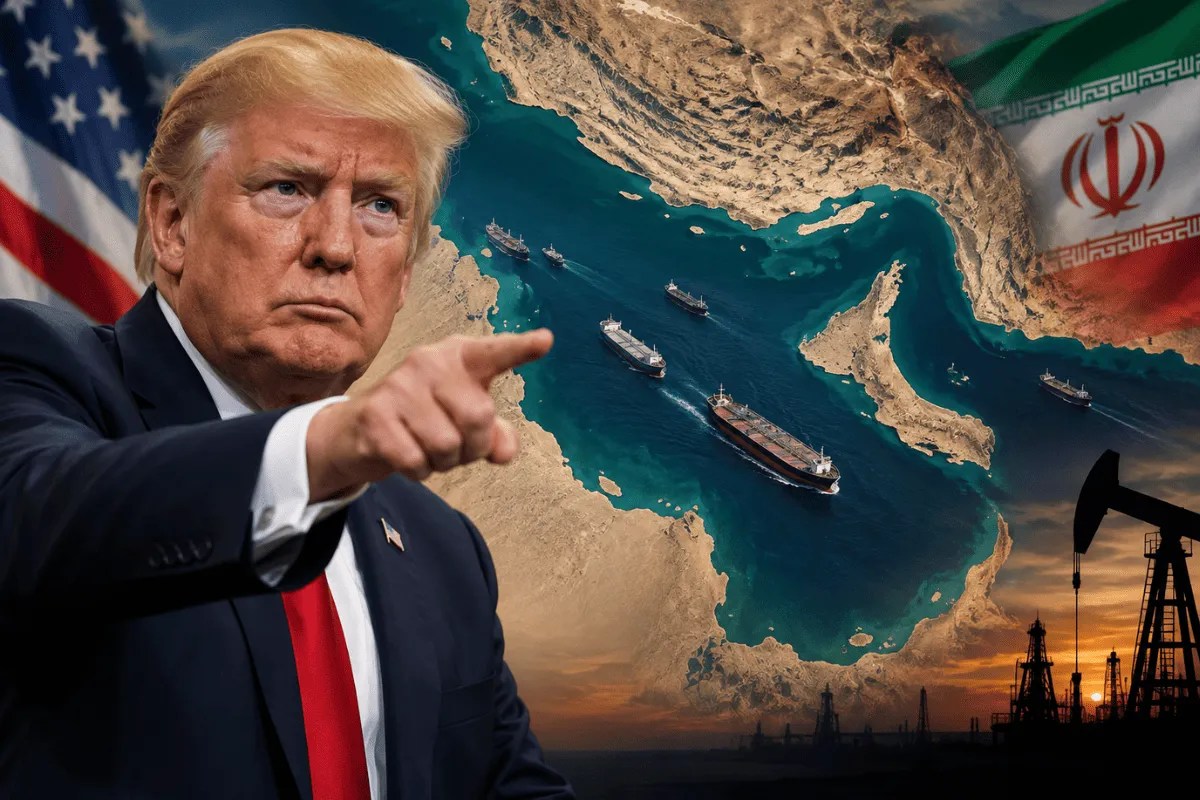
The rules of engagement in the Middle East just shattered. When Iran announced it fired a barrage of ballistic missiles at a United States military base in Jordan, it wasn't just another routine exchange of threats. It was a direct escalation triggered by aggressive US naval strikes against Iranian oil tankers near Kharg Island and the port of Jask.
If you've been watching the news, you know things are spinning out of control. But most mainstream reports miss the actual mechanics of why this specific clash matters so much right now. Let's break down what actually happened, why the Kharg Island attacks changed the math, and what this means for regional security.
The Spark That Lit the Fuse Near Kharg Island
The sequence started offshore. United States forces launched strikes against multiple Iranian oil tankers operating in the Persian Gulf near Kharg Island and the southern port of Jask. Washington claimed these operations were tied to earlier Iranian aggression against commercial and naval vessels in the Strait of Hormuz.
Tehran saw it differently, of course. Iranian state media and the Islamic Revolutionary Guard Corps viewed the tanker strikes as an intolerable economic assault on critical infrastructure. When you start hitting a nation's energy lifelines, a military response is practically guaranteed.
Instead of backing down, Tehran retaliated swiftly. The target wasn't just a random naval patrol or a minor outpost. They aimed high, targeting American military presence deep inside Jordan.
Inside the Missile Barrage on Jordanian Soil
The Islamic Revolutionary Guard Corps claimed responsibility for hitting the American Al-Azraq base—and reports soon confirmed that Muwaffaq Salti Air Base also took direct heat. Jordan's air defense systems faced an intense barrage. Officials in Amman reported that out of roughly 20 incoming ballistic missiles launched toward the kingdom, defense batteries managed to intercept 18 of them, while two impacted unpopulated areas.
Even with successful interceptions, the volume of fire overwhelmed parts of the defensive umbrella. Military sources confirmed that the strikes caused real physical damage. Several US aircraft parked at the air base sustained hits, including an A-10 Thunderbolt—the legendary Warthog—losing part of a wing, alongside roughly eight F-15 fighter jets suffering light damage from shrapnel and blast impact.
American forces scrambled, firing more than 30 Patriot missiles in a frantic defense window. This wasn't a symbolic gesture with zero impact. It was a high-stakes, kinetic engagement that tested the limits of regional missile defense architecture.
Why Jordan Keeps Getting Caught in the Middle
Jordan occupies a difficult geographic and strategic position. Amman tries to walk a tightrope between maintaining vital strategic security ties with Washington and keeping its own borders secure from sliding into an all-out regional war.
When regional adversaries start launching twenty ballistic missiles at a time across neighboring airspace, Jordan's military is forced into a defensive war it didn't choose. While Jordanian air defense systems successfully neutralized the vast majority of the inbound threat, the mere fact that American facilities on Jordanian soil are now primary targets completely alters Amman's security calculus.
Public sentiment inside Jordan is deeply volatile, and the government faces immense pressure to keep the kingdom out of a direct superpower collision. Yet, hosting crucial hubs like Muwaffaq Salti Air Base makes neutrality nearly impossible when Washington and Tehran trade blows.
The Broader Economic Fallout in the Gulf
This isn't just about aircraft and missiles. The confrontation has metastasized into a full-blown crisis over trade and energy choke points.
Following the strikes near Kharg Island, Iran moved to expand its no-go zones outside the strategic Strait of Hormuz, threatening vessels passing through neighboring gulf waters. Maritime insurance rates skyrocketed overnight. Importers across Asia and Europe are scrambling as shipping lanes become genuine combat zones. Even secondary nations are feeling the pinch; for instance, countries like Turkey and Jordan have had to actively source alternative agricultural and industrial suppliers as traditional trade routes through the Gulf face massive disruptions.
Washington insists its naval presence will keep the lanes open, but Tehran's willingness to target tankers and regional bases proves that blockades and maritime harassment are now core components of their asymmetric playbook.
What Comes Next
We are looking at a prolonged standoff. President Trump’s administration and military commanders face mounting warnings that this conflict could grind on for years, testing American endurance and exhausting missile defense stockpiles.
Don't expect a sudden diplomatic breakthrough. Iran has floated conditional terms tied to broader conflicts in Lebanon and Yemen, but Washington has shown zero appetite to negotiate under the immediate threat of ballistic missile barrages.
Keep a close eye on the Strait of Hormuz and air defense readiness logs in the coming weeks. The threshold for escalation is lower than it has been in decades, and every tanker strike or missile launch brings the region one step closer to an irreversible catastrophe.