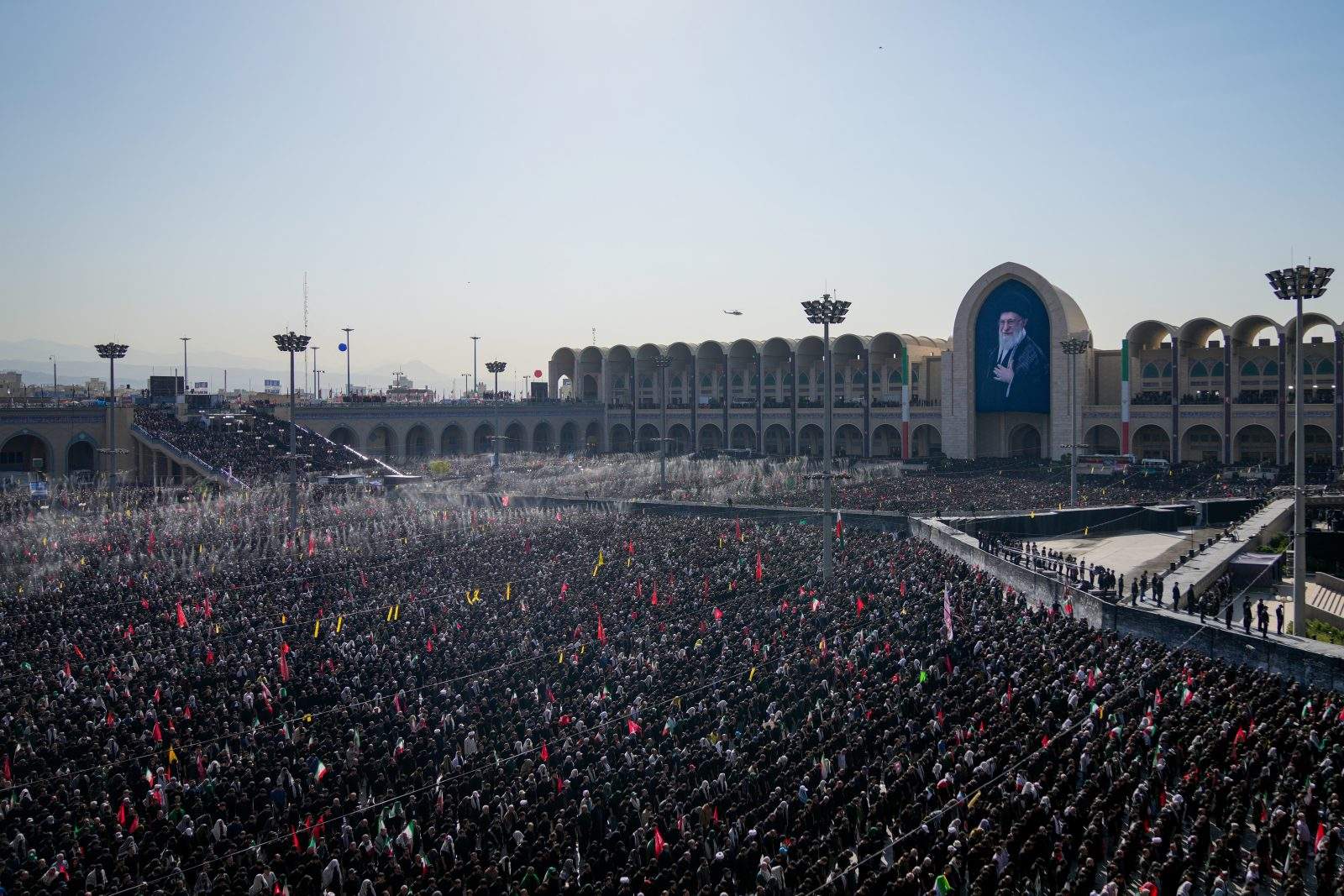
You don't expect a regime that spent months ducking airstrikes to suddenly stand in an open courtyard before hundreds of thousands of people. Yet, that's exactly what happened in Tehran. Iran's top political and military figures finally walked out into the open at the Grand Mosalla for the funeral prayers of the late Supreme Leader Ayatollah Ali Khamenei.
It's a massive gamble. The February 28 airstrikes that killed the 86-year-old Khamenei, several family members, and key officials completely shattered the regime's sense of security. Since then, the leadership has been a ghost crew, operating from bunkers and avoiding any public venue where a satellite or drone could lock onto their positions. Stepping out into a massive crowd signaling public defiance isn't just a mourning ritual. It's a calculated political statement aimed directly at Washington and Tel Aviv.
The Public Gamble in Tehran
The atmosphere at the Grand Mosalla wasn't just somber; it was chaotic and angry. Hundreds of thousands of mourners dressed in black packed the courtyard, chanting the usual regime anthems alongside highly specific, aggressive threats. The crowds openly called for the assassination of U.S. President Donald Trump and Israeli Prime Minister Benjamin Netanyahu.
What makes this specific gathering wild is who actually showed up.
- President Masoud Pezeshkian and Parliament Speaker Mohammad Bagher Qalibaf stood front and center.
- Esmail Qaani, the chief of the elite Quds Force, made a rare, high-profile public appearance.
- Gen. Ahmad Vahidi, the Revolutionary Guard head who hadn't been seen or photographed since the war started until just days ago, stood flanked by plainclothes security.
- Even Khamenei’s surviving sons—Masoud, Meysam, and Mostafa—emerged from hiding.
They stood together while 97-year-old Shiite cleric Ayatollah Jafar Sobhani led the congregational prayers. For months, Israel used public appearances by Iranian officials to fix their coordinates for precision strikes. By showing up in a massive, predictable location, the regime is trying to signal that they're no longer afraid of immediate assassination. They want the world to think they've regained control of their own security.
The Absent Successor and the Shadow of War
Despite the bravado on display, the most important man in Iran was nowhere to be found.
Ayatollah Mojtaba Khamenei, the late leader's son and the newly appointed Supreme Leader, skipped the ceremonies entirely. Rumors have been circulating for months that Mojtaba was wounded in the very same February 28 strike that killed his father. Official state lines say he's staying away due to "continued security threats," which is basically code for: Israel still wants him dead, and he's not willing to risk it.
This creates an intense paradox for the Iranian public. Hardline mourners at the event openly expressed that they're ready for state-directed retaliation, yet the man supposed to give those orders is operating entirely from the shadows. While a 42-year-old nurse at the funeral told reporters that the nation must follow whatever Mojtaba commands, the reality is that a leader who cannot show his face struggles to project absolute authority.
To manage this, Mojtaba issued a written statement confirming he authorized a 14-point memorandum of understanding (MoU) recently negotiated between Iranian officials and the U.S. It's an interesting peak behind the curtain. He admitted he holds a "different view" on the deal but allowed it to move forward after receiving assurances that it protects Iranian rights.
What This Means for Global Energy and Diplomats
Don't let the "Death to America" chants fool you. This entire funeral arrangement is a theatrical backdrop for intense, high-stakes geopolitical leverage.
Iran currently holds a major card: its chokehold on the Strait of Hormuz. During the war, Tehran choked off traffic through the strait, sending global energy markets into a tailspin. Right now, a temporary ceasefire is holding, and the U.S. is pushing hard in negotiations to permanently reopen the shipping lanes and roll back Iran’s nuclear program.
The regime is using the massive turnout at the funeral to show Washington that the population is united behind a hardline stance. They want to prove that killing Ali Khamenei didn't break the state's back.
Diplomatic talks are officially on hold until the six-day mourning period ends. The logistics of the funeral are massive: streets are closed, airspace is shut down, and the body will be transported to holy sites in Iraq, including Najaf and Karbala, before a final burial on Thursday at the Imam Reza shrine in Mashhad.
What Happens Next
If you're watching the Middle East, the real metrics to track aren't the angry speeches from the emcees at the Mosalla. Watch these specific indicators over the next two weeks:
- The Post-Funeral Resumption of Talks: Once the burial concludes on Thursday, see how quickly Parliament Speaker Qalibaf returns to the negotiating table over the 14-point MoU.
- Mojtaba's First Public Address: The new Supreme Leader can't hide forever. The transition of power isn't fully solidified until he delivers a public sermon. If he remains unseen through July, expect internal factional rifts to widen within the Revolutionary Guard.
- Strait of Hormuz Commercial Traffic: Watch the volume of oil tankers moving through the strait. Any sudden deployment of Iranian naval assets or harassment of commercial vessels will signal that the regime has decided diplomacy failed.

.jpg)

