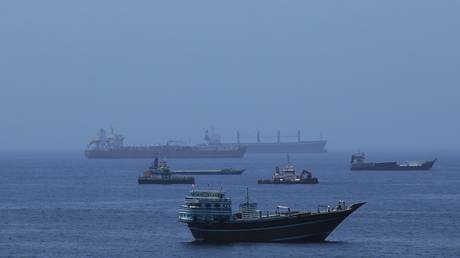
Tehran is playing its favorite geopolitical card again. Iran recently declared the Strait of Hormuz closed until the United States ends what it calls illegal interventions. The announcement came right after the Iranian navy fired on a Cyprus-flagged commercial vessel for allegedly traveling through an unapproved route. Washington wasted no time firing back, launching a fresh round of military strikes against Iranian targets.
If this feels like déjà vu, that's because it is. Tehran threatens to choke off this tiny stretch of water every time geopolitical tensions spike. But here is what most people get wrong about these announcements. Iran can't actually seal the strait permanently without destroying its own economy.
Let's look past the loud headlines and break down the reality of what this escalation means for global energy markets, international shipping, and your wallet.
The Reality of the Strait of Hormuz Crisis
The Strait of Hormuz is the most critical chokepoint in the global oil trade. It's a narrow strip of water separating Iran from Oman and the United Arab Emirates. At its narrowest point, the shipping lanes are only two miles wide in either direction.
According to data from the US Energy Information Administration (EIA), roughly 20% of the world's petroleum liquids pass through this tiny corridor every single day. That's about 20 million barrels of crude and refined products moving from giant producers like Saudi Arabia, Kuwait, and Iraq straight to markets in Asia, Europe, and beyond.
When Iran claims the waterway is closed, the shipping industry doesn't just pack up and go home. Instead, it triggers an immediate defensive protocol. Insurance premiums for tankers skyrocket, naval escorts get scrambled, and oil traders brace for volatility.
Strait of Hormuz Daily Transit: ~20 Million Barrels of Oil
Global Share: ~20% of global petroleum consumption
But declaring a waterway closed and actually maintaining a physical blockade are two entirely different things.
Why Iran Cannot Keep the Strait Closed
Let's talk about the economic suicide pact of a real blockade. Iran relies heavily on maritime trade to keep its own heavily sanctioned economy afloat. It sells millions of barrels of crude to buyers willing to bypass Western restrictions. Guess how that oil leaves the country? It goes right through the Strait of Hormuz.
If Tehran completely seals the passage, it cuts off its own economic lifeline.
There's also the military reality. The US Fifth Fleet, based just across the Persian Gulf in Bahrain, exists primarily to guarantee the free flow of commerce through these waters. The UN Convention on the Law of the Sea guarantees transit passage through international straits, even if those lanes run through an explicit economic zone.
Every time Iran attempts to disrupt shipping, it faces immediate kinetic blowback. We saw it during the Tanker War of the 1980s, we saw it during brief standoffs over the last few years, and we are seeing it right now with the latest US military strikes. Iran knows its conventional navy can't match a concerted international coalition. Its strategy isn't total war. Kinda the opposite—it's calculated harassment designed to gain leverage at the negotiating table.
What This Means for Global Oil Prices
Whenever headlines scream about a closed strait, oil markets spike instantly out of pure panic. We've seen brief price surges following the latest news. But notice how quickly those spikes tend to cool down?
Traders have grown somewhat numb to Tehran's playbook. They know that a temporary disruption is highly likely, but a prolonged blockade is virtually impossible. Modern supply chains also have built-in redundancies that didn't exist decades ago.
Saudi Arabia and the UAE possess massive cross-border pipelines that can bypass the strait entirely. The East-West Pipeline in Saudi Arabia can transport up to 5 million barrels of crude per day directly to the Red Sea. The UAE's Habshan-Fujairah pipeline can pump another 1.5 million barrels daily directly to the Gulf of Oman, completely clearing the bottleneck. While these pipelines can't handle the entire volume of the strait, they provide a massive safety valve that prevents a total global energy collapse.
Your Next Steps on the Supply Chain Front
If you are running a business that relies on global logistics, energy inputs, or international manufacturing, you shouldn't panic, but you absolutely need to prepare.
First, review your energy exposure. If your operations are highly sensitive to sudden fuel or electricity spikes, look into locking in fixed-rate energy contracts now before seasonal volatility collides with geopolitical noise.
Second, map out your shipping vulnerabilities. Work with your freight forwarders to identify if any of your secondary components or raw materials are transiting through East Asian routes that rely heavily on Middle Eastern energy. Diversifying your supplier base away from single-source dependencies isn't just good practice anymore—it's survival.
Tehran will keep shouting, and the US military will keep pushing back. Don't mistake the political theater for a permanent global shutdown. Treat the noise as a prompt to harden your business operations against the next inevitable disruption.