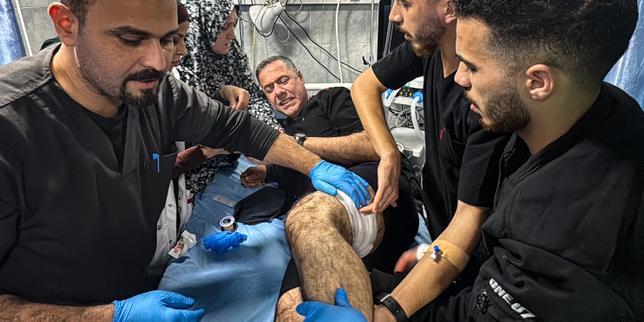
Doctors Without Borders (MSF) just issued a stark warning that should shock anyone following international humanitarian law. Ninety-five Palestinian healthcare workers are currently rotting in Israeli detention facilities without formal charges, facing solitary confinement, physical abuse, and zero access to independent medical oversight.
When a country detains doctors, nurses, and ambulance drivers straight out of operating rooms, it isn't just an isolated security operation. It's a systematic dismantle of the very infrastructure keeping a civilian population alive.
The Reality Behind the Detention of Medical Personnel
Take the case of Dr. Hussam Abu Safiya, director of the Kamal Adwan hospital in northern Gaza. He has been held in solitary confinement for over a year and a half under Israel's "Unlawful Combatants Law." This framework allows the state to detain individuals indefinitely based on secret evidence that neither the prisoner nor their lawyer ever gets to inspect.
Or consider Dr. Mohammed Obeid, an orthopedic surgeon for MSF. Israeli forces grabbed him in October 2024 while he was actively treating patients inside Kamal Adwan hospital. He's been held in Israeli custody for more than 600 days. No formal charges. No communication with his family. No trial date.
Medical personnel are supposed to be protected under the Geneva Conventions. Yet, since late 2023, over 1,700 healthcare workers have been killed in the region, including 15 MSF personnel. Holding almost 100 surviving medics in arbitrary detention sends a clear signal to whoever remains: working in a hospital can land you in a prison cell indefinitely.
Key Figures in Palestinian Healthcare Detention (2023–2026)
- Healthcare workers currently detained: 95
- Total health staff killed: 1,700+
- MSF staff members killed: 15
- Days Dr. Mohammed Obeid held without contact: 600+
Why International Silence Is Becoming Complicity
Humanitarian groups aren't usually known for using blunt, aggressive language. They tend to stick to neutral diplomatic speak to keep operational access. That's why MSF's latest official statement stands out so starkly: "Silence has become complicity."
The International Committee of the Red Cross (ICRC) has been blocked from visiting Palestinian prisoners and detainees since late 2023. Human rights organizations report that medics are being subjected to severe physical violence, starvation rations, and medical neglect while in custody.
When global powers refuse to enforce baseline protections for neutral medical workers, the global rules of war fall apart for everyone. If detaining a surgeon mid-operation carries no diplomatic cost, then no humanitarian worker anywhere in the world is safe.
The Administrative Crackdown on Humanitarian Operations
This wave of detentions didn't happen in a vacuum. It sits alongside a broader administrative campaign aimed at crippling non-governmental organizations (NGOs) operating in the region.
- Mass Deregistration: Israeli authorities ordered dozens of international NGOs, including MSF, to submit personal data and lists of local staff under new compliance rules or face complete operational bans.
- Supply Blockades: Crucial medical gear, engine oil for hospital generators, and basic pharmaceuticals have been systematically delayed or outright turned back at border crossings.
- Remote Support Realities: Since early 2026, international staff entries into Gaza have been repeatedly denied, forcing teams in Amman to manage complex medical operations remotely while local staff bear the full brunt of the crisis on the ground.
These administrative hurdles make running basic triage units nearly impossible, even before accounting for missing doctors who are sitting in detention cells.
What Needs to Happen Next
If international law is going to retain any meaning, Western allies and international bodies can't keep turning a blind eye to the targeting of healthcare workers. Expressing "concern" during a press briefing doesn't open prison doors or return surgeons to operating tables.
Immediate action requires three basic demands:
- Unconditional Release: Release all healthcare personnel detained without formal charges or grant them immediate, transparent trials in accordance with international standards.
- ICRC Access: Restore full, unhindered access for the ICRC to inspect detention facilities and evaluate the physical health of all medical prisoners.
- Protected Status Enforcement: Re-establish strict diplomatic consequences for military forces that target, harass, or arbitrarily detain neutral medical workers operating in conflict zones.
Support independent human rights observers and non-profit organizations that track medical detentions directly by monitoring updates through Médecins Sans Frontières and Physicians for Human Rights.