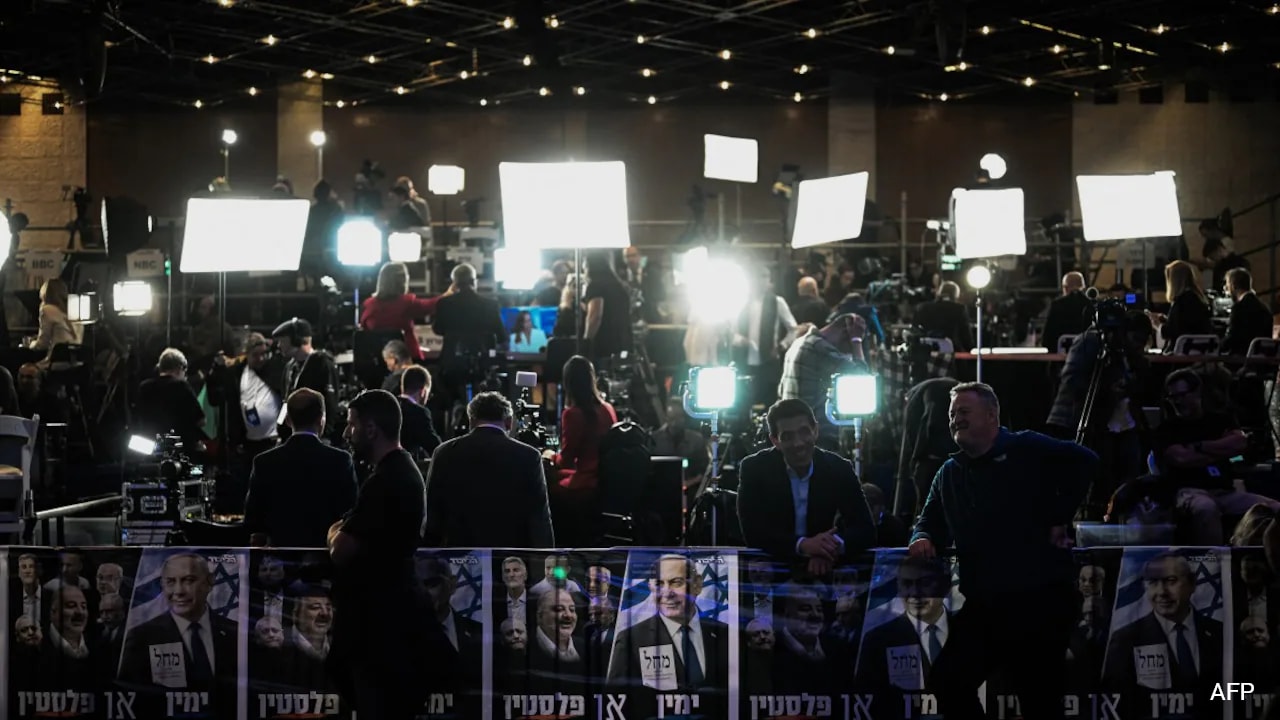
Elections rarely end when the last ballot is cast. Sometimes, they mutate into institutional warfare.
When a nation's top prosecutor demands that its premier intelligence agency put up or shut up regarding explosive claims of electoral rigging, political friction turns into an open constitutional crisis. That is exactly what is playing out right now in Israel, where Attorney General Gali Baharav-Miara has drawn a hard line against unverified allegations pushed by Prime Minister Benjamin Netanyahu’s Likud party.
If you think political drama is intense elsewhere, look closer at how intelligence oversight and electoral integrity are colliding in real-time.
The Flashpoint Behind the Allegations
The core dispute didn't materialize out of thin air. Following a deeply polarized election cycle that left the 120-member parliament without a clear majority, Arab-majority parties walked away with a historic 19 seats. That surge triggered immediate pushback from the right wing. Likud and its allies began flooding public channels with claims of widespread voter manipulation, pointing fingers directly at Arab factions and demanding delays in the official results certification.
Enter the Shin Bet. Reports surfaced that the domestic intelligence agency's leadership sought to question key Arab political figures under the banner of electoral fraud investigations. But there was a massive procedural disconnect. The attorney general stepped in with a blunt reality check: intelligence bodies cannot operate in a legal vacuum, and investigations require actual evidentiary grounds rather than political convenience.
Why the Attorney General Drew a Line
Baharav-Miara's stance is straightforward. If the Shin Bet or any investigative branch holds legitimate proof of wrongdoing, hand it over. If they don't, stop letting unvetted suspicions dictate the democratic timeline.
The attorney general accused intelligence leadership of failing to share core investigative materials with her supervisory team. This procedural standoff exposes a deeper structural tension. When political actors attempt to weaponize national security apparatuses for electoral leverage, the boundary separating state security from partisan politics begins to dissolve.
Opposition leaders haven't held back. Figures across the fragmented anti-Netanyahu bloc have framed these maneuvers as an direct assault on the rule of law. When governing parties try to stall election outcomes by leaning on intelligence probes lacking verified backing, democratic norms take a severe hit.
The Kingmaker Dilemma and Parliamentary Math
Beyond the courtroom-style drama between prosecutors and intelligence chiefs lies a brutal mathematical reality. Neither the right-wing bloc led by Likud nor the diverse opposition coalition has managed to secure the magic number of 61 seats needed to govern comfortably on their own.
With Likud sitting at 53 seats and the broader opposition bloc holding 48, those 19 seats won by Arab-majority parties carry immense weight. They are the ultimate kingmakers, yet incorporating them into any governing coalition remains a massive political lightning rod.
On one side, moderate opposition voices argue that shutting out 20 percent of the population—citizens who are descendants of Palestinians remaining after 1948—is fundamentally undemocratic. On the other side, security benchmarks and ideological red lines set by various opposition figures make an inclusive coalition extraordinarily difficult to stitch together.
What This Means for Democratic Institutions
We are watching a stress test of institutional resilience. When election results produce a stalemate, the temptation to pressure state agencies grows exponentially.
Intelligence agencies are built to counter external and internal threats, not to serve as instruments for verifying vague social media allegations of domestic ballot tampering. Dragging them into political disputes damages public trust in their neutrality. When the head of the Shin Bet is publicly tangled in disputes with the attorney general over transparency and oversight, nobody wins except political chaos.
The electoral commission refused to halt the certification process despite intense pressure from Likud. That decision kept the machinery of government moving forward, forcing political leaders to grapple with the actual numbers rather than chasing shadows of fraud without proof.
Political deadlocks rarely resolve themselves through accusations. Until leaders accept certified outcomes and navigate the messy reality of coalition-building, the risk of dragging the entire system into prolonged instability remains high. Real governance requires facing legislative math head-on, not fighting phantom battles over unproven conspiracies.