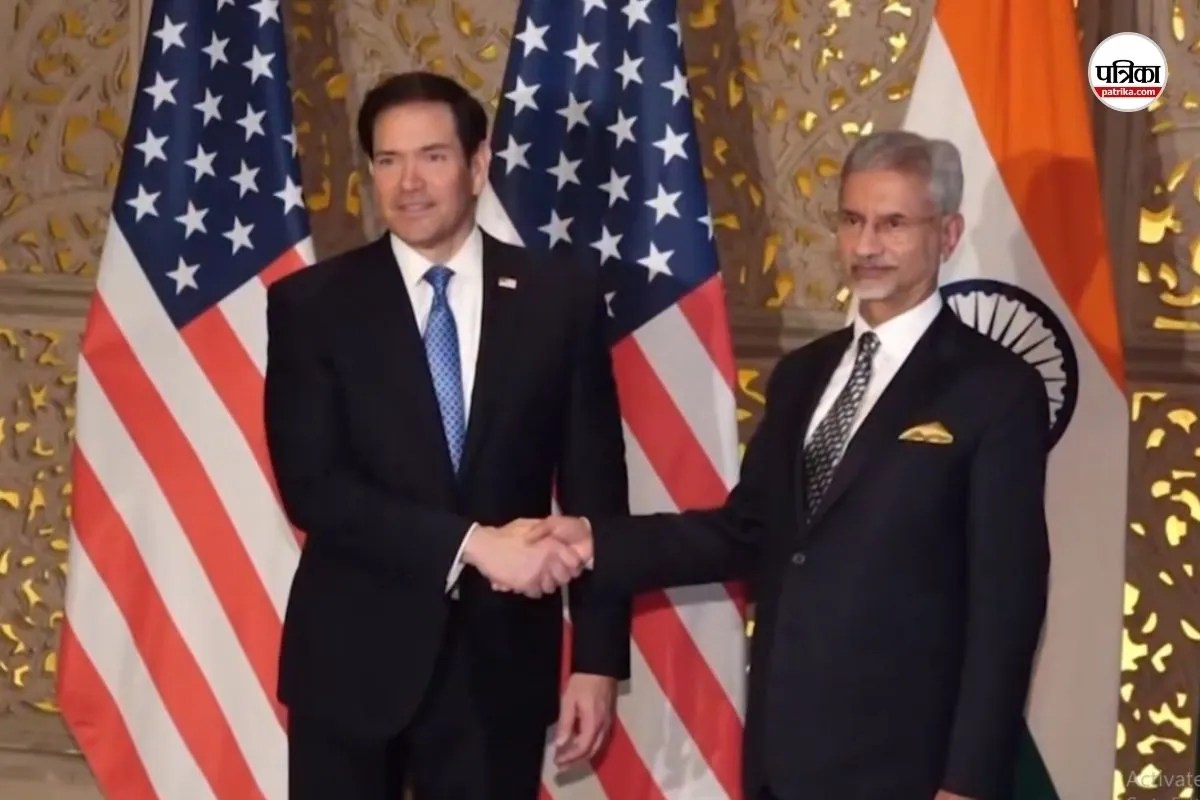
Geopolitics rarely offers clean theatre, but the G20 Foreign Ministers' Meeting in Atlanta provided a striking visual. With top diplomats from competing global superpowers packed into the same room—including U.S. Secretary of State Marco Rubio and Russian Foreign Minister Sergey Lavrov sitting just rows and tables apart—India's External Affairs Minister S. Jaishankar cut straight through the diplomatic niceties.
His message was blunt. Military interventions and battlefield posturing are failing to solve modern global conflicts. If you've been watching world events lately, you know that diplomacy has taken a brutal backseat to artillery. Jaishankar's remarks at the Atlanta summit challenge that trajectory head-on.
Moving Past the Battlefield Illusion
You can't bomb your way out of structural global instability. That's the core reality Jaishankar laid bare before his international counterparts. From the ongoing grind of the Russia-Ukraine war to escalating flashpoints across West Asia, military solutions keep hitting a dead end.
Instead of treating diplomacy as an afterthought once the ammunition runs out, nations need to flip the script. Jaishankar argued that dialogue isn't a sign of weakness; it's the only functional tool left when the alternative is mutually assured economic and social destruction. When superpowers rely entirely on military calculus, collateral damage spreads far beyond the immediate combat zones.
The Global South Pays the Highest Price
It's easy for western capitals or major military powers to treat conflicts as abstract board games. But the reality on the ground is starkly different for developing nations.
Jaishankar specifically flagged the weaponization of supply chains and mounting threats to civilian shipping lanes. When maritime routes face constant disruption, countries in the Global South bear the heaviest brunt. Energy prices spike, food security wobbles, and inflation trickles down to citizens who have zero say in distant geopolitical showdowns.
Supply chains shouldn't be leveraged as political choke points. Building resilient, diversified trade networks isn't just an economic preference anymore; it's a matter of basic survival for emerging economies navigating a fractured world order.
Calling Out the Terrorism Double Standard
You can't talk about global stability while ignoring state-sponsored terror or strategic blind spots. Jaishankar delivered a sharp warning regarding terrorism, noting that governments often miscalculate when they try to use extremist groups or overlook threats for short-term diplomatic leverage.
It's a risky game, and history shows that the monster usually turns on its creator. Ignoring terror networks based on convenient political alignments is a dangerous gamble that eventually backfires on everyone involved.
What This Means Moving Forward
The Atlanta G20 gathering made one thing painfully clear. The old playbook of bloc politics and armed coercion is breaking down under the weight of modern interconnected crises.
India's stance at the summit reinforces a multipolar reality where regional powers refuse to be sidelined by binary cold war mentalities. True strategic autonomy means calling out failed military approaches and demanding that global institutions return to actual negotiation tables.
If major players want sustainable stability, they need to listen to the room and choose dialogue before the next crisis spirals past the point of no return.
G20 Meeting in Atlanta: Marco Rubio Leads Global Diplomacy Talks
This video provides an inside look at the G20 Foreign Ministers' Meeting in Atlanta, where top global diplomats gathered to discuss pressing geopolitical and economic challenges.