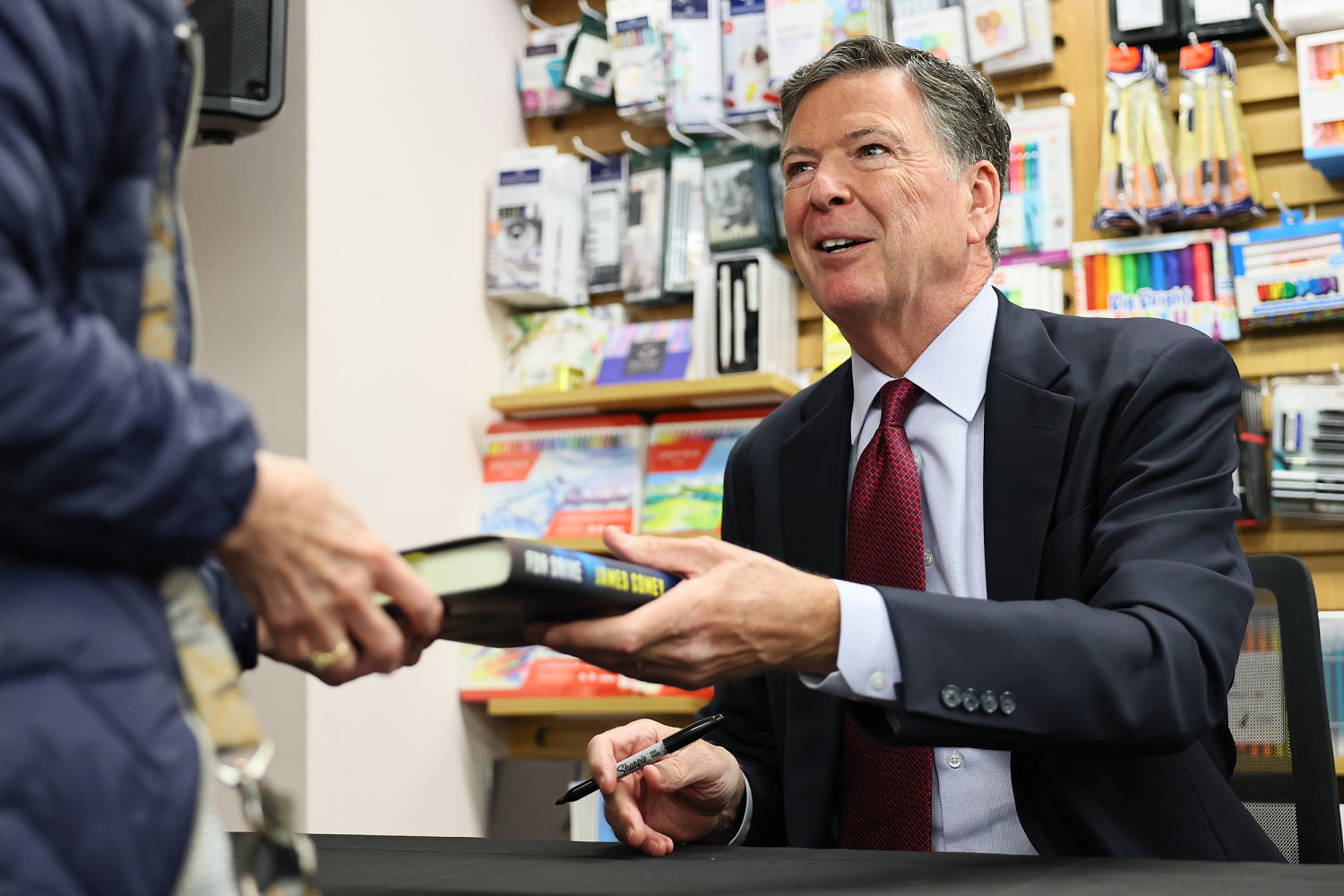
Federal prosecutors are betting their case against former FBI Director James Comey on a handful of seashells. It’s an unconventional move in any courtroom. They aren’t just looking at the Instagram post from May 2025 where Comey displayed shells arranged to read "86 47." They’re actively using his crime thriller, FDR Drive, as a piece of evidence to establish intent.
If you’re wondering why a novel matters in a criminal indictment, you aren’t alone. The government’s logic is that the book—which features a social media personality whose words incite his followers to violence—isn't just a creative work. They claim it provides a blueprint for understanding Comey’s mindset.
The logic behind the seashell prosecution
The indictment charges Comey with making threats against President Trump. The core of the government’s argument is that "86" is underworld slang for killing someone and "47" refers to the 47th president. Comey’s defense team maintains the post was political speech, pointing out that "86" is common restaurant parlance for getting rid of something.
Prosecutors are working hard to frame the seashells not as a coincidental beach find, but as a calculated act of stochastic terrorism. They’ve noted that the post appeared just five days before the launch of FDR Drive. By comparing the book’s plot to the social media post, the prosecution is trying to bridge the gap between "political commentary" and "intentional threat."
They’re pointing to one specific passage in the book where a character explains how a leader can "jack people up" using the internet while maintaining plausible deniability. The government is essentially telling the jury: Comey wrote the manual on this, then he acted it out.
Why this case is making legal experts nervous
Legal observers have noted that winning a conviction here won’t be easy. Proving a "true threat" under current legal standards requires more than just an interpretation of numbers. You have to prove intent.
The government is facing a high bar. They are arguing that the political climate—which included assassination attempts against Trump—made Comey’s post inherently dangerous. They’re effectively saying that context matters as much as the content.
There’s also the question of "vindictive prosecution." Comey’s lawyers have argued that the DOJ is only pursuing this case because of public pressure from Trump. Prosecutors have formally rejected this, stating that Comey hasn't provided evidence that officials acted with improper motives. They’re framing the defense's argument as mere speculation.
The book sales angle
What’s perhaps most damaging—or most damning, depending on your perspective—is the communication between Comey and his publishing agent. According to court filings, after the seashell post went viral and sparked an outcry, the agent texted Comey saying he had gone viral. Comey replied, "Not my intention, but I'll be OK if it sells books."
It’s a moment of tactical transparency that the prosecution is now using to paint Comey as a calculated opportunist. To a jury, that exchange might make his claim of "stumbling upon the shells" look like a weak excuse. Whether or not it proves a legal threat is another matter, but it certainly complicates the narrative of innocence.
What happens next
The defense is pushing to have the indictment dismissed. They argue that the government has misled judges, withheld key facts, and failed to prove that Comey knew the numbers could be seen as a call to violence.
The strategy for the defense is to keep the focus on the law. They want the court to look at the precedent for free speech and political expression. The prosecution, meanwhile, is betting that a jury will look at the timing of the book release, the contents of the novel, and the context of the political environment and see something much darker than a beach walk.
For those watching the intersection of free speech and criminal law, this isn't just about James Comey. It's about how far prosecutors can go when they start using an author's fiction as a window into their real-world criminal intent. If this case moves to trial, expect the line between the plot of FDR Drive and the reality of 2025 politics to be the primary battleground.
Keep an eye on the upcoming motions. If the judge allows the book to remain a focal point of the evidence, the trial will be less about the shells and more about the author’s mind. Don't expect a quick resolution. This is set to be a long fight over what constitutes a threat in an era of viral social media posts. The legal standard for "true threats" is being put to a serious test.