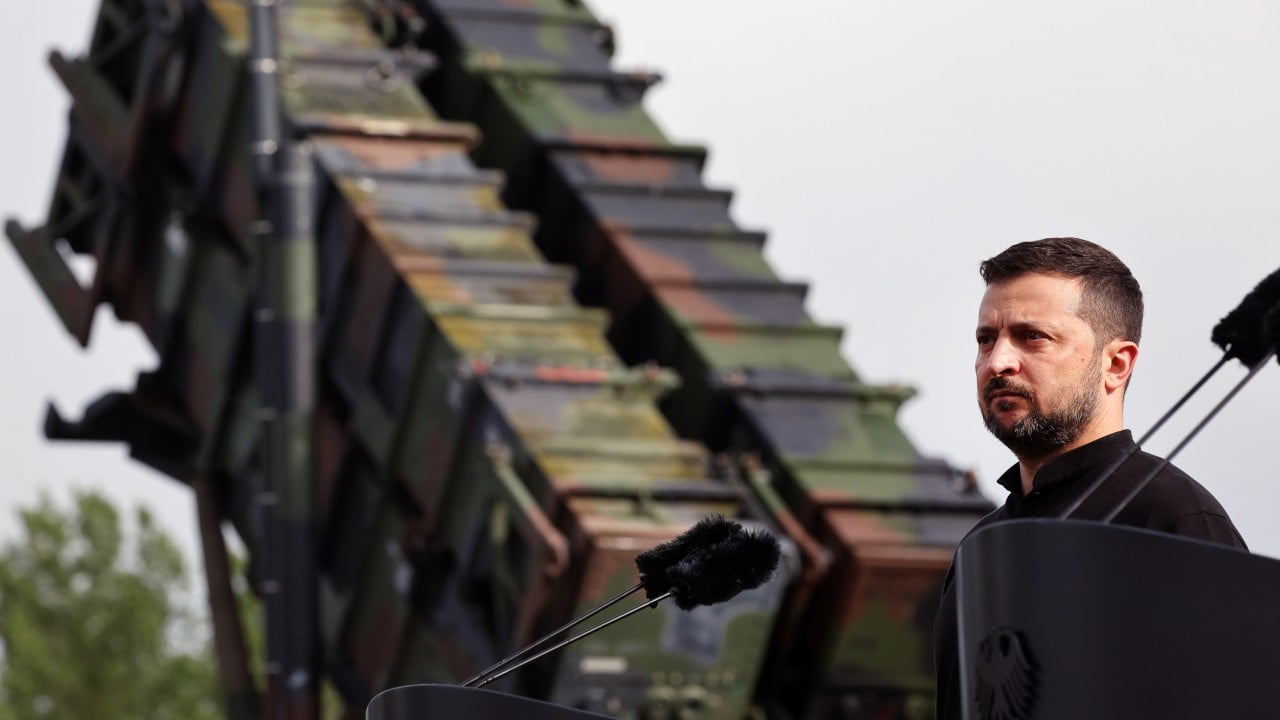
Ukraine is running out of air defense. The sky over Kyiv, Odesa, and Kharkiv is a constant battlefield where Russian ballistic missiles rain down with devastating power. To stop them, Ukraine relies heavily on the Patriot missile system. Specifically, the advanced PAC-3 interceptor, which is the only weapon in Ukraine's arsenal capable of reliably taking down those high-velocity targets.
But there is a major supply bottleneck. The United States, facing its own shifting political realities, has scaled back direct transfers.
This pressure led Ukrainian President Volodymyr Zelenskyy to look toward an unexpected partner: Japan.
Specifically, Zelenskyy set his sights on Mitsubishi Heavy Industries, the only company outside the US licensed to manufacture the highly sought-after PAC-3 interceptor. Kyiv wants to replicate Tokyo’s manufacturing model, or better yet, get its hands on Japanese-made interceptors directly.
The request hits a massive roadblock. Japan's post-World War II pacifism is deeply woven into its legal and cultural fabric. While Tokyo has taken unprecedented steps to update its defense posture, the country’s export rules still draw a hard line when it comes to active war zones.
The High Stakes of Zelenskyys Appeal to Tokyo
The Ukrainian president openly praised Japan's production capacity, calling Mitsubishi Heavy Industries a premier example of how a nation can successfully build its own anti-ballistic missile infrastructure under a US license.
Kyiv’s interest is two-fold:
- They want to copy the "Japanese template" of domestic production.
- They desperately need actual, ready-to-use missiles to defend their cities today.
With the White House curbing direct sales and transfers of these interceptors, Ukraine is forced to look for alternative supply chains. Japan sits on a massive industrial goldmine. Tokyo fields 24 Patriot batteries, containing roughly 120 launchers. More importantly, it has the active factory lines to build them.
But Japan’s pacifist limits are not just a matter of political will. They are codified into law.
Inside the Red Tape of Japanese Pacifism
For decades, Japan maintained a strict self-imposed ban on exporting military equipment. This was an extension of Article 9 of its constitution, which renounces war.
Things began to shift. In April 2026, the cabinet of Prime Minister Sanae Takaichi pushed through a historic revision of Japan's "Three Principles on Transfer of Defense Equipment and Technology". They scrapped the old rule that limited exports to non-lethal categories. Suddenly, selling warships, combat drones, and missiles became legally possible in principle.
However, this liberalization came with major strings attached:
- The 17-Country Limit: Lethal exports are restricted to a select list of 17 nations that have formal defense equipment and technology transfer agreements with Tokyo. These include the US, Australia, Sweden, and Germany. Ukraine is not on this list.
- No Active War Zones: The new guidelines explicitly prohibit exporting lethal weapons to countries currently involved in active conflicts.
Even when Tokyo completed its historic transfer of PAC-3 interceptors to the US in late 2025, it did so on the condition that the missiles remain under US custody. They were meant to backfill American stockpiles, not to be forwarded to Ukraine. To this day, not a single Japanese-made interceptor has touched Ukrainian soil.
The Secret Power of Mitsubishis Production Line
Many people assume Japan is just an assembly line for American designs. That is a mistake. Tokyo’s defense industry holds crucial leverage in the global supply chain.
Take the guidance gyroscopes used in PAC-2 missiles. Years ago, the US actually lost the domestic industrial capacity to manufacture these highly specialized parts. They had to turn to Japan, which approved the export of these components under strict guidelines.
Without Japanese manufacturing, the global Patriot ecosystem slows to a crawl. This is why Zelenskyy didn't just ask for weapons—he specifically named Mitsubishi Heavy Industries. Ukraine wants the blueprint. They want to know how a non-US nation can build a world-class missile defense factory from scratch.
The Political Fight Brewing in Tokyo
While the Japanese government officially maintains that it will not send weapons to Kyiv, domestic pressure is building.
In the National Diet, lawmaker Shigefumi Matsuzawa recently confronted Defense Minister Shinjiro Koizumi. Matsuzawa urged the ruling coalition to bypass the bureaucratic red tape and send Patriot missiles to Ukraine, invoking the concept of "proactive pacifism".
Matsuzawa’s argument is straightforward: Russia’s continuous strikes on civilian infrastructure constitute "extraordinary circumstances". Under the revised April 2026 rules, transfers under such circumstances are technically allowed if the National Security Council approves them.
Defense Minister Koizumi, however, shot down the proposal. He stated that Japan is not considering weapon exports to Kyiv and will continue to support Ukraine through other, non-lethal means—like generators, demining equipment, and financial aid.
The public remains deeply divided. Many Japanese citizens worry that sending lethal weapons to a country at war will drag Japan into a global conflict and violate its pacifist identity. Others argue that if Japan does not help stop aggression in Europe, it will send a green light to aggressive neighbors in its own backyard, such as China and North Korea.
What This Means for Global Security Alliances
Japan’s hesitation highlights a broader challenge for Western allies. The democratic world has the industrial capacity to match Russia's war machine, but it is locked behind different legal systems and historical constraints.
If Japan refuses to budge, Ukraine's air defense crisis will worsen. Europe cannot produce Patriot interceptors fast enough on its own. Germany co-produces a variant of the PAC-2, but it cannot independently manufacture or export the entire system without US approval.
Tokyo’s decisions are watched closely by Beijing. A Japan that remains hesitant to export weapons even during a historic European crisis suggests to regional rivals that Tokyo may still hesitate to fully mobilize its industrial might in a Pacific contingency.
Practical Next Steps for Kyivs Strategy
Since a direct shipment of Japanese PAC-3s is legally blocked for now, Ukraine must shift its diplomatic strategy to keep its skies protected.
1. Push for the Indirect Backfill Route
Ukraine’s best bet is to lobby Washington to buy more Japanese-built PAC-3s for its own stockpiles. This allows the US military to free up its own older, American-made Patriot interceptors for immediate transfer to Ukraine. It avoids violating Japan's third-country transfer ban while achieving the exact same result on the battlefield.
2. Pivot to Funding Instead of Hardware
Kyiv should lean into the proposal made by its ambassador to Japan, Yurii Lutovinov. Instead of asking for finished missiles, Ukraine should ask Tokyo to directly fund the research, development, and domestic manufacturing of Ukrainian-designed air defense systems. This sidesteps Japan's export bans entirely, keeps the money flowing, and builds Ukraine's long-term independence.
3. Seek Joint-Venture Licensing Agreements
Mitsubishi Heavy Industries cannot send missiles, but they can share technical expertise on manufacturing efficiency. Ukraine should focus on securing joint-venture agreements under US oversight. By getting technical consultation on how to set up high-precision assembly lines, Ukraine can lay the groundwork to build its own domestic interceptor plants faster, copying the very template that made Japan an industrial powerhouse.